Dream Psychology

Dreams are fascinating aren’t they? At least our own are to us. There are tomes and tomes written about dreams and what they might mean.

This isn’t a post about my dreams as such. If you try telling anyone about a dream you’ve had the general reaction is ‘so what?’ And that’s fair enough. What this is, is a bit of analysis of the relevance of dream interpretation, by taking a few of my recent vivid dreams, looking up the interpretation, and seeing if it holds water.

Dream 1: The Window

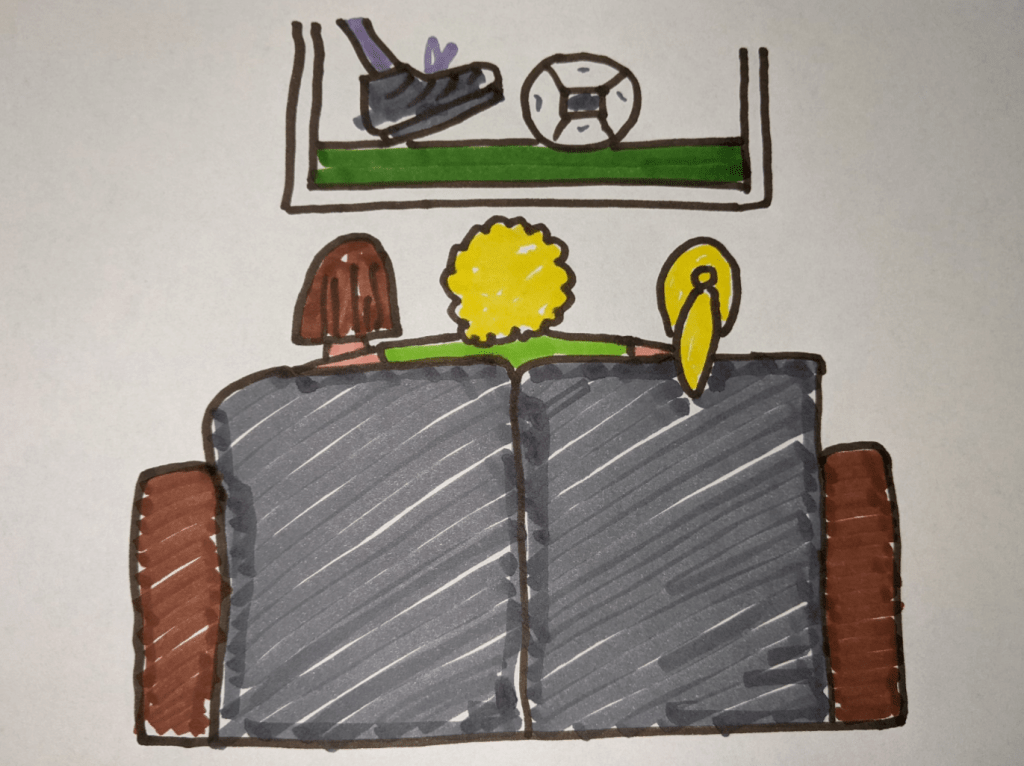
A fairly tepid dream with not much going on. In the dream I was lying on the living room floor, I sometimes do this when my back is playing up, so it seemed perfectly natural. Just laying on the floor watching TV when I noticed someone at the window. A builder. They were removing the window, replacing it.

In real life the window does need replacing but it’s low on the priorities. It turned out that the work had been booked by the previous owner and was already paid for. I left the builder to get on with it.

Windows

The dream then moved to the kitchen, which was more like a staff kitchen. My colleagues were there from a previous job. In real life, my relationship with these colleagues was not good, but in the dream we were friendly enough. We chatted small talk things, and eventually we came to my news. In real life I have had a somewhat important breakthrough. I shared my good news, and they did not care.

What do they care?

There was also a middle aged Indian lady with a walking stick. I did not know her, but she seemed to want me to talk to my colleagues.

Dunno

Dream 2: Cellars

The second dream was a little more abstract, and was one of those recurring ones. The sort about finding extra rooms in your house, I get that dream often, but something I have only just realized as I write this is that home has always presented itself in my dreams as the old family home, but not anymore. Home is now my own house, where I live now.

In the dream there was a mix of it being extra rooms, but the rooms were also underground, in the cellar. I did become aware at some point in this dream that it wasn’t real. Our house is way too small for the amount of unnecessary stuff we feel compelled to retain, and my subconscious must be conscious of it.

The cellars were a bit like the undercroft of a station or something. With rooms splitting off from a central corridor. Most of the cellars were like void spaces, but others were filled with storage boxes and lit by candles, the perfect place to sit and share ghost stories with friends.

In the dream, I was also worried that the naked flames might start a fire. This danger was ever present in the dream.

The dream did move on though, to the upstairs, and the main feature was the front door that would not lock. A builder was required to fix the door before it could be secured.

Dream 3: Business

In the third dream I went into business with a couple of other parents I know vaguely from the school. What was surprising though, in the dream, was that the joint bank account of my wife and me was suddenly renamed to the business of  those parents and was several thousand pounds overdrawn. Naturally, I was a bit miffed and felt betrayed. I was also unclear if we had just a business arrangement or were having some sort of affair.

Thingi

The scenery then changed to what I assume was some sort of leavers ball, and my business was somehow involved in the arrangements. It was early and the party had not got going, and guests were people that I knew from my own school, though I’ve long since forgotten all of their names, I recognised them as such.

Lass

The party soon picked up though, and whatever was my role in this business venture was complete and I was free to mingle and drink beer. I remember bumping into someone from university, who explained that she had broken her nose twice since the last time we had met. Bizarre.

Then there was the eating of food. Lots of food, curry and Chinese dishes by the bucket load. What I noticed about the food though was that it was very much like a variety of frozen meals I used to buy, but have not seen for almost twenty years.

Dancing

And then I joined the dance floor with a partner that had been giving me the eye throughout the night, but what was meant to be the start of a beautiful and elegant dance led to my companion landing flat on her arse when I failed to catch her hand. There is a reason why I don’t dance in real life. People get hurt.

There was a brief incursion by an armed assailant at one point but that seemed to resolve itself, and the business was drawn to a close and we all went our separate ways.

But what does it all mean?

In the first dream, there was building work, and windows. To dream about windows can symbolise curiosity or new perspectives. The window was being replaced, and in real life I am about to embark on a new career . One that will certainly bring new perspectives.

To dream about colleagues is apparently a sign that one is doing well at work. This seems to be the case at the moment. And perhaps these particular ones appeared because they held me back. I will take their dreamy disinterest in my news at face value and remember Matthew 6:7, to not cast pearls before swine, and be grateful that the dream allowed me to say what I wanted, but without giving them the opportunity to trample it.

The second dream had more familiar dream imagery. That of the extra rooms appearing in the house. This is understood to signify parts of our psyche developing. As we grow as individuals, the house of the mind expands. This fits with the career change. The cellars too. To dream of a cellar relates to our belief structures, and accessing our inner self. This might signify my relationship with God, and that I have one now. Or it might just be that the cellar was cool.

Ghost Stories in dreams is a puzzler. I couldn’t find anything about that. But the dream about the front door not locking is indicative of vulnerability and insecurities, which is pretty accurate for my current situation. Giving up the secure and familiar for something new is always daunting.

The final dream seemed to have a lot more going on. Going into business suggests facing a challenge. Yup. The potential of the affair may represent insecurities, and I’ve always got those. The debt suggests a sense of obligation, and I currently have a lot of those, not least in my current job.

The dancing suggests happiness, but I did drop my partner. I felt like I had let them down, which can mean that I need to revisit my choices. Possible.

Meeting an old friend can reflect a desire to connect with the past, nostalgia. Last weekend was spent visiting a railway museum and an outdoor Victorian museum. We rode vintage trams and enjoyed old style fish and chips. Nostalgia is a lifestyle choice for me, but I don’t think it’s something my subconscious would care about. The broken nose, again relates to vulnerability and losing control, which is exactly where i am right now.

There is a lot of interpretation here, but what I have found, just by searching up the main themes from my dreams is that they do translate into a common language. That we can interpret our dreams and derive meaning from them in an intelligible way.
I have written at length previously about the meaning of sex in dreams. And I find the whole subject fascinating. Something that I will probably revisit many times.

Back to the Office? Not on your Nelly!

As I write this, the Omicron infections are rising, and as a new lockdown looks imminent, it is, once again, temporarily, academic, for the foreseeable.

I’m talking about Working From Home, or WFH as it’s often shortened. Ever since the first lockdown, when anyone who could work from home was instructed to do so, and anyone who couldn’t was paid to stay home. Unless of course they were a key worker. A driver, a nurse, a shop assistant, a butcher; anything that the country needed to operate.

At the start of 2020, the world wasn’t ready for Working From Home, psychologically at least. Pragmatically, many millions have been working from home for centuries in their home businesses: cottage industries, freelancers, and the like.

In 2009 we had snow. Lots of snow. Lots of snow in comparison to places that don’t get snow, but just a dusting compared to the snowy alpine countries that deal with several feet of snow on a daily basis. Switzerland doesn’t grind to a halt when there’s a bit of snow, they say, and it’s true, but they’re always expecting snow. In 2009, it snowed, and I remember being in the office as colleagues gathered at the big glass windows and watched everything turn white. Everyone checked the weather news sites, and one by one, reluctantly, declared that they couldn’t risk being stuck, so left work early.
I was one of the more persistent ones. It wasn’t that work needed me. I was an analyst, I provided monthly figures, but I felt this unfathomable pressure, a duty to stay at my post whilst others lost their heads. “What if they needed the First Time Permanent Reinstatement figures three and half weeks early? I really should stay.”
Eventually the Director walked by and saw me stood looking out the window. I don’t remember exactly what he said but it was something along the lines of “What the bloody hell are you still doing here? You’ve an hour’s drive in this you idiot. Sod off home and be safe, and for God’s sake drive carefully!” There may have been more swearing. Actually, there might have been less, I do tend to embellish my anecdotes with every retelling.

But why am I writing this? Much as I like recalling this tale, I do have an actual point.  There is a thing, call it a condition, that inflicts our industries and encourages bad practice and drives inefficiency. That condition is Presenteeism. The idea that career progression is best served not by productivity, not by what we do, but by what we are seen to be doing.

Make sure that everyone in the chain of command knows what car you drive and make sure they see it in the car park when they arrive at 7am, and make sure it is still there when they leave, even if it’s 10pm. Have a jacket on the back of your seat so when you’re not there, you can’t be far away. Always make time for the CEO and those around them, but always have something important in your hand, and always be on the way to somewhere.  Be aloof, but available if needed. Don’t be afraid to big yourself up and get junior staff to do some of your work. I’m obviously exaggerating here to some extent, but there’s a lot of it going on.

But what does this have to do with the snow? The very next day the whole country woke to a fresh covering of crisp white snow.  When it snows overnight you don’t even need to look outside to know it’s snowed. You can hear. Everything outside is muffled, muted, like the volume is turned down.

Outside on the street, neighbours were returning to their homes, unable to leave the village because of the ungritted roads were too steep to climb. I couldn’t go to work even if I wanted to, so it was lucky that the boss called me on my company phone and told me that the roads were treacherous and under no circumstances must I attempt the journey. Brill, but this didn’t mean that I could just go back to bed, or sit by the window with a hot chocolate and watch the sheep huddle in the field across the road. No. I had a company laptop, I had a company phone, and I had access to the virtual desktop. I had access to everything I needed in the office from the comfort of my own home. Except for the best liver and bacon in the world from the staff canteen, I had everything I needed to get the job done.

But there’s a problem. How can anyone park their car where it can be seen by senior management – remotely? How can anyone be seen to be doing anything at all – remotely. How could anyone demonstrate their value to the organisation if they have nothing to show for their time?

This was a problem in 2009 and it was a problem in 2020, but technology has moved on.  So as the whole world went in to lockdown, and vast numbers made offices in kitchens, bedrooms, and on sofas, thousands felt the icy finger of accountability on their shoulder. “Work from Home?” They said, “Out of the question. Its impossible. A physical presence is critical. One cannot just send emails from anywhere you know. First you must phone the person that you are about to email and for that both you and your colleague need to be at your desks. Then you must send the email, again, from the desk in the office. Then you must ring the person to check that they have received it. And then the critical part, and this cannot be done remotely. You must visit your colleague, or subordinate, and discuss the content of the email while resting against their desk. None of this can be done from home”.

In lockdown, diaries filled with zoom meetings. Meetings about meetings. There were meetings about meetings. Pre meeting meeting meetings. Post meeting meeting meetings. Meetings to discuss the next meeting. Meetings to discuss discussing the next four pre meeting planning meetings and follow up. If nonsense and absurdity had a bastard child it would still be more sensible than that shower. But what does that matter? Everyone is busy, as they should be.

Well not quite. Productivity is right down during lock down. There are numbers and everything so it must true. Even the Guardian says so, and they’re the most unbiased and sensible newspaper in the world ever.  Also, now that lockdown is over, there is a reduced footfall in the city centres, less workers eating overpriced sandwiches and drinking over priced coffee, filling over priced car parks, trains and office space. A terrible knock on effect that we are still yet to grasp the full magnitude.

Except. What about the ones that are rather suited to working from home? The ones that have found that they not only get more work done when they are free of the distraction of others, but they don’t really miss the commute?

There are some who quite enjoy the new way of things. No longer do they set their alarm clock for before sunrise to drop of their children in a breakfast club, for a fee, before enduring a long drive or ride to the office. They quite like that they now saunter to their desk at 9am feeling fresh and well rested.

They like that, instead of sharing a cramped office, at the far side of a long commute, and with others that complain about the smell of cuppa soups, or can’t agree on the temperature, or talk loudly on the phone, or fart discreetly but whiffilly, or pretend they can’t hear them with headphones in, and talk about them behind their back etc, they can just sit down and do their job. Some people happen to really enjoy their job but just aren’t interested in office politics. This peculiar type of worker is often overlooked but they do add value to their organisations.

But why aren’t they worried about their value not being seen by the business? Why aren’t they just as desperate as the others to prove their worth? That difference is another P word, productivity, and unlike Presenteeism, it can be measured, and a value can be assigned. This class of worker isn’t burdened by politics, they simply receive their assigned task and complete it within an arranged timeframe, some times alone, sometimes in collaboration, but always more effectively than when also contending with the commute, or Barry’s smelly lunches.

Of course. Any job that can be done as effectively in a log cabin in the Lake District as it can in the office, could also be done in North Korea for a penny a day. While this is technically correct, outsourcing isn’t exactly a new phenomenon. It was tried in the Nineties with IT, and again in the Naughties with customer service. There are still IT jobs and Customer Service jobs in the UK. Automation is by far the biggest threat to job security, but that’s something else entirely.

Then there are the key workers, those whose jobs cannot be done from home. Some would say it’s not fair on them that others have the luxury of working from home. Sounds stupid but this has been said on forums and newspaper comment sections. Others have said that home workers should have their pay cut because they no longer have to cover the commuting and childcare costs if they won’t return to the office. Imagine the outrage if they were told to spend much of their income on something they didn’t need, or if shop workers and drivers were forced to convert half of the kitchen into an office space they don’t need because it’s not fair on homeworkers if they don’t. But let’s not linger on how ridiculous the argument can get.

The cat is out the bag now, the genie is out the bottle. There is no going back to normal, this is the normal. Big shiny offices, and grubby back offices where the support staff are hidden for that matter, are enormous overheads. Overheads that WFH has now made discretionary. While some businesses have taken the line that their staff will work where they are told, where they can be watched, whether they like it or not, their competitors are telling their staff to work where they perform best and are happiest, and are using the cost savings to improve pay and undercut the unresponsive and reactionary rivals.

The industrial revolution brought mass production and transport that changed the face of the planet. Anyone that didn’t adapt was outpaced by those that did. The digital revolution brought the internet and enabled the infrastructure for homeworking. Like the companies that failed to computerise in the eighties, and retailers that didn’t move online, those that snub their employees preference for WFH will also disappear.

Working from home has given me time with my family I would otherwise spend on the commute. It’s given me longer hours in the evening and more hours of sleep. I’m eating better, sleeping better, drinking less, and not missing out on what matters. And on top of that, I put in a good shift every day and the results are there for all to see.

I’m under no such pressure to return to anywhere, but the voices are out there, calling on us all to do our duty and keep Pret supplied with starving miserable workers looking for a quick bite to eat, and the nurseries filled with miserable infants missing their parents for ten hours a day. Well I say no. Not on your Nelly. And so should everyone else.

The Moon Under Water: A Response

I listened to George Orwell’s essay while waiting for the kettle to boil this morning and immediately felt minded to write a response.

Orwell writes about the perfect London Pub,  The Moon on The Water, and captures so closely the quintessential essence, the quintessence, of such a perfect London pub that I have little to add, only that he wrote this essay eighty years ago, in 1946, and much has changed, and much hasn’t changed, but still, I felt it worthy of a response. If you haven’t read it, I suggest you do. Read it here.

There are many Moons Under The Water now, but Orwell’s is the original. Our Pub, for the purpose of this response, is called the Lune Over The Water, its a sort a play on Words. My perfect pub is not in London, it is in Lancaster, the city of the fort on the Lune. The Lune being the river, the water, on which Lancaster is built, and Lune being the French word for moon, its all really very clever if you think about it.

So Orwell speaks of the perfect pub being one that is close to a bus stop, but is tucked away to where the rabble cannot find it. We can all agree, though perhaps the rabble will differ, that we all love a good pub without the rabble. The rabble have their pubs, we have ours, and never twain shall meet.

He speaks of the ample elbow room of Victorian grandeur, and the original features and decor, uncheapened by modernity. Of a warm welcome and familiar faces. Pub grub and delicious ales served in the proper vessels. Little has changed in the mix of the perfect pub in those eighty years.

To the Lune Over The Water, I would perhaps add only maybe a large jar of pickled eggs on the shelf behind the bar. Homemade pickled eggs of a certain vintage and sour enough to set the drinking pace for the evening. Like the Moon, the Lune is as much a place of conversations as it is for drinking, and we very much want to keep it that way.

There were no jukeboxes in Orwell’s time. Might we risk the addition of a small jukebox in the corner? Or would that invite a newcomer to inadvertently break the conversational ambiance with their poor taste? No. The only good jukebox is an inoperable jukebox. Some stylish lines from a fifties antique offers us some intrigue and a window on the past, its tantalizing playlists trigger conversations and recollections, and stories abound. But, gracefully, we are spared the sounds of another’s loud and invasive noise of choice by the want for a replacement needle.

Hey, ain’t nobody got time for that.

Live music is no bad thing in the more boisterous establishments, where shouting words at the ear of your companion and moving on to the next one is all part of the fun, and those establishments are welcome to it. A charming pub of the quality of the Lune Over The Water has no call for entertainers, for a pub is entertainment enough of itself.

The biggest change from Orwell’s time is the smoking ban. The air may be cleaner, but gone is the smokey charm. And gone too are the cigarette machines. I am self censoring here, no one called them cigarette machines, but we’ll run with it. Somewhere in every pub, often near the door or the toilets was a vending machine that would sell packets of 16 cigarettes, in boxes the size of twenties. The perfect pub sells them in twenties, they would be tax exempt, and by some ill understood legal concession, smoking is permitted in some areas.

Vaping is not permitted anywhere on the premises.

Packet of fahhh… Cigarettes.

Of the decor, on the walls of the Lune there are small framed photos of famous and note worthy patrons of the past, now difficult to discern, and somewhat faded by time and the near century of accumulated nicotine yellow. Where some pubs might make the mistake of redecorating, this one hasn’t. The furniture is replaced only when it is beyond repair, and is replaced with the suitable stools and chairs and tables from those pubs still recklessly engaged in the mistake.


Serving food at lunch, I would call for liver and onions, hotpot, or beef stew. Neopolitan ice cream or spotted dick for pudding. The modern pub has too much choice, we are spoiled for choice in fact. We choose from burgers to pizza, to curry, to fish and chips, even gourmet fish finger butties. This is not the way. A limited choice, or no choice at all keeps things nice and simple. Less is more.

Sunday Roasts though. That’s a good honest meal for the weekend. Always two meats to choose from. Sometimes Chicken and Lamb, sometimes Beef and Pork. Every now and then we’d be surprised with roast duck or goose, or even goat, and there would always be some sort of amusing anecdote behind the unexpected menu. Like the time farmer Ted had the problem with the rabbits, and rabbit and ale pie was on the menu for weeks.

And while the food that is served is excellent, the Lune is not a restaurant. You cannot book a table, and the choice is limited. Do not arrive hungry at the Lune, you might be disappointed.

Every pub has a selection of snacks. Its keeps the thirst going, and therefore the drinks, and therefore conversation, and thats how you build the evening. The snacks at the Lune are frozen in time, somehow stocking long gone brands and flavours. Piglets, Hedgehog flavour crisps, and KP Skydivers. Along side the usual pork scratching and peanuts, and of course, pickled eggs.

In the evenings, around 20:30, a man called Trevor, wearing a white overcoat would enter the pub with with a wide tray or basket, offering the delicacies of the marine for a small sum. Cockles, mussels, fish sticks, crab claws, and prawns.

Fish, mussels, cockles, crab sticks, crab claws…

Entertainment at the Lune. Need it even be said? No television. No sports. No football. No music videos.

But there is a piano, positioned right where no one will notice it. It is in tune, and it receives a lick of polish every other day, but its used only often enough to not be annoying. Every once in a while, maybe to mark an occasion, maybe when the beer is on the turn and the patrons are going loopy, the whole pub would gather around the key thrasher and an old dear reliving her choir days.

Wild nights around the piano

The Lune is not without its novelties. Beneath the building is a deep well shaft, discovered during structural work, and revealed for the first time in 400 years. This well is capped with glass allowing guests to peer down in to the atmospheric lighting, and maybe see a face staring back at you from the shadows.

The Ladies Toilets are said to be haunted. There are several stories behind who that ghost may be. The coachmaster’s daughter. A pendle witch. A jilted lover. New sightings bring new stories and ideas every other year or so.

In the Gents, next to the Johnny machine is a gullabilty testing machine. A narrow wooden case with brass fittings and a glass compartment displays an old 60 watt light bulb. A small sign by the coinslot invites you to insert a coin, preferably a pound coin. I won’t spoil the surprise by revealing what happens when you insert your money.

Outside, there is a beer garden, plenty of seating for those rare sunny days when you can risk leaving the house without a coat. Plenty of shade for midday, plenty of shelter for when the short-lived sunshine returns from whence it came. As with the Moon Under Water, the Lune too has a play area. Not just slides but the whole gambit, outdoor adventure play. An enormous wooden fort with slides, and rope bridges and ladders and poles and more ropes and everything you can imagine and more. All safe and sound with soft padding of springy ground coated with rubber and a thick scattering of cork and soft bark. Having children should be no impediment to the joys of conversation.

Most importantly, The Lune Over Water is within walking distance of home, and just one street away from the humblest family run fish and chip shop you’ll ever know. On entering the chippy, six pints in, you’re greeted from behind the counter by the cute smile of a young lady that seems to fit available but not available but not unavailable, and hello what can I get you in to the small space between two cheeky dimples. The freshest haddock and cod, fried in beef dripping, and the crispiest batter you can get, and a generous serving of chips, drenched with lashings and lashings of salt and vinegar, wrapped in yesterday’s news and eaten with a small wooden fork on the walk home, beneath the brilliance of a clear moonless night.

Much like the Moon, the Lune doesn’t exist. But there are, or there have been, many such places about Lancaster that would qualify as the perfect pub. In the Three Mariners you’ll find a ghost, in The Sun Inn you’ll find a well, and though its long gone now, the John O’Gaunt had a gullability testing machine in the gents.

I recall many great nights out. Back when pubs were always crowded and the beer affordable. Now, many of our beloved public houses, are dying. Barely worth opening in the midweek for the amount of footfall they see.

I can think back on countless nights, unbroken runs of perfect nights out, where the beer was perfect, the company was perfect, the atmosphere was perfect. Like the Moon, the Lune doesn’t quite exist as I would like it, but after a few beers, every pub is the perfect pub.

Tubular Anecdotes

As a northerner, a resident of the sticks that are way out there, I grew up almost entirely reliant on scant service buses, and as such, only visited the places to which the buses went. Cities, like London, with their subway systems were a great source of envy for me. Trains, being not just cool, they can take you anywhere. Using these systems, like the London Underground, give you a different perspective of them.

My First Time

My first experience of the Tube must have been in the very early eighties, and I was very little, and don’t remember very much of it. A family trip to London on the brand new Intercity 125s, and that’s about as much I recall. So my first genuine exposure to the tube was around 1994 when I visited a friend in Watford.

Being a young adult of limited means, a student, I was using the National Express, like in the song, and the way from Watford to Barnsley was via Victoria Coach Station. And the best way to get to Victoria was an Intercity train from Watford Junction to London Euston, but that was something that only happened to people with money. The cheaper alternative was the semi fast commuter service in to Euston. Cheaper than that was the slower DC line to Euston. And even cheaper than that was the Metropolitan Line to Baker Street, and then the Circle to Victoria. An hour longer than the next best option, but it cost about £1.50 instead of a tenner.

I remember this journey particularly well because of much it contrasted with my expectation of London and the South of England. To make the coach from Victoria I had leave early, before seven am. And it was still dark, foggy, snow on the ground, and to get there I had to walk through a lonely municipal park, and for the entire twenty minute walk, I didn’t see another soul until I arrived at the tube station and purchased my ticket from a chap behind a little window. The train was waiting for me at the platform, and as far I could tell, the train too was empty. I had an entire London Underground train to myself. The first stop was a couple of minutes down the line, Croxley, and no one got on or off there either, and the snow was crisp, fresh, undisturbed.

It was the darndest thing, and I began to doubt the realness of my situation. Was I dead?

Obviously I wasn’t. The whole of the South East had just over slept or something. Having an entire train to myself wasn’t going to last though, and from then on it began to fill up and by the time the train arrived at Baker Street it was standing room only.

The thing I remember most about that train ride, aside from the emptiness at the start, was looking out of the window of a London Underground train and seeing open countryside and suburbs, and with a dusting of snow no less. The closer you get to London, the denser the housing gets. Victorian terraces that stretched as far as the eye could see, four of five, or even six stories tall, smoke bellowing from the chimneys. Very Mary Poppins.

Recalling this journey made me realise something about myself. This trip was the first and only time I ever used Baker Street station without a certain song getting stuck in my head.

From a certain music video…

The onward train from Baker Street wasn’t as pleasant as the first. The station wasn’t as empty, in fact it was positively heaving. And when I did manage to board a train, well, “like a tin of sardines” might be a well worn cliche by now, but its yet to be beat. It was packed. I was unable to raise my arms to hold a hand rail, but there was no danger of losing your balance as the train jolted about beneath the streets of London. I can’t even use the word jostle, for that would imply some degree of freedom of movement within the carriage. There was none.

Gone too was the scenery. We were now deep below ground. The delightful snow topped open countryside and suburbs was replaced with armpit. A lot of armpit. Armpit in ever direction, as far as the eye could see. I’d never held breath so long, and the diesel fumes and tabacco smoke of the open London air never tasted so sweet.

Since then, I have used the tube many times and found it just as unbearable at rush hour, but quite pleasant at any other time.

Their First Time

A year or so ago I was working in London and thought it would be a good idea if the wife and kids traveled down to meet me for a weekend of sights and sounds, and travel down to meet me they did.

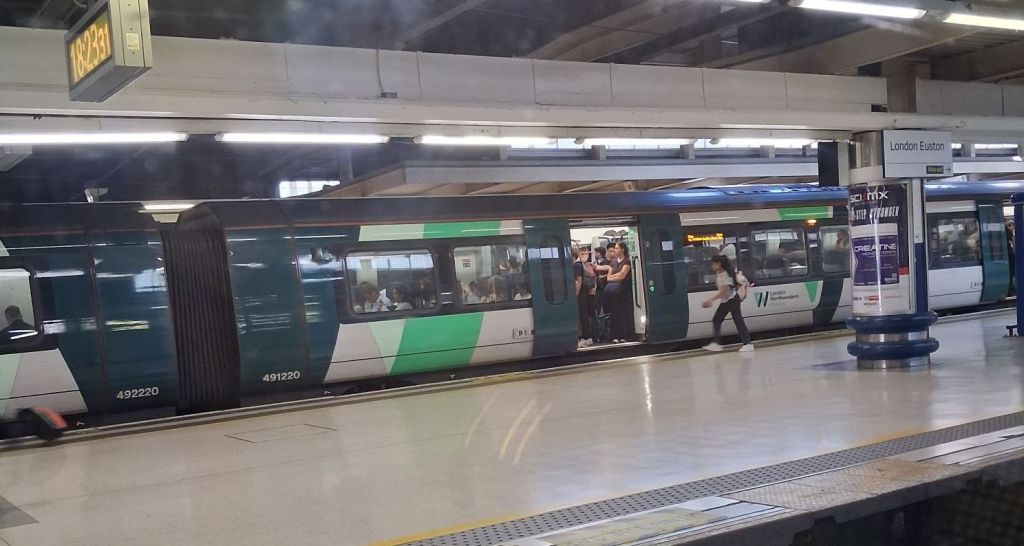
Waiting at Euston

It was a weekend of firsts, for all of us. It was the boys’ first long distance train ride, first time in London, first Black Cab, first West End show. It was my first, and last, Uber. It was also, the first time on the London Underground for the kids, and it did not go well.

We were staying at the Kings Cross Plaza, quite a walk from any tube station but I was absolutely adamant that we should have the experience of the London Underground. It would be fun. It wasn’t.

The nearest tube stop was Russel Square, so we walked there. I was particularly looking forward to showing the kids the steep long escalators that go so far down that you cannot see the bottom. Russel Square is not the station for that sort of thing. The platforms being accessed by lift. A very busy crowded lift as it happened. It took us a while to figure out how to buy tickets too. The whole system is geared up for using contactless tickets. You just present your oyster card, phone, or bank card to the gate and it opens for you. There was very little provision for passengers traveling with children that did not have oyster cards, mobile phones, or bank cards.

When we did finally make it down to the platform, it was quite exciting. You could hear, even feel, the rumble of the trains, the whoosh of air as trains whizzed through the tunnels, and that musty old ozone smell that is unique to the London Underground. This was what we’d come for.

The first train burst out from the tunnel and slowed to a screeching halt. The doors slid open for us to board, but we couldn’t, beyond the door was a wall of people, several layers deep. There was no boarding that train. We let it go and waited for the next one. It was the same. We observed the locals forcing their way in to the carriages and after watching the third train leave without us we resolved to give it a try.

We (wife and I) each took a firm hand of a child, straightened our backs, and took a deep breath as yet another train drew in to the station. I had the hand of the eldest, and as the doors opened, he stepped aboard along side his mother, who held tightly the hand of our youngest. Without warning. The doors slid shut, separating me from my assigned child, and my youngest from his mother. I pulled him away from the platform edge.

“I’ve got him” I shouted to my horrified wife, “Meet at next stop!”

And then they were gone. The train whizzed out of view and we had no option but to wait for the next one. I shudder to think what might have happened had the kids boarded the train together first, or been left on the station without us.

Onboard the train, our separated family unit was the talk of the carriage. All were disgusted that this could have happened. Where was the warning that the door was closing? Where was the guard? I don’t know why I didn’t make a complaint, this was a serious breach of railway safety rules. This one event would have been enough to put the kids off London, but that was only the outbound trip, later, we had to return to the hotel.

It wasn’t until much later that we returned to the Plaza, by then it was late, after eleven, and the platforms and trains were all much quieter. I think we used Leicester Square, and there was a relaxed friendly atmosphere as most passengers were wined and dined and returning from a pleasant night out. The train came in and we boarded without incident.

Just up from us was a young man sat hunched, his head in his hands. I only really registered that he was there at because it was just as I was looking in that direction that he suddenly belched the content of his stomach on to the carriage floor. It stank. We got off of that train and waited for the next one.

Larping a Commute

The thing that inspired this post to begin with was a recent trip to London for a few days, and my usual hotel haunts were unavailable so I ended up staying further out. Baker Street is well within walking distance of Bloomsbury but I rather liked the idea of pretending to be a beleaguered weary tube commuter for a few days. Larping, for the unitiated is Live Action Role Play-ing. I doubt that I will do it again.

Its nice for cities that have metros, they are fast and efficient, but in rush hour, they really aren’t fun. They are hot and sweaty, the London Underground has a constant temperature of 50 degrees Celsius, or there abouts, which is why it always feel so warm, even in winter. Even before I arrived at the station, there were crowds of people overtaking me on the pavement, a stream of people, a river, nay, a raging torrent of commuters.

Through the station gate and you have to make a payment to gain access to the trains. Everyone knows where they are going and work on autopilot. You hear the sighs from behind as you fail to complete the card payment at the gate in one fluid motion, adding crucial seconds to their journey. Baker Street station is on the junction of 5 lines, interconnected by tunnels and bridges and subways and walkways. Its easy to get turned around and find one’s self about to board a train in the wrong direction. Luckily, during rush hour, there are plenty of trains, but they’re all full, and it takes a few trains before one appears with a gap in the door way to accommodate you.

The ride itself is bouncy and awkward. You don’t want to catch anyone’s eye in case it got weird. I don’t know what would happen if that did occur, but I feel like it would be bad.

Baker Street to King’s Cross is three stops. More than enough to get the taste of a central London commute, and when you get there, you follow the swarm up the escalators and along the wide subterranean avenues. On the first day of my larping, there was some sort of delay, and crowds were gathering, hundreds of people penned in line like sheep. Its always a relief to break out in to the open air again, and promise ourselves, never again.

Please Can You Help Me

On the last day of this trip, after checking out, I made my way to the office for the last time. I had planned to take a photo of the commuters penned in like sheep to illustrate this blog post, but it was clear so didn’t bother. I took a wrong turn however and found myself walking beneath and along the undercroft beneath the magnificent train shed roof.

As I wandered past the shops and outlets beneath the railways of the international rail services, marveling at the Victorian opulence, my eye met that of another. To be fair, it was the pie that I noticed first. A disheveled young lady with a thick blue coat and backpack was eating a pie. She changed her course to intercept me. I had every intention of walking away but she said something and I had to stop.

“Please can you help me” She said.

Something about big cities and crowded spaces with strangers sort of shuts down your responsiveness to others I find. Like not wanting to make eye contact with others on the train. Whats the worst that can happen? Well, they might want something for a start. I was more than prepared to mind my own business and go about my day. For a moment, I was reminded of the movie Liar Liar, when Jim Carey’s lawyer that cannot lie character was asked on the street “can you spare any change”.

If I replied with anything other than yes, it would have been not only a lie, but it would have been a heartless lie. So I stopped and turned to face her. “What help do you need” I said.

She was very softly spoken and seemed to choose her words cautiously and deliberately. I do not know if she was recalling a well practiced script or thinking on her feet.

“Thank you for stopping and talking to me” She said. “I am homeless and destitute and I need to get money for a ticket”.

I am accustomed to this play. We have it up north, but its not usually a disheveled young lady asking politely. More often then not its a coarse “Scuse me pal you haven’t got twenty pence for the bus home have ya?” spoken in an accent not unfamiliar in one of the larger cities to the western edge of Lancashire.

“How much do you need?” I asked her, and she told me. It wasn’t a trivial amount, nor was it excessive, so I gave her what little cash I had on me. She thanked me, and said bless you. And its difficult to fathom because her expression was unchanged throughout the entire encounter, until I said “Bless You” in return.

Its almost better to believe that I had been scammed out of a small amount of money, than to think that there really are destitute and homeless people dependent on the generosity of commuters on the London Underground.

We don’t see that up north, not in the rural communities. There is no one around to ask for money for a start, and its difficult to imagine being asked for help every day without having to harden the heart a little. As useful as the underground is, I am glad I use it rarely.

The Follow Me Bridge

They call it the Follow Me Bridge because of the sound it makes when you cross it alone. Each step makes a sort of reverberating echo sound that for all the world sounds like someone is following you.

When you’re walking home from the pub late at night, or you’ve just got off the last train of the day on some dark damp wintery evening, and the town is all silent except for the low hum of the motorway in the distance. You’re alone, everyone else is home where they belong, tucked in beneath their cozy blanky, binge watching Netflix. Your own footsteps on the tarmac are the only sound to break the ambience until you reach the bridge.

It takes six or seven steps on the old steel framed bridge before you register it. The sound of another’s feet. You can’t help but look over your shoulder. No one is there.

You press on. The second set of feet follows on. You stop. Check again. You are definitely alone. Onward to home and safety, you pick up the pace. The followers feet match yours still. You halt again, ears pricked. Now there’s only one set of feet to be heard on the bridge, and they can’t be yours, your feet are planted firm.

A warm breath on the back of your neck, a long sigh in your ear. You don’t look back, but you know you’re still alone

Everyone knows the sound of the Follow Me Bridge, when they think they’re crossing it alone.

Unit 1000

I chose Saturday 13th September as the day to visit the Manchester Museum of Transport for two reasons. Firstly, it had only recently become a place of interest when I learned that it houses the prototype Metrolink unit and I wanted to cross it off before I forgot about it. And secondly, we were visiting family in South Yorkshire that day, and living as we do in North Lancashire, the museum is a mere ten minutes out of our way. Roughly half the population of Manchester however, chose Saturday 13th September to visit the Manchester Museum of Transport because it was free entry. We are not the same.

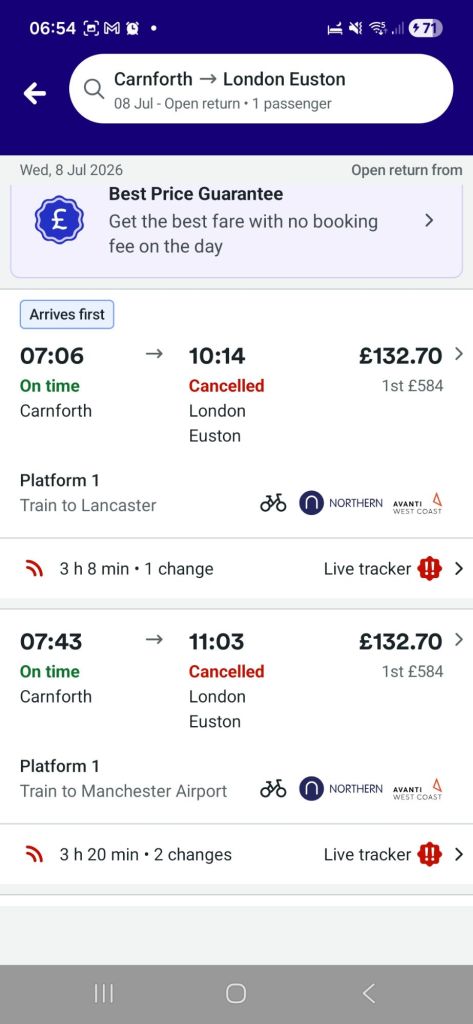
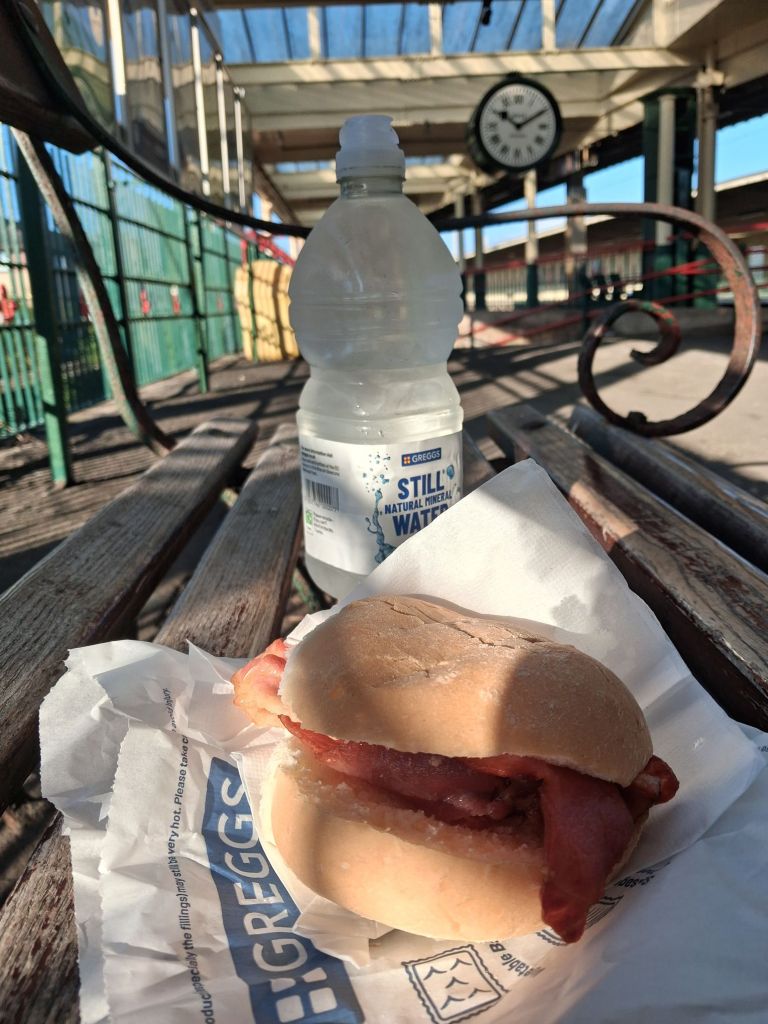
The plan was to get up early, have Breakfast at Truck Haven and get to the museum in time for the doors opening at 10am. We achieved this, more or less, arriving only thirty minutes late [Insert Avanti West Coast joke here].

Not gonna lie. Parking was a problem. There is no visitor parking. And as mentioned above, it was free entry, so that may have attracted a lot of extra visitors. There is however a retail park just around the corner so it all worked out in the end.

None of that has anything to do with the main event. The Metrolink unit that I wanted to see.

When it opened, the Metrolink network was the first new tram system since the Dearne District in 1933, and it was very exciting at the time. A revolution.

Unfortunately, Manchester Museum of Transport suffers the same space issue as Crich and many others. They don’t have the space to show off all of their excellent exhibits to the full, and the presentation of the Metrolink unit suffers because of it.

The Metrolink unit was set up parked in a mock tram stop and you could board it, explore, sit in the seats etc.

There is only half a unit though, these are two car units. A large mirror inside cleverly provided the illusion of the second half.

The cab is accessible, but it’s stripped of all equipment.

And that’s pretty much that. Space limitations prevent getting a good look at it. Being situated next to a wall, the undercarriage is concealed by the platform, and access to the other side is prevented by barriers and other exhibits.

It would have been nice to have a proper look at the thing. Had it been a whole unit, with a proper cab, and to walk round it, inspect the bogies and under floor equipment. But it is what it is.

The rest of the museum is worth the visit, and they operate vintage buses to connect with other museums in the area. There is also a proper tea room where they serve proper tea in a proper mug.

The Greatest Gathering

When I was a lad, I had a dream. The thing I wanted most. Not for fame or fortune, or even for world peace or anything like that. Not even for a kind word from that girl in class that I seem to remember that I quite liked at the time, and whose name would probably come back to me if I gave it a minute. No. What I wanted most was the ultimate railway exhibition experience.

I think I’d been to Crewe Open Day. It must have been about 1990. And my mind was blown by the number of trains that were concentrated in one location. But it wasn’t everything, my mind wasn’t quite blown enough, and I imagined how it would have been better had I curated the event myself.

What I wanted, was everything, in one place. More trains that you could ever possibly hope to ever see and appreciate in one day. Trains from across time and space. Trains from history, and trains from the other side of country. This weekend (1st August to 3rd August) that dream came true.

No. I didn’t curate my own rail event. Someone else curated the ultimate rail exhibition for me. That event, was called the Greatest Gathering, and I took a lot of pictures. Some of which I will share below.

Getting There

We drove to the event the night before and stayed at the Holiday Inn. I’ll have a bit of moan about that at the end – I have notes. The event was already sold out for the Friday and Saturday by the time I’d heard tickets were on sale, so I could only get tickets for the Sunday, so I thought we could make a weekend break of it in sunny Derby.

Transport was organized from the train station using vintage buses. Our Vehicle was a Volvo Plaxton B10m. Its always sobering when a particular make and model of a vehicle becomes considered to be vintage, or a museum piece. These buses were the buses I would catch to work not a quarter of a century ago. Ouch. Still, it was good to relive them.

The Event

There was quite literally too much to see. So I will just dump some of my better photos below and add a bit of commentary here and there.

I feel like I should know what this is, but I don’t. Its a shunter, in intercity colours, but not something I would expect to see in on a real railway. Very cool though. The cab reminded me of an old derelict NCB shunter that was stationed at Hickleton Main Colliery when I was very little.

The inside of a Pendolino. I’m a regular traveller in to Euston on these, but it was interesting to see what they looked like without people standing in the vestibules.

It was interesting to see a class 23 here, what with all them being scrapped 40 years ago. This one is a rebuild. The 37 was open to the public to enter the cab apply power, pull the horn, that sort of thing. Wonderfully noisy.

A few specimens of hybrid power. Electro Diesel locomotives. They run either diesel, or external supply.

There was a ride on a steam train. Always good fun. Unless you get ash or grit in your eyes.

There was a ferris wheel. They say that your tolerance for height diminishes with age. I believe them. I can honestly say I will be very happy if I never go on another ferris wheel. Kids loved it.

Electric Multiple Units

Food was a disappointment. There were loads of food stalls to choose from, but the queues were long too, so we settled for a burger. There was a also a mobile bar, with a healthy queue as you might imagine, but when I was finally served I was told it was zero alcohol drinks only. Turn the other cheek and all that.

The toilet facilities were quite excellent though.

There was a selection of High Speed Trains. With the HST power car (Intercity 125), class 91 from the Intercity 225, a Pendolino class 390, A TMST Class 373 Power Car from the Channel Tunnel services, and a green Deltic for good measure.

The place was full of Class 66s. I see about a thousand of those any time I go near a railway so I wasn’t paying that much attention to them. But I did leave the event somewhat disappointed that I hadn’t seen a class 59. I’d really hoped that I would see a class 59 up close but I left empty handed. I only realised later that there was one there and that I taken a photo of it.

One of the highlights for me was the freight diesel section, mostly in BR blue. This took me right back to my spotting days.

There was plenty of steam to be seen. It was particularly odd to see Fly Scotsman getting so little attention. Here is a locomotive that we drove across dark country lanes to see stop and take water in the Yorkshire dales when she first returned to the mainline. We followed her to York for her first exhibition. We queued for an hour in County Durham to get a tour of the cab and walk through the tender. Yet here she was, alone, visitors walking by like she was a regular dumpster.

Another one of the highlights. Brand New class 99.

The Pacer and Sprinter drew more attention than you might have expected. A blast of pure nostalgia.

Abrupt Closure

With so much left to see, the big hand tolled 4 o’clock and the public address system blarted out that the “even”Greatest Gathering was now closed. Sod off!”

It was a bit of a ‘Release the hounds’ moment. There was so much I hadn’t seen. We didn’t see the model railway or the main stalls. I had managed to pick up a small item but I wanted to see the traders. I wanted to see the model railways. There were exhibits that I knew were in attendance but hadn’t seen. The class 398 Tram-Tram for example. And so many others.

So. Sensing that the security team was about to turn nasty. We obediently made our way to the exit. We did, in the end, find the model railways, but they were packing up and we were rushed through.

Would have been nice to spend a bit of time in this exhibit, looking at the layouts. I’m planning a model railway of my own. I need inspiration.

On the Way Out

Finally, as we were being herded toward the exit, I found one of the sections I knew I’d missed. The electric locomotives. In particular, the unique class 89. I have a couple of stories about the class 89.

On the way out we crossed an imaginary line, a point of no return where, once crossed, there was no re-entry. It was here that we saw an elderly gentleman pleading with security personnel, begging them to let him find the group from which he’d become separated. There is a fine line between crowd control and being a dick. This maybe the umbridge at the lack of a bar speaking, but I saw crowds of football hooligans in the eighties being corralled on to the specials by mounted police treated with more civility than the frail and inoffensive railway enthusiasts at the end of this event.

The Hotel

I’m not one to moan relentlessly, but as we were leaving the hotel on the Monday morning, we were asked about our stay by the receptionist. We said everything was great. She said “Really?” Like she didn’t believe us.

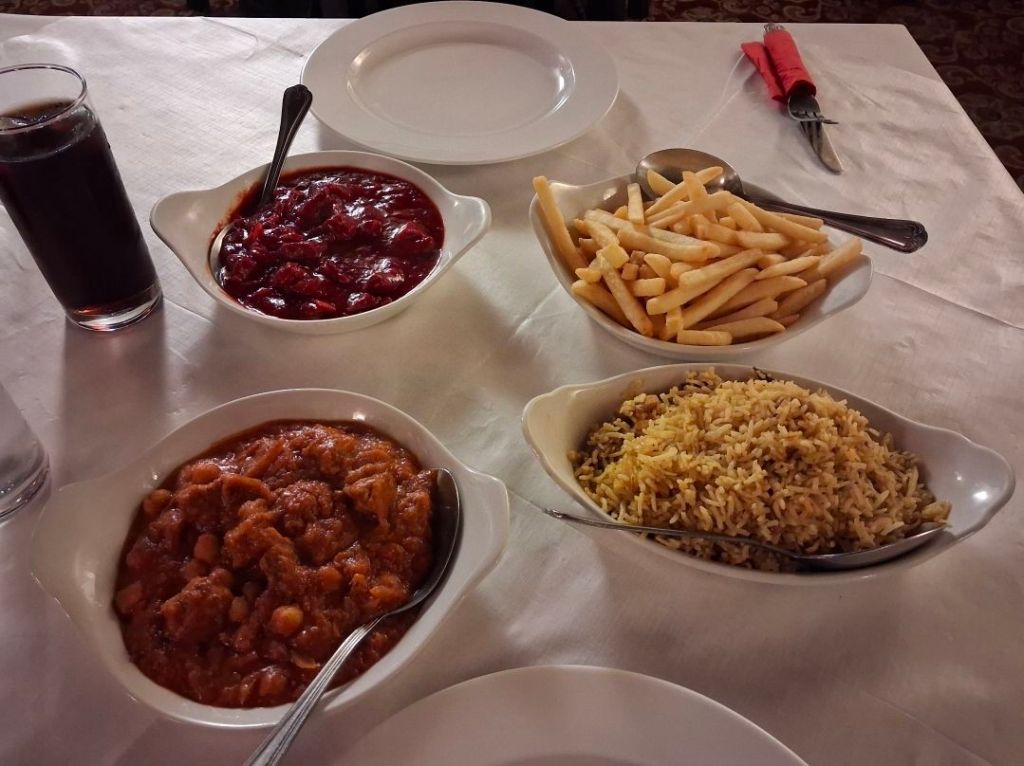
Ok. So the hotel was busy. It was full of mostly trainspotters. I’ve never seen that before. But it was fine. The food was nice enough. I’d had a curry, and though I’ve been spoiled by the curry experiences on offer down on Drummond Street next to Euston Station, it was still an alright curry.

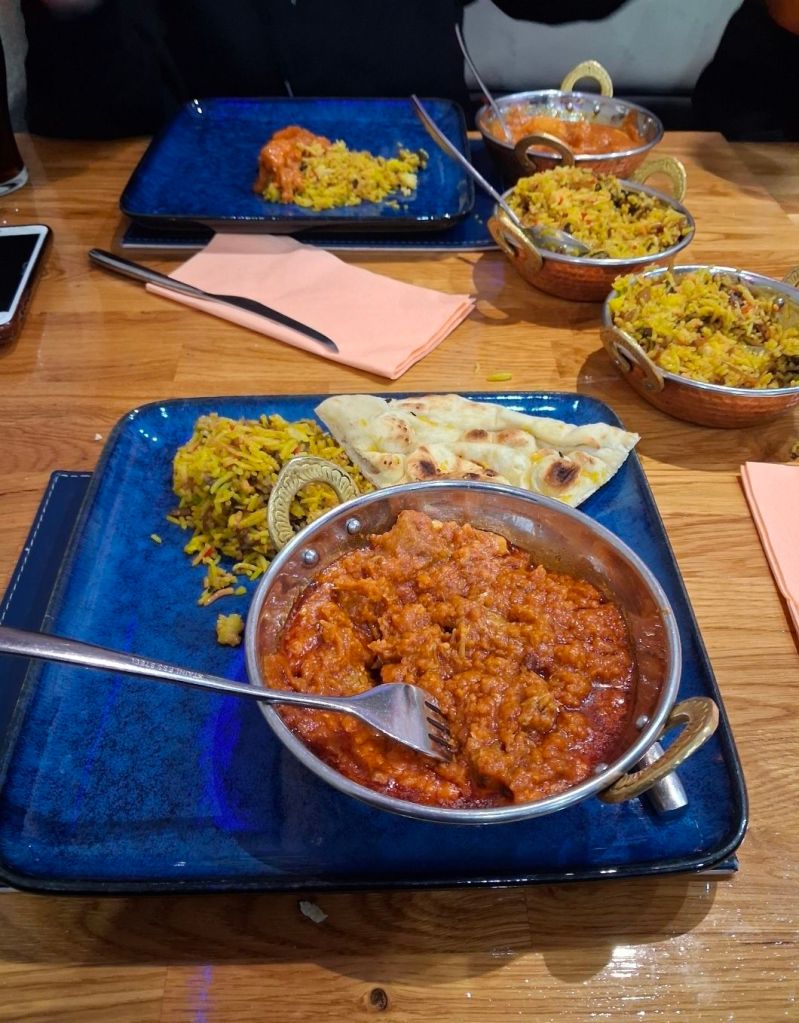
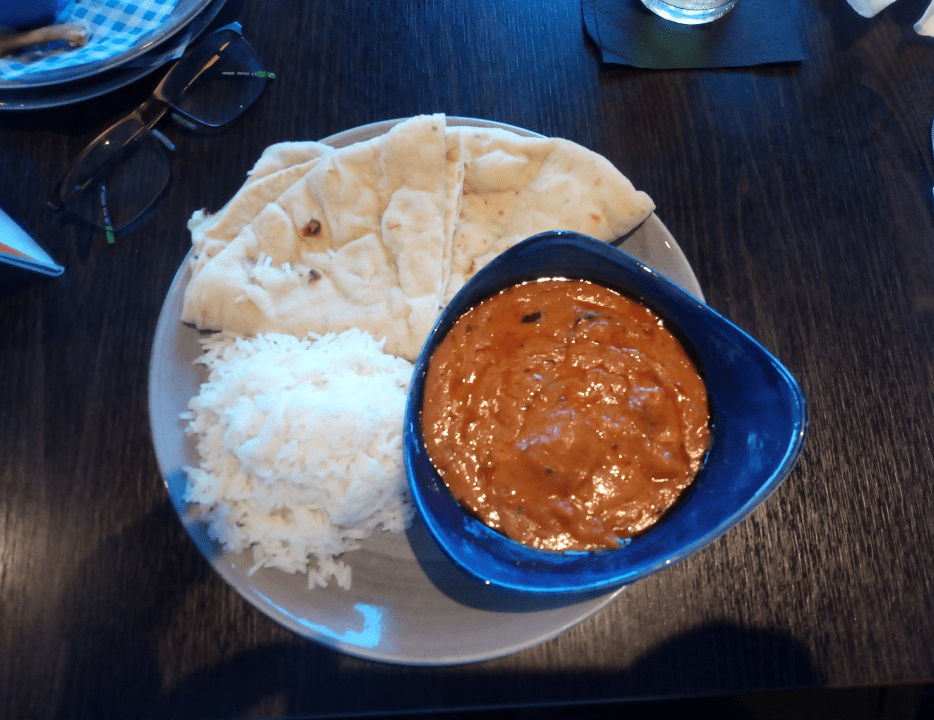
A Chicken Makhani for £16.50 – Marinated chicken breast in a rich curry sauce, served with basmati rice and sourdough Naan. 1080 kcal. I am tempted to look up the recipe for this one. The other food was alright. The kids had pizzas. Cheese Toastie and chips, also not bad.

Woodfire wings for £7.95 – BBQ mesquite-flavoured chicken wings served with a garlic mayo dip. 586 kcal. I’d heard of mesquite from The Simpsons, so was pleased to try these. Its maybe time to investigate buying a smoker.

The breakfast though. An all you can eat buffet, included in the price of the hotel. There was no egg, no sausage, no hash brown. There was one slice of bacon left, which I had with a slice of bread. Bread that, and I hadn’t noticed at the time and only noticed in my photo, had the impression of finger marks. Grim.

There was me thinking the grimmest part was the finger nail clippings on the hotel room carpet. Best not dwell on things of that nature.

All in all. a great time was had by all.

Trains in the Attic

I was probably about ten years of age when my mate’s dad proudly showed off his model railway collection. Both my mate and me were seriously fascinated by trains at the time and on this one occasion while we were playing trains at his house, my mate’s dad asked if we wanted to see his own trains. Naturally we said yes.

It was very much a look don’t touch sort of thing. I was known to be clumsy and my grubby hands spoke for themselves. But anyway. Box after box emerged from attic, and each box contained one locomotive or another in pristine condition. And not just trains, but wagons and carriages too. Station buildings and unbuilt kits of village churches and corner shops. He even had a large collection of minitrix, the road system that went alongside the trains. I was super impressed, and I decided there and then that when I grew up, I too would have an attic full of model trains and railway kits packed away never to be enjoyed.

Well. I am all growed up now, and with very little effort on my part, I achieved the dream. I too have model trains boxed away in the attic. But now that I have this, I’m not sure that its really what I want. Model trains are supposed to be enjoyed, not stored away until some distant descendant sends them to the landfill or job lots it all on Ebay once we’ve left the mortal coil. No. Its high time I had a model railway of my own.

Six years on from that epiphany and I’m still no closer to enjoying my collection of trains. Simple truth is, I don’t know what I’m doing. These things take a lot of planning. You need baseboards and electricals and plans and ideas. I’ve got none of that. All I have is boxes of trains, some of them are mint condition, still in the box. Some of them are massively in need of repair, having belonged to my own father when he was about the age that my youngest son is now. And that’s when it struck me. Before I begin my railway, I will need a fleet of working trains, and a lot of my trains need restoring.

This one for example. It used to sit in the siding on my old teenage model railway. Its one of two carriages that I never saw running properly. Having belonged to my dad, and being heavily played with by the looks of it, it was already in a poor condition when it was passed along to me. But I find the above image mesmerising, there is a sense of scale here that I scarcely believe I took the image myself with an inexpensive smart phone. I could almost step in to it, and climb aboard. It deserves to run again. It demands a restoration.

But what would it take to get something like this running again? The front coupler is knackered and will need replacing with something more modern. There are details broken off from bogies that will need restoring, its supposed to have a third rail contact shoe for picking up electricity from the power rail, I don’t know if the model even had one of those to begin with, but it should have one nonetheless. The buffers are missing. The whole thing is filthy, there is chipped and worn paintwork. By the yellow splashes on the window, I’m guessing that this has been touched up at some point before it came in to my possession, which would explain why it looks nothing like the other examples that I have found of it online.

And this is just the dummy car, the unpowered trailer.

The motorised car is in an even sorrier state. Its missing the motor bogie, and its missing huge chunks of the body. Part of the undercarriage has a hole burned through it, possibly as some sort of repair in the distant past. The roof is distorted, either by age or heat, and its no less filthy than the trailer car. Plus we’re also missing the glazing, and probably the interior detail, if this model ever had that to begin with.

This is going to be quite a project, and have some research to do.

About Those Portable Door Locks


That thing when you’re traveling alone. You book what looks like a nice hotel, but when you get there all you can think about is Roald Dahl’s Tales of the Unexpected.

It’s not even that there is anything wrong with the place, it’s just that it’s a little empty considering that you supposedly got the last room. The staff are pleasant and attentive, but it’s just too quiet. Stuffy, even.

So after checking in you take your luggage to your room and freshen up, before going back down to the restaurant for a bite to eat. Again, the place is empty, except for the waiter, the guy behind the bar, and whoever mans the kitchen, and of course the mandatory two ladies of a certain age enjoying a cocktail.

You order yourself a drink, a pint of something local, and its brought over to your table on a little paper doily. It has a strange taste taste but you think nothing of it, it’s not that it’s bad, it’s just an unfamiliar brew.

So you finish your drink and you order another one. This time, the bar man brings along the evening menu and without saying a word, he places it on the table next to your drink. Its been a long day and you haven’t eaten since you left the safety and familiarity of your hometown so you pick up the menu and review the options. Perhaps you’re more tired than you might have realised. The words are blurred, difficult to read.

Not recognizing much on the menu, which doesn’t even list prices, you keep it simple, and you order the Rabbit Cacciatore. It comes quickly enough but there isn’t much of it, and the pint you wash it down with still has the strange taste. You order something different for the next one.

By now, the two ladies of a certain age enjoying a cocktail have left and it’s just you and the bar man. His attentive gaze could be mistaken for willing an early finish, but you decide to stay for a few more pints and order the same again; you receive your pint with a reticent smile from the bar man and take it to a seat by the window where you plan to enjoy the rest of your evening watching the city go by.

Almost immediately, you catch the eye of the homeless guy sitting on the pavement at the entrance to the Underground in the cold February night. The swish and cosy ambiance of the three point five star rated hotel and restaurant is shattered, and you instead decide to hastily finish your pint and retire to your room for a bit of bedtime telly.

By the time the lift delivers you to your floor, you’re exhausted, drowsy even. You enter your room and close the door behind you, being sure to lock it. Too drained even for a bit of ITV, you recline on to the bed and immediately drift off soundly asleep.

But you don’t sleep long. Soon, there are hushed voices outside the door, and the sound of keys jangle, the door handle crunches the spring inside. Someone, mistakenly, is trying to enter your room.


You sit up, except you don’t, you can’t. You’re pinned to the bed. You call out, but hear nothing but a hushed groan, your words slurred as if drunk, drugged even. You’re heavy. Is something on top of you, is someone in the room? For a moment, you panic, but then it’s over. You’re awake and the room is empty.

“Sleep paralysis is when you can’t move any part of your body right before falling asleep or as you wake up. It happens when your body is in between stages of sleep and wakefulness. An episode is temporary and only lasts for a few seconds to a couple of minutes. It’s a type of parasomnia.”

Sure. Terrifying. But just a dream. But it does raise the interesting question: has your suitcase been moved? Seriously, was that how you left it? Are you sure?

By the fourth or fifth time you’ve done this, you decide, paranoia or not, you need peace of mind, even if it does come in a pretty but blurred pink case.

Can’t believe they didn’t think of these before, Del Griffith and Neal Page sure could have done with one.

For the Love of a Good Culvert

“And that’s why they think you are weird”.

It was the voice in my head that said it, but where that originated I’ll never know. Was it my own self loathing, the collective subconscience, God, a stray thought from my wife detected via ESP?

But yes, we were travelling 160 miles to see and photograph a culvert. In my defence, it wasn’t just any culvert, it was where I used to play when I was about six years old.

Possibly still in the weird territory, but this was basically a place where a number of convergent streams dipped underground, and had formed a wide basin with shallow water that was perfect for little feet to splash about.

I hadn’t been there for about thirty years, and even then, the splashing about was ten years before that. But I’d had an idea for something creative that got me thinking of this culvert. In my mind’s eye, this was an idyllic place of sunny days and happy memories. Something Bernstein Bearsy. How nice would it be to go back?

Long springs and longer summers, we played all sorts of games on the grassy field beside it, jumped in the water, built dams. We brought our Transformers and Go-bot toys and waged war in the canyons and long grass. That’s what I remembered.

The reality was actually a bit grim.

It was smaller than I recall, and overgrown. There was no way that this was a place frequented by little feet any more.

Perhaps if I had visited in Summer, it might have been a different story, but this was not what I wanted to see. The wide river basin was barely a foot at its widest. The vast flood plain where we made our base was just grassy mud. The sound of children laughing, gone, as if it never even were.

They do say that you can never go home.

Start a Blog at WordPress.com.

Up ↑