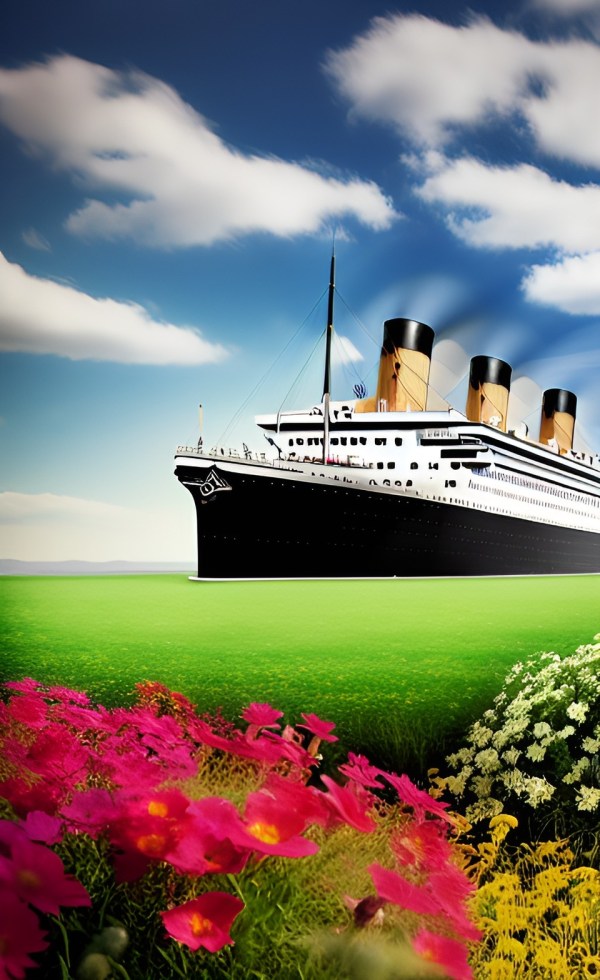
There is an old episode of Doctor Who that starts with the Tardis landing on the Titanic. His assistant, I forget which, had persuaded him to take her on an opulent voyage so he honed in on the Titanic and off they went, but they didn’t land on the deck, nor were they in Southampton, and it wasn’t even 1912.
The Tardis had materialised atop an outcrop of sandstone in a hillside clearing, surrounded by dense ancient woodland. No sign of docks or sea or ladies in hats, just trees and scrub, and creatures unseen rustling in the ominous undergrowth
“Where’s the ship Doctor?” The assistant shrieked. I’m thinking it was Tegan.
The Doctor, Tom Baker’s I think, hushed her and listened carefully to the wind whistle past his curled ear. Then he licked his finger and held it in the air.
“Ah” He said at last. “Seems we missed the sailing”
“No kidding, so where’s the ship now?”
“You’re standing on it”
Beneath their feet was the weather worn sandstone lip. It was nothing remarkable, much like any rocky outcrop in any clearing in any forest.
That spot upon which the Doctor and his assistant now stood, we learned, was the very same spot where the Titanic had come to rest on that fateful night in 1912. And it was that same spot where it remained while the years took their toll. The iron hull and super structure slowly corroded away and the sediments settled above, hiding all trace of that legendary watery grave.
Europe and North America drifted apart over the aeons until the process reversed and plate tectonics brought the two continents back together where they formed a new mountain range that would come to dwarf the Himalayas, had they too not succumbed to time and long since reduced to gentle undulations beneath the new Antarctic Ocean.
One hundred million years brought this spot of deep ocean bed back to the surface, and millennia of ice and wind and rain chipped away the layers of sedimentary rock until finally, the iron remains of the sleeping leviathan once again saw the light of day.
In the yellow sandstone on which they stood, a thin band of iron ore stained the otherwise uniform rock. Fifty thousand tons of metal, and 1500 souls, now a barely perceivable geological curiosity.
Then there was a scream and off they ran to their next adventure.
Time is deeper than any ocean, and there is way more hidden within it. Every day it seems that new histories are being washed upon the shores of our knowledge. Tidbits of antiquity, seemingly inconsequential to the untrained or uninterested eye, but putting them all together, a picture is emerging.
On a treasured but dusty bookshelf in my office I have a series of books that I have had since childhood. It includes such wonderful titles as Alchemy the Ancient Science, Dream Worlds, Magic Words and Numbers, Ghosts and Poltergeists, among others, but there is one book in the series that I don’t think belongs. I’m reminded of Winston’s interview question in Ghostbusters.
Do you believe in UFOs, astral projections, mental telepathy, ESP, clairvoyance, spirit photography, telekinetic movement, full trance mediums, the Loch Ness monster and the theory of Atlantis?
Janine Melnitz – Ghostbusters
One of those things is not like the others. I’ll admit, I’ve had this movie quote in my head for five decades and it never struck me before. For the longest time I had no inclination to believe that the city of Atlantis was anything more than a myth, a legend, but that’s hardly surprising when the matter is always listed with other fringe topics in the book shop.
The YouTube channel Bright Insight has a great video outlining the evidence to support the Eye of the Sahara, the Richat Structure, as the location of Atlantis, I won’t go into detail here, but just looking at a picture of the thing and comparing it to the countless artistic impressions that have been created over the years forms a compelling case.
Atlantis is a curiosity, like Near Death Experience, Alien Abduction, not really given much credence, but why? Plato wasn’t, by all accounts, an attention seeking nutjob, why was it treated as anything but a historical account? I suppose it doesn’t help that Plato’s account was not first hand, it was passed down over 9000 years, so there was some room for error, but evidence is stacking up that there might be more to the story of Atlantis than mere parable or whimsy..
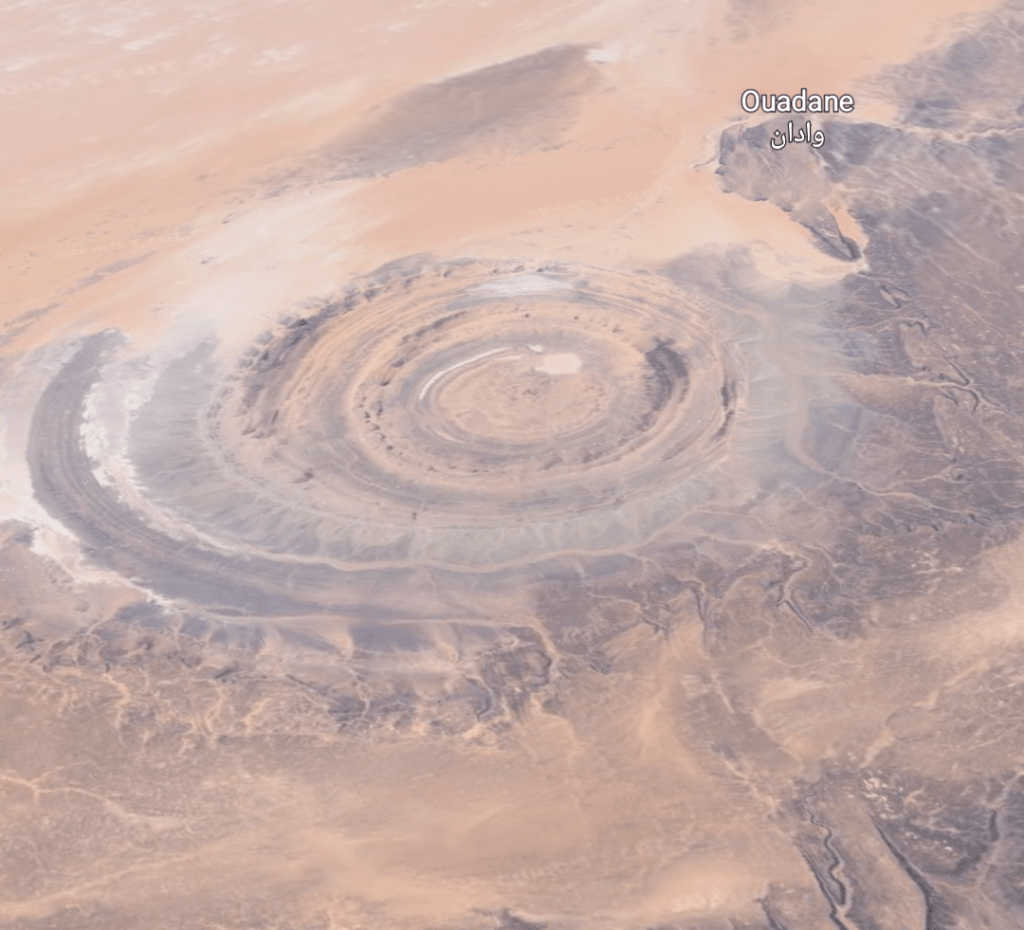
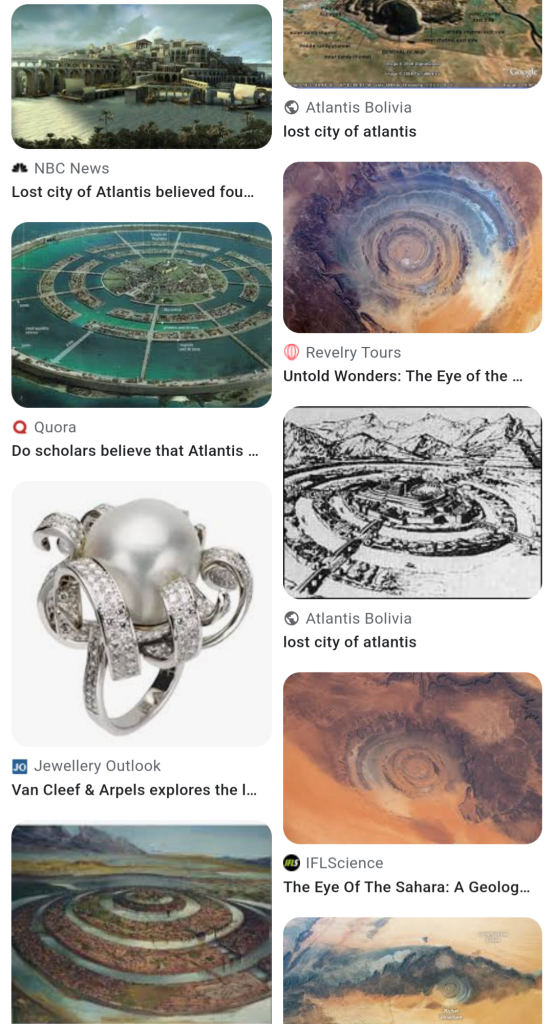
This isn’t exactly a “The hair proves it” moment, but it’s hard to dismiss it. It’s entirely possible that a deluge, of the type that is known to have happened often during the 12000 bce Younger Dryas, could have swept Atlantis off the face of the planet in one night.
I don’t think this is a myth anymore. Not now that the evidence for high technology in abundance, scattered around the megalithic sites across the world has been brought to my attention. The work of Graham Hancock and Randall Carlson, and YouTube channels such as UndiscoveredX and Bright Insight are doing a wonderful job shining a halogen torch on the historical inconsistencies, and I’ve only just begun to scratch the surface.
It’s spring as I write this, and as I looked out of the window of a holiday let, across the tree tops of the steep hill of the park, and out across the water to the timeless view of Scottish mountains, I am struck by the enduring permanence of the view. The mountains carved out from solid rock by miles thick glaciers. The murky depths of choppy brine that flow to the ocean. Centuries of farmers have tended those hills, raised crops, driven their sheep. And centuries of sailors, merchants, adventurers, have plied those waters. An unbroken history, going back down the generations.
But then my gaze is broken abruptly by a thud on the window. A bumblebee ramming the glass brings a new perspective into focus. Against the backdrop of the seemingly eternal landscape, the ephemeral bee, brand new to the season makes its presence known. And the tree tops, over which I enjoy the view have recently been cut back. The bee knows not the date, it doesn’t know what year this is or what happened in the previous cycle. It is merely here and now. The trees are not what they might have been had they been allowed to grow, they will grow back, and they will be cut back again.
In this information age we have grown accustomed to knowing who we are and where we came from, the certainties of our past, the story of who we are, but is that an illusion? A lie? A cope? Does the bee have any doubts about its identity? Will it be remembered by the next colony? I have my doubts.
Just as the ship destroyed by Propsero’s magical storm sank beneath the waves and left no trace, so too the memories of the behemoth that was the Titanic will also vanish in time, but for those who know where to look, it’s mark will be found and understood.
The world turns and the crust churns. We cannot know how many shakespeares there have been, how many Einsteins, or how many Hitlers for that matter, if the passing millennia tear down all that we built, but the slate isn’t wiped clean every time. Some remnants remain to be found and understood, if we care to take a second look.
 Duggan's Dig