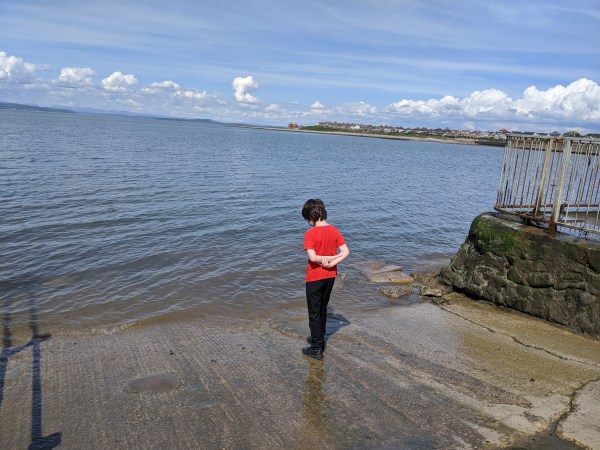
What do you want for Christmas? Dunno.
What do you want for dinner? Dunno, with chips.
What do you want?
It’s not an easy question to answer. I thought I knew what I wanted. I mean, something like that should be autonomic really, shouldn’t it? I mean, the heart wants what the heart wants does it not?
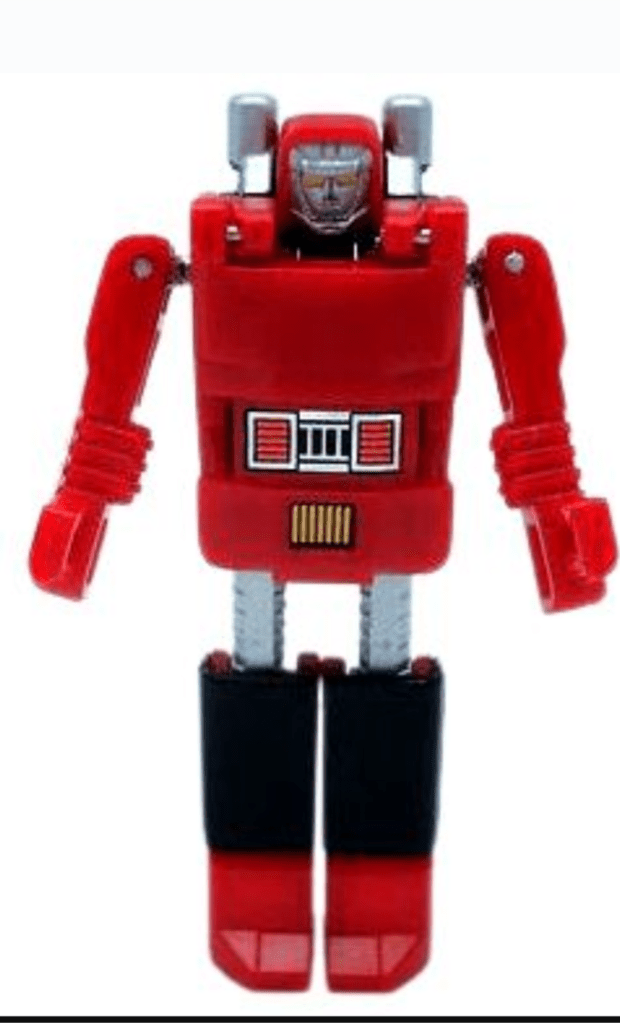
When I was a child I wanted an Advanced Passenger Train for my model railway. I wanted all of the Transformers and Gobots. I wanted lots of chocolate. I wanted to play video games, make video games even. I wanted to climb tall trees and explore derelict buildings.
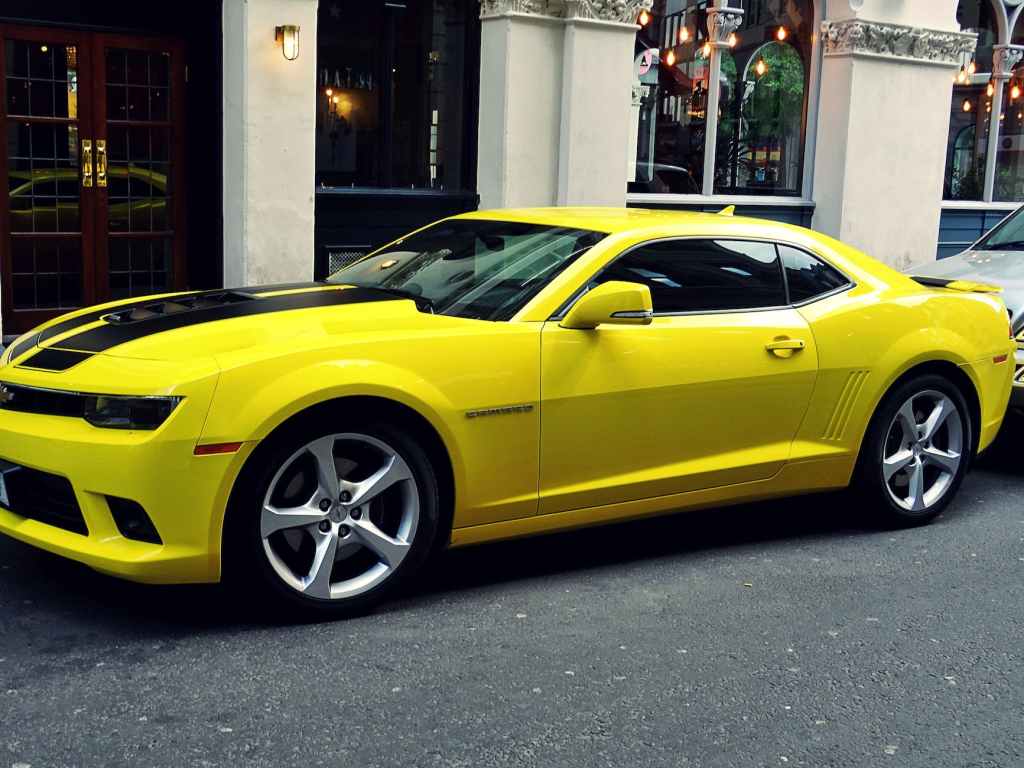
As I got older I wanted beer, and women, and more beer. Usual stuff really. I wanted a career, a home, a family, a wife, a car, and maybe a little bit more beer.

As you get older, I suppose that question gets more difficult to answer. At first I thought that it was depression. Then I thought it was a midlife crisis and all I needed to do was buy a sports car. And then I thought it was depression again, so I turned to Google for the answer.
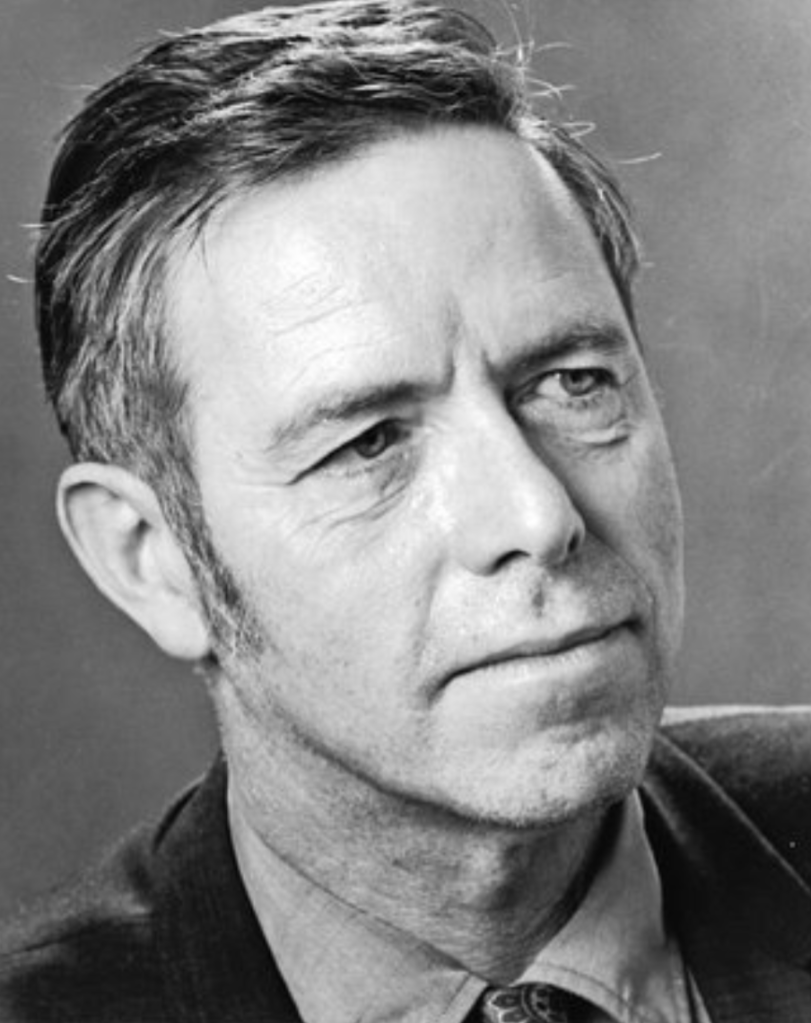
“Why don’t I know what I want?” I keyed into the search box. I reasoned someone somewhere was bound to have figured it out. The first result that caught my eye was a video by a chap called Alan Watts. I didn’t know the name but I recognised the voice immediately from the Cunard cruise ship advert that is doing the rounds at the moment.
I listened to the mesmerising voice of this English philosopher as he got straight to the point. What I heard was an eye opener, though it’s probably common sense to the more enlightened among us, my mind was blown.
When we don’t know what we want we have reached a state of desirelessness. He explains, more eloquently than I could dream, that there are three stages of not knowing. At the start, we don’t know because we haven’t thought about it. Then there’s the stage where were asked, pressed, on the matter, you want this and that, right? And we might say yes, to begin with. But then we realise that no, that’s not what we want at all. Maybe those things will be satisfying for a while, and that we wouldn’t turn our noses up at them, but really, they’re not what we want.
There are two reasons, he explains, why we don’t know what we want. The first one is that we already have it. The second is that we don’t know ourselves.
The question “who are you?” is the same as “What do you want?” I always thought of them as being diametric opposites, but that’s because I was for many years obsessed with Babylon 5.
We cannot know ourselves, if I’m understanding this correctly, because the Godhead cannot be the object of its own knowledge. It is a mystery.
I don’t know, uttered in the infinite interior of the spirit is the same as I Love, I let go, I don’t try to force or control. It’s the same thing as humility.
Upanishad said, if you think you understand Brahman, you do not understand and have yet to be instructed further. If you think that you do not know Brahman, then you truly understand, for the Brahman is unknown to those who know it and known to those who know it not.
Alan Watts
These are powerful evocative words and gave me much to think about.
He goes on to explain that when we give up control we have access to power that we can be trusted with and are one with the divine, but when we try to control our situation, we lose that energy because we are defending ourselves against that which we cannot defend.
We have to give it away and trust the universe because there is nothing to hold on to anyway. Everything is falling apart. We are going to die and leave not a rack behind. What we truly want is kind of irrelevant in the grand scheme of impermanence.
He goes on to quote Shakespeare, a few lines I was familiar with from Star Trek VI, but had never grasped the significance.
Our revels now are ended.
These our actors,
As I foretold you, were all spirits and
Are melted into air, into thin air:
And, like the baseless fabric of this vision,
The cloud-capp'd towers, the gorgeous palaces,
The solemn temples, the great globe itself,
Yea, all which it inherit, shall dissolve
And, like this insubstantial pageant faded,
Leave not a rack behind. We are such stuff
As dreams are made on, and our little life
Is rounded with a sleep.

William Shakespeare
From The Tempest, Act 4 Scene 1
Everything I recall ever wanting was for a future fulfilled, or a past revisited. But there is no past and there is no future. There is no time. There is only now. The infinite and eternal now. It is always now. Sufficient to the day is the worry of it. They should teach this stuff at school.
"Time is a tool you can hang on the wall, you can wear it on your wrist.

The past is far behind us, the future doesn't exist."
My youngest son spoke those timely words, seemingly out of nowhere, after a long car journey on which I’d considered the matter of time and the eternal now. It’s from a YouTube channel called Don’t Hug Me I’m scared. Deep stuff.
I am a long way from satori, but I did have to laugh on that journey as I mulled over and over the unknowableness of the Brahman. If to know it is to not not know it, and to not know it, is to truly know it, then doesn’t knowing that I don’t know it mean that I do know it, except that I can’t because knowing that I know it because I don’t know it means that I can’t know it because I know that I don’t know it.
Bonkers. All of it.
I still don’t know what I truly want, but I do now know that I don’t know what I want.
 Duggan's Dig