Pardon me, if you will, while I lament the Christmas dichotomy.
I was not raised a Christian, but we followed the traditions. I was raised not to follow Jesus but to worship Santa, the bringer of train sets. It was only later in life that I picked up a bible and the penny dropped. Don’t do the things that are bad for you, sin, and you suffer the consequences of having done the things that are bad for you. It seems obvious now, but anyway.
It turns out that there are 137 of these sins, but the ones that raise their heads at Christmas are obvious.
Gluttony is the big one. At this time of year we open our gullets to all manner of lavish self indulgence. I enjoy that.
Carousing. For the longest time, carousing was the best part of Christmas. For me.
Envy, coveting, greed. Everyone seems to be having a better Christmas… perhaps, perhaps not. The media machine seems hell bent in giving us this impression.
Drinking and drunkenness, also bad. It’s expensive, gives you hangovers, ill health, and a bunch of bad decisions. I can see why this is bad. I usually spend much of Christmas day inebriated, imbibing glass after glass while I prepare the Christmas dinner.
I take pride in my roast potatoes. My roast potatoes could stop wars, end all suffering, all pain, all disease, all poverty, all hunger. My roast potatoes really are that good. Pride goeth before a fall.
But what’s the alternative? A low effort Christmas dinner? Steamed Turnips? Who wants that? Surely we are allowed in moderation to indulge but once a year, at least.
My roast potatoes are amazing, I’m told.
I will have to ruminate on this matter further. It is a proper dichotomy.
Not sure who to attribute this question to, I’ve been asked it by everyone. Colleagues, the woman at the chippy, my mam, the kids. That literally is everyone. And I heard someone on the train asking someone else.
Am I set for Christmas? 🎄
No. I don’t think that I am.
Sure. The tree is up. And we’ve got a dining table this year, so there is that.
Most of the presents are sorted for the kids. Not that they ask for much anyway. I haven’t wrapped them yet though.
We’ve done Christmassy things with the school. Church fate, tombola. All that stuff. Trip to the Panto for the youngest.
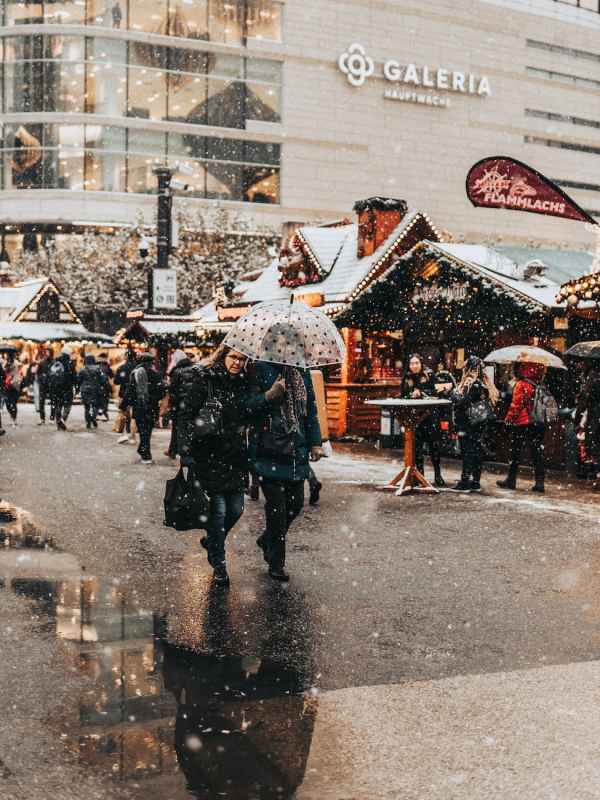
We’ve been to the Christmas fair. Endured the madding crowds that we can enjoy hot coal roasted chestnuts and hot mulled wine on the ice cold cobbles of a foggy medieval town while listening to street music.
We watched our first Christmas movie of the season, not Die Hard, but Scrooged. We recently watched Yippee Ki Yay at the local theatre and I’m all Die Harded out for now.
There will be other Christmas movies, Polar Express, Muppets Christmas Carol, and it wouldn’t be Christmas, legally, without It’s a Wonderful Life. I’m not really about the Christmas movies, it’s more about the ghost stories that go so well with the season, and the Nativity, obviously.
Christmas for me doesn’t kick in until the house falls silent on Christmas Eve. When the kids are finally asleep. When the last of the presents are wrapped and positioned under the tree 🎄, and I scare myself giddy watching the old M R James episodes from the BBC by the light of the tree.
But am I ready for Christmas?
Not particularly. Not even turkey dinner and work disco, and two ghost story productions (Casting of the Runes, and The Signalman, both excellent btw, go see them) have got me in the mood.
We still have to visit family and friends about the country. Still need a few pints with my drinking bud. We haven’t done the pantomime yet. We always try to get the final performance before Christmas, the atmosphere is fantastic.
But let’s get to the heart of the matter, the title of this piece. The Shuddersome Shopping Season. I just don’t understand it.
It’s one day, and everyone goes nuts. Christmas dinner is Sunday Dinner, but with more choices. I’d be lying if I said that I made pigs in blankets, sausage meat stuffing, coca cola ham, turkey, goose fat roast potatoes, honey glazed parsnips, extra buttery mash, roast rainbow carrots, cheesy cauliflower, baconised sprouts and chestnuts, and two types of gravy every sunday, but roast dinner is roast dinner. There’s no need to go crazy at the supermarket.
I can understand that some people will be feeding large family groups, catering to guests and having to buy extra, but the number of people eating is static, is it not? The people at the shop buying crazy amounts of food must surely be offset by the people that don’t need to buy crazy amounts of food because they’re being catered for.
I am keen, this year, to not do that. There will be Christmas Day extras. Smoked salmon butties for breakfast, plus the bucks fizz to wash it down, for example. And I will spend all morning in the hot kitchen, drinking wine, listening to Radio 2, while I chop the veg and thicken the gravy. I suppose by then, I will be ready for Christmas.🎄
I don’t want to be an AI bore but it’s here isn’t it, and there are questions to be answered. While publishers launch legal battles over AI systems being trained on their intellectual property I am concerned with smaller questions. It’s no secret that AI does not create, it plagiarizes so AI work cannot be considered original and unique, so I cannot claim IP ownership of anything it produces for me.
But that got me wondering, what about the prompt it used? Let’s say that I wanted to write a short story about a man tinnitus discovering that the buzzing sound that had haunted him his entire life was actually the ghost of a bumblebee that he trapped in a draw thirty years earlier. I don’t have time to write this story myself, I’ve got washing up to do, but I could put the idea, my idea, I own the IP on the story idea, into AI. What would the legal standing be then? It’s my story. If I used AI to calculate my taxes, it’s still my taxes.
I wouldn’t do this of course. I know that even my worst output on a very bad day is still better than AI, but curiosity got the better of me at the exact moment that I needed a block text to test the twitter character limit on my verified account. I haven’t even read this myself, but if the movie rights were ever in question, they are undoubtedly mine.
Can you write a short ghost story, 3000 words, about a man suffering since childhood with tinnitus, learning to his horror that the buzzing sound he’d heard his entire life was the ghostly cries of a ghost bee that tied after being deliberately trapped in a desk drawer.
My prompt
The Buzzing of the Bumblebee
The buzzing sound had been with him for as long as he could remember. It was a high-pitched whine that never seemed to go away, no matter what he did. He had seen doctors, tried different medications, and even tried meditation, but nothing seemed to help.
The man’s name was John, and he was 35 years old. He had lived with tinnitus his entire life, and he had learned to just ignore it. But lately, it had been getting worse. The buzzing sound was louder and more persistent, and it was starting to interfere with his work and his personal life.
One day, John was working in his office when he heard a strange noise. It was a high-pitched whine, just like his tinnitus, but it was coming from somewhere outside his head. John got up and went to investigate, and he found the source of the noise in a desk drawer.
Inside the drawer was a dead bee. The bee was small and black, and it was covered in dust. John had no idea how the bee had gotten in the drawer, but he was sure that it was the source of his tinnitus.
John took the bee out of the drawer and examined it. The bee’s stinger was still intact, and John could see that it had been crushed. He realized that the bee had been trapped in the drawer and had died of starvation.
John felt a pang of guilt. He knew that he should have let the bee out of the drawer, but he had forgotten about it. Now, the bee’s ghost was haunting him.
John tried to get rid of the bee’s ghost, but it was no use. The buzzing sound continued, and it seemed to get louder and louder. John started to have trouble sleeping, and he was always on edge. He was afraid that the bee’s ghost would drive him crazy.
One night, John was so tired that he fell asleep in his office. He dreamed that he was back in his childhood home, and he was playing in the backyard. He saw the bee, and he tried to warn it not to go into the desk drawer. But the bee didn’t listen, and it was trapped.
John woke up in a cold sweat. He knew that he had to do something to stop the bee’s ghost. He went back to the desk drawer and took out the bee. He buried the bee in the backyard, and he said a prayer for the bee’s soul.
The next day, the buzzing sound was gone. John was finally able to get some peace and quiet. He knew that he would never forget the bee, but he was glad that its ghost was finally at rest.
John’s story is a reminder that even the smallest creatures can have a big impact on our lives. The bee’s ghost may have been annoying, but it was also a reminder of John’s own mortality. The bee had died, but John was still alive. He had a chance to make a difference in the world, and he was determined to do so.
John went on to live a long and happy life. He never forgot the bee, and he always made sure to let any trapped insects go free. He knew that even the smallest act of kindness could make a big difference.
What’s your favorite game (card, board, video, etc.)? Why?
I don’t play games anymore. Except for Family Games Night, then I play games. I can’t say that I have a favourite though, just whichever is the flavour of the day and that gets played to death, until we get bored and never touch it again.
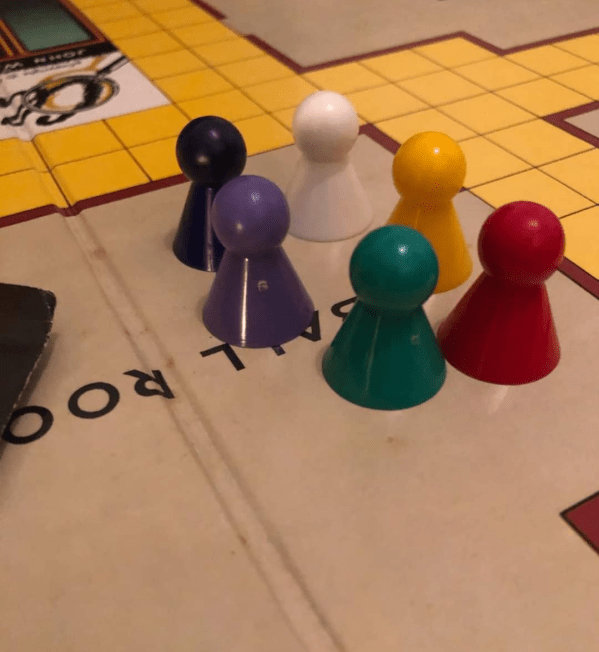
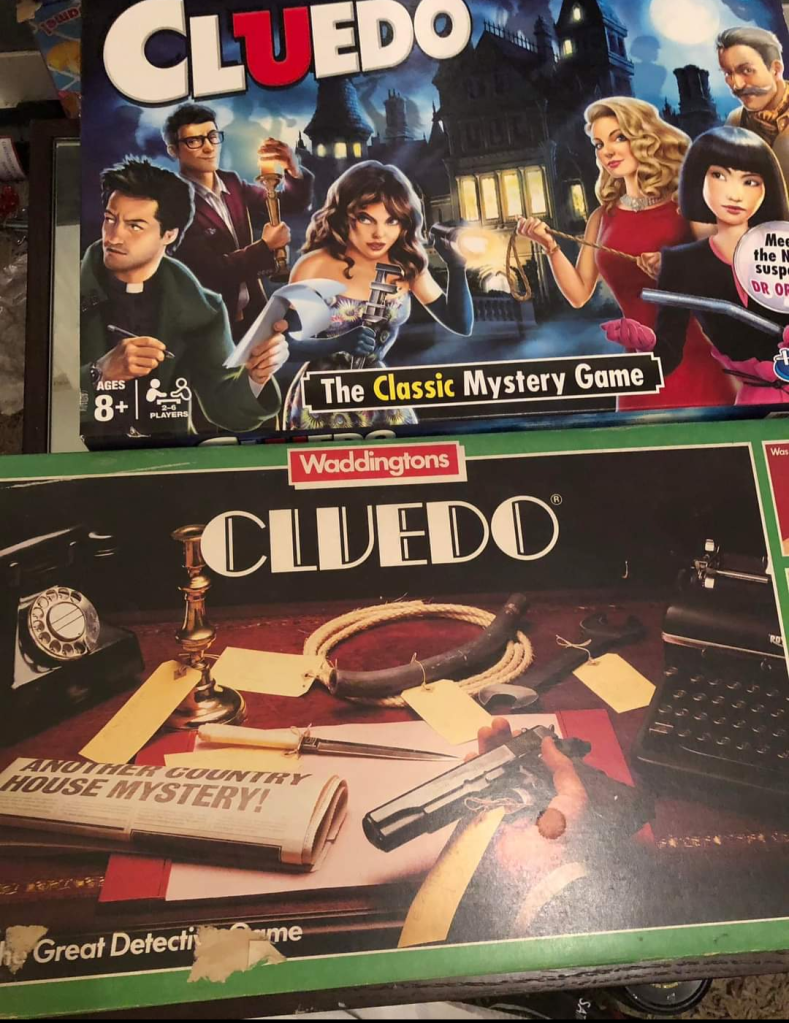
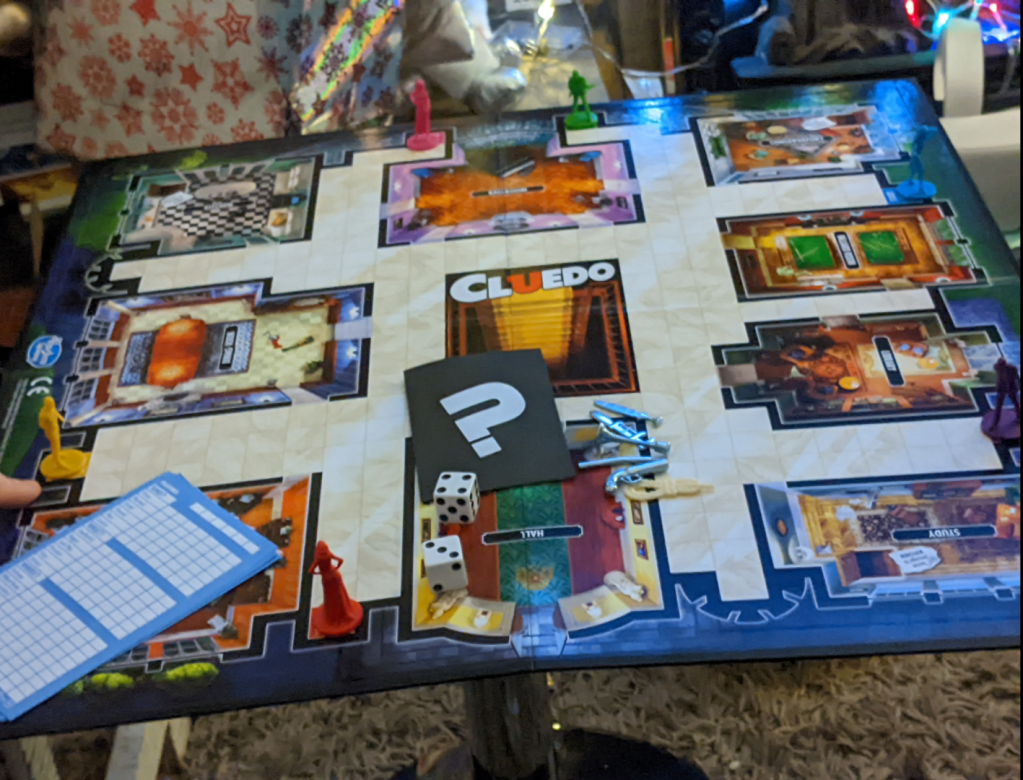
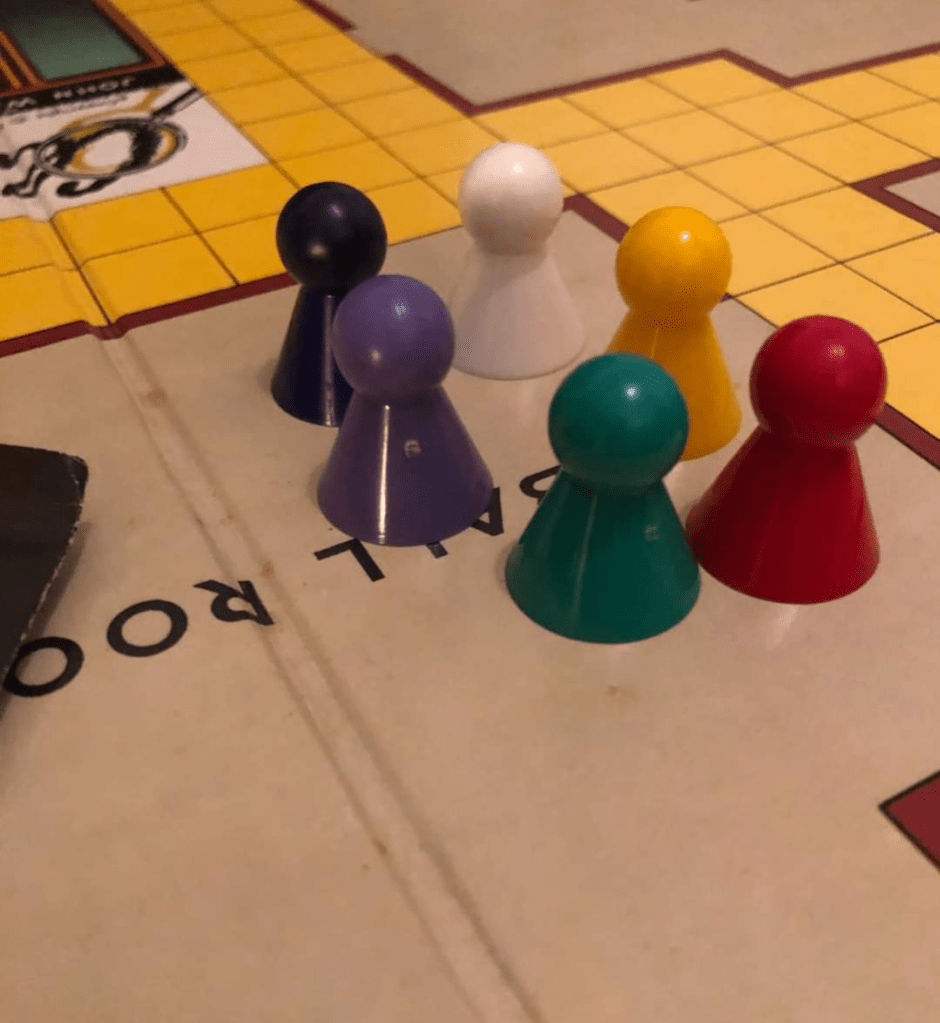
At the moment, that game would be Cluedo, or Clue, for my American friends. We’ve got two versions. The modern one, and the classic.
We also play Soggy Doggy, but that involves water and batteries. For a long time though Monopoly was my all time favourite, but it goes on for so long, and ruins friendships, so that went into storage long ago.
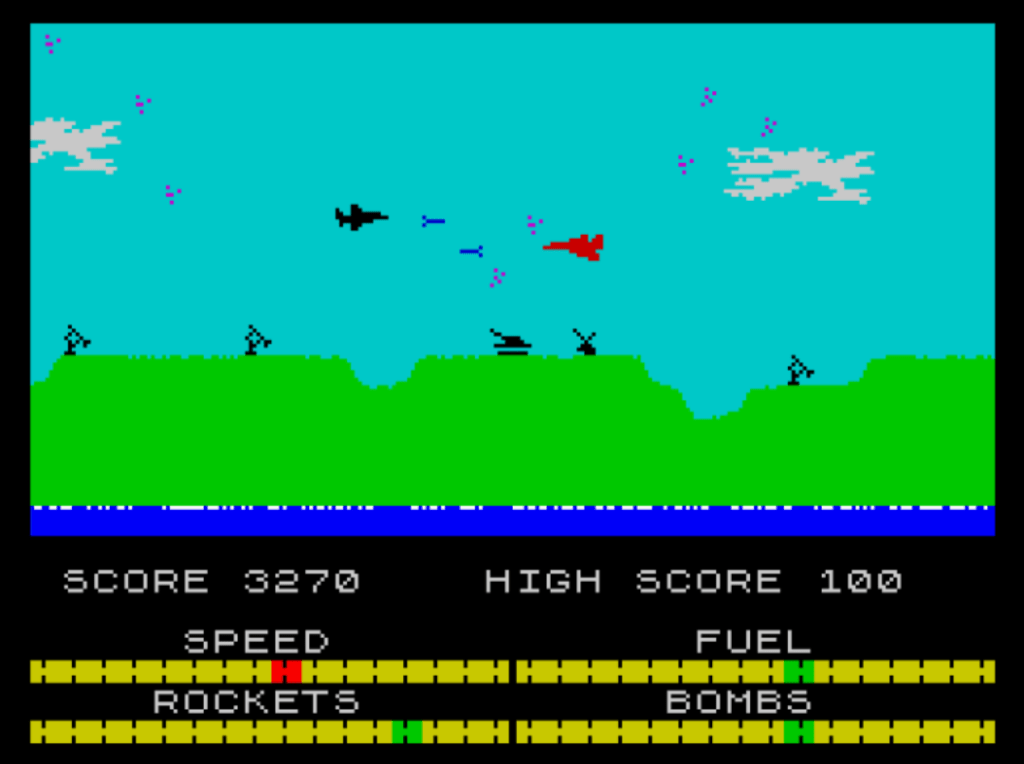
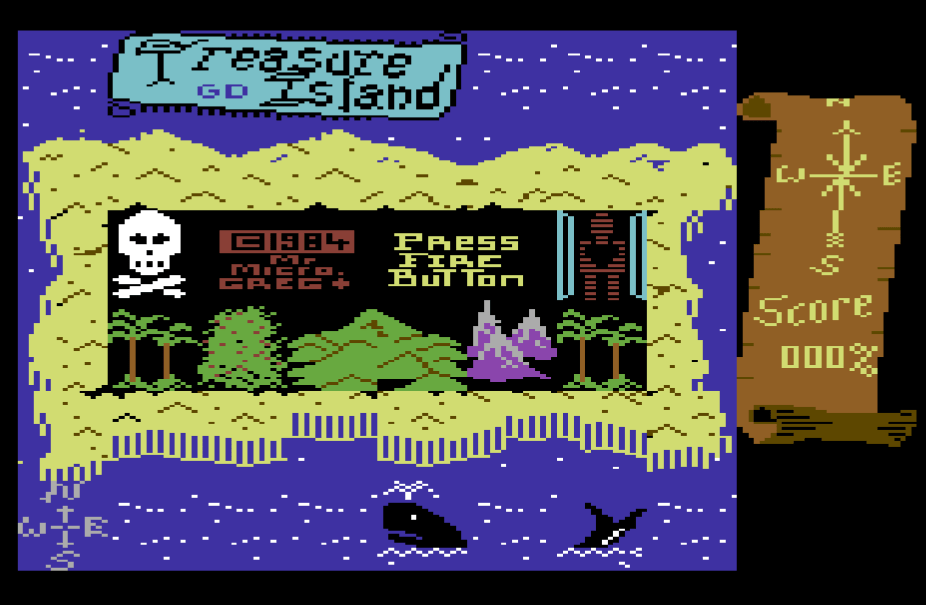
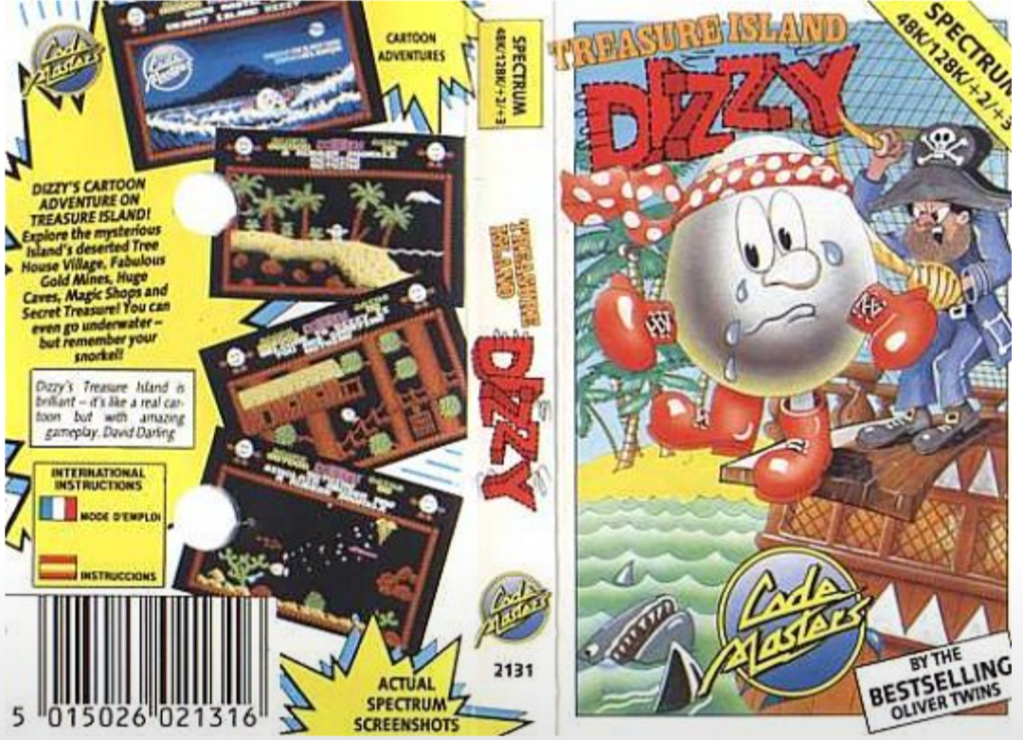
I was always more of a video game player. My first computer was the zx spectrum and for the first week it was set up on the TV in the living room, and the whole family got involved. We played such games as Harrier Attack, Oh Mummy, and Treasure Island into the small hours.
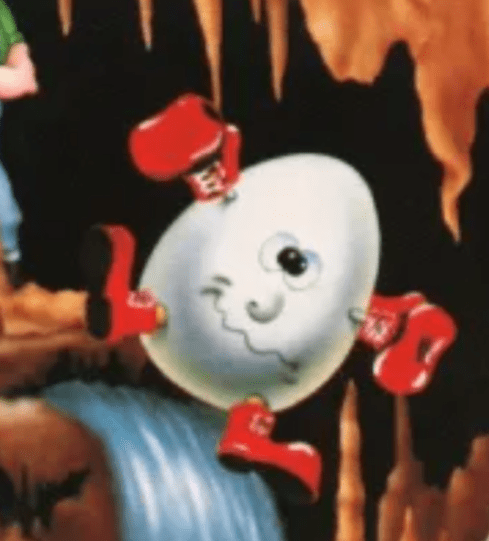
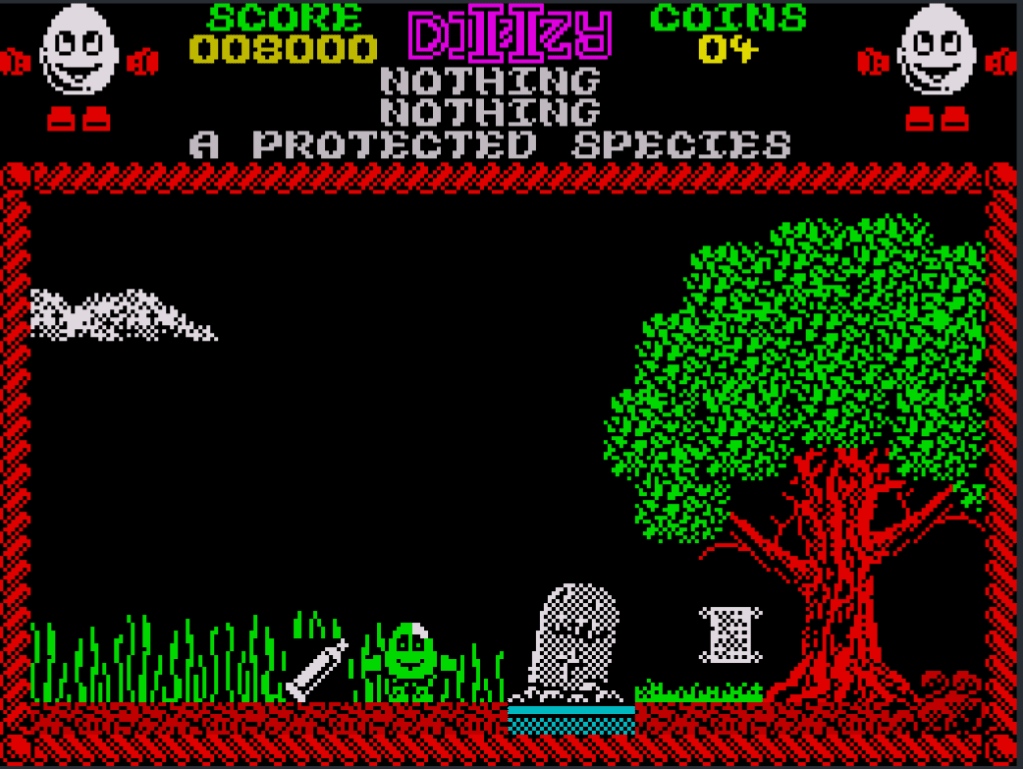
There were thousands of games, but the one that captures my imagination most was Dizzy, and all of its clones and spin-offs. It kept me entertained for years.
Dizzy was a boxing glove wearing egg that bounced around the screen solving puzzles. The setting didn’t matter, the main interest was exploring the world, collecting objects and finding their purpose to unlock new parts of the game. It was almost as good as going outside.
They don’t make games like this anymore, and the more the graphics have improved the visuals, the less the imagination is fired. In a modern game, what you see is what there is, but in a low resolution game the world implied by visual prompts is way richer.
Something about that grave ..
It didn’t matter that the graphics were simple or that the colours clashed. There’s long grass here and you can smell it, hear the insects beating their wings. The tree is old, the wind rustles its leaves and its branches sway and creak, this tree could tell a tale or two. But that gravestone, it’s been there for a while and it’s started to sink, soon it will topple and disappear in to the ground, taking it’s secrets with it. Could there be something buried here? Treasure? A secret entrance?
I picked up this game on a trip to the seaside in the eighties. I read the packaging, consumed its treasure island themed art work with the sun on my face and the sea air in my lungs interwoven with the anticipation of playing the game when I got home, 3 long hours later. Memories like that can carry you from childhood to deathbed in a way that instant downloads never will.
I’ve played many games since. Blood, Grand Theft Auto, Bendy and the Ink Machine. There are good games but they don’t have the simplistic beauty or the imagination of the classics.
I can’t name an all-time favourite, there are just too many, but many have left an indelible soft spot.
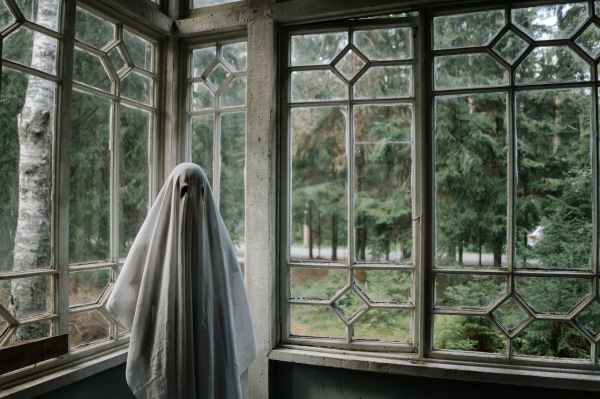
I saw a post today on twitter about being haunted by ghosts. I posted here previously about ghosts, including the spectre of the child that sits at the bottom of our stairs, but it got me thinking about those other ghosts that haunt us. Not the lingering spirit form of the departed, but those of regret.
The ghosts that visit us in the past and ask for help.
I had a childhood friend, and for the longest possible five years or so we were utterly inseparable. But we were apparently, on different paths, or perhaps just one of us was. As we approached adulthood our lives diverged until just a couple of years ago and we got back in touch.
The intervening years had not gone so well for my friend and for reasons I can’t go into, he is no longer with us. This haunts me. Had I known I would have helped, wouldn’t I? All he had to do was ask.
The mind can take you to the strangest of places and it reaches back, far beyond our grasp. What if he did ask? What if he asked when it was possible to do some good, but I didn’t recognise it. A call for help stretching back through time to the one moment I could have made a difference. And I said no.
I didn’t know. I still don’t know. But what I do know is that one day, thirty years ago, a strange little man knocked on my door and offered his hand in friendship, and I had better things to do. How different things might have been had I not been so self absorbed. If there is a next time round, I will go for that walk and set the path differently.
She came to me in a dream the other night. His mother. I do believe that we can communicate in dreams, with both the living and the dead. She came to me in the night and brought a message that I cannot share, but I did get the chance to tell her that I loved her son. I impressed this upon her like her life and mine depended on it. Love, like brotherly love, and that I was sorry I wasn’t there.
Ghosts are real. They don’t always rattle chains and say boo, but they are with us, and we need to do right by them.
If there is one thing that we can all agree on, it’s religion. Not.
Do I practice religion? It’s difficult to say really. I wasn’t brought up to be religious. My interest lay in logic, and reason, and science. I was a big fan of star trek. Arthur C Clarke was my all time favourite author. There was no Sunday school for me, no baptism or confessions. The school dutifully served up parables and had us singing hymns with all the enthusiasm of a stale loaf of bread. I was led down the path of atheism.
I had to be an atheist. It was the only thing that made sense as a reductionist consciousness living in a material universe. Anything else was an absurdity, wishful thinking, or a means to control the gullible population.
And yet, my relationship with God was always a strong one. How could it not be? We are one with the divine.
My very earliest memories, from my very earliest years, they are obviously very vague. How can we process and store the vast amounts of experiences and sensations without any context? We can’t, but there are still memories. I remember being a toddler, barely able to walk or talk. I remember being shoed away from the things that weren’t for me, dangerous or fragile. But at that time, I remember the presence of God, always there, speaking, indistinguishable from the rest of the world.
I’ve had more than a couple of paranormal or spiritual encounters. Warnings on high that have saved my life in one way or another. Ghosts, premonitions, inexplicable things in the sky, and even a broadcast message from the future, I shit you not.
If you find yourself paying any sort of attention to the nature of what it is to be alive in the universe, we come across all manner of intractable problems. Questions such as why is there something and not nothing? What happened before the big bang? What even is consciousness?
It turns out that we’ve been asking these questions for thousands of years, and the more we learn, the less we can be certain of anything at all. Quantum mechanics tells us that the universe doesn’t even exist when we’re not looking at it. It’s almost as if all of this is in our head.
Nothing came from nothing, Cordelia, but the universe did. The unfathomably massive entirety of everything is thought to have a net energy of zero. In aggregate, the universe doesn’t exist. Everything leads to metaphysics.
Religion is villainised by atheists as the domain of ignorance and they shower it, and its followers, with ridicule. They attack its values and lore with nitpicks, but in doing so, they miss the point.
I certainly didn’t arrive at religion from a place of ignorance. I had the full atheist mindset for a long time, and it was only with thorough questioning of everything that I realised that atheism was the lie, not religion. The bible is not a means to control, though it undeniably can be hijacked by the ideologues for nefarious ends, but that’s to miss the point. The bible isn’t a blueprint for a kind society, it’s a guide on how to live a good life, and it’s purely serendipitous that a great society will emerge from a population that lived a noble and courageous truthful life.
Do I practice religion? Well, I don’t go to church, but I do practice gratitude, when I remember. Gratitude for the life we have gives us solace and serenity. I also try to live by truth because lying splits our spirit across multiple versions of reality, of which only one is true and the rest cannot last. Jesus taught us that we must go through hell to know heaven. If we think not of the afterlife, but as analogues for daily life, we know that nothing worthwhile is ever easy, nothing in abundance has value.
It’s possible to assimilate these lessons without incurring religion, but even a narrow thread of intellectual integrity must admit that there is a ‘why’ to be accounted for, and that is a question only for religion. And when recognising this, the benefits of practicing religion become obvious.
Anyone blindly using AI to inform themselves or pass off knowledge and wisdom as their own needs to steady their steeds.
This very morning I spotted a post on twitter raising Population Collapse as a major risk to the future of civilisation. A quote, I believe, attributable to Elon Musk. I’ve been aware of population pyramids since I attended high school in the Eighties, and the economic impact of the cessation of perpetual growth, but is this really a problem for civilisation as a whole?
It was the plague in England, after all, that released the poorest from indentured labour, and a huge drop in available workers led to an increase in the value of their labour. The plague itself was terrible, but life was measurably better for those who came after, than it was before.
So rather than brush up on the evidence myself, I turned to AI to do the intellectual grunt work.
Prompt: What are the dangers of population collapse?
Population collapse is a serious problem that can have a number of negative consequences for a society. Some of the dangers of population collapse include: Economic decline: A shrinking workforce can lead to a decline in economic productivity. This can make it difficult to maintain a strong economy and provide for the needs of the population. Social instability: A declining population can lead to social instability. This is because a smaller population means fewer people to support the social fabric. This can lead to an increase in crime, violence, and social unrest. Cultural loss: A declining population can lead to the loss of culture. This is because a smaller population means fewer people to pass on cultural traditions and values. This can lead to a loss of identity and a sense of community. Environmental degradation: A declining population can lead to environmental degradation. This is because a smaller population means less demand for resources. This can lead to an increase in pollution and the destruction of natural habitats. It is important to note that population collapse is not inevitable. There are a number of things that can be done to prevent population collapse, such as increasing the birth rate, encouraging immigration, and improving the quality of life. Here are some of the things that can be done to prevent population collapse: Increase the birth rate: This can be done by providing financial incentives for families to have more children, making it easier for women to balance work and family life, and providing better education and healthcare for children. Encourage immigration: This can be done by making it easier for immigrants to come to the country and by providing them with the support they need to integrate into society. Improve the quality of life: This can be done by reducing poverty, improving education, and providing access to healthcare. By taking these steps, we can help to prevent population collapse and ensure a bright future for our society.
Google Bard response.
Superficially, this is a solid response and one that might well be parroted in an essay or an online argument, but some of the points just don’t make sense, so I challenged it.
Prompt: How would a declining demand for resources lead to additional environmental degradation?
A declining demand for resources could lead to additional environmental degradation in a few ways. First, a declining demand could lead to a decrease in the price of resources. This could make it more profitable to extract and use resources, even if they are harmful to the environment. For example, if the demand for oil declines, it could become more profitable to extract oil from tar sands, which is a more environmentally damaging process than extracting oil from conventional sources. Second, a declining demand could lead to a decrease in the amount of investment in environmental protection. If there is less demand for resources, there is less incentive to invest in technologies that reduce pollution or protect natural habitats. This could lead to an increase in environmental degradation, even if the overall amount of pollution or resource consumption declines. Third, a declining demand could lead to a decrease in the number of people who are concerned about the environment. If fewer people are using resources, there may be less public support for environmental protection measures. This could lead to a decrease in the enforcement of environmental regulations and an increase in environmental degradation. It is important to note that a declining demand for resources is not always a bad thing. In some cases, it can lead to a decrease in pollution and resource consumption. However, it is important to be aware of the potential negative consequences of a declining demand for resources and to take steps to mitigate these consequences. Here are some of the things that can be done to mitigate the negative consequences of a declining demand for resources: Invest in environmental protection: Even if the demand for resources declines, it is important to continue to invest in technologies that reduce pollution and protect natural habitats. This will help to ensure that the environment is protected even if the demand for resources does not increase. Increase public awareness: It is important to increase public awareness of the potential negative consequences of a declining demand for resources. This will help to ensure that there is public support for environmental protection measures. Enforce environmental regulations: Even if the demand for resources declines, it is important to continue to enforce environmental regulations. This will help to ensure that the environment is protected even if the demand for resources does not increase.
Google Bard response
The reply still didn’t ring true, so I queried it again.
Prompt: This doesn’t make sense. How would a drop in oil price lead to tar sand extraction being more economically attractive?
You are right, a drop in oil price would not lead to tar sand extraction being more economically attractive. In fact, it would have the opposite effect. Tar sands are a type of oil that is very difficult and expensive to extract. The process of extracting tar sands requires a lot of energy and water, and it produces a lot of pollution. As a result, tar sands are only economically viable when oil prices are high. If oil prices drop, it will become less profitable to extract tar sands. This is because the cost of extracting tar sands will not decrease as much as the price of oil. As a result, tar sand extraction will become less economically attractive, and there will be less demand for tar sands. In addition, a drop in oil price could lead to an increase in the use of renewable energy sources. This is because renewable energy sources, such as solar and wind power, become more competitive with fossil fuels when oil prices are low. As a result, there will be less demand for oil, including tar sands. Overall, a drop in oil price would not lead to tar sand extraction being more economically attractive. In fact, it would have the opposite effect.
Google Bard response
So we did start to get somewhere eventually. But what this shows is that the technology is some way from maturity, and it’s answers often need scrutiny. Google freely accepts that the technology is still at beta stage and to not rely on it, and that’s not my point. If social media posts are to be believed, big if, then users are obtaining legal advice from these things and students are cheating on exams. I just don’t buy it.
The point of this isn’t about Population Collapse, I don’t have a qualified opinion on that, only that AI can’t be relied on to provide a qualified opinion either. Not yet anyway.
Evil is a strong word and I’m using it here in the context of harm, whether that harm is conscious and deliberate I cannot say, harm causes suffering, and evil causes unnecessary suffering, or something like that.
Lifestyle magazine is a catch-all phrase and I include websites and social media, and TV shows, and gurus in that. Cooking shows for example, property porn, that sort of thing.
I am somewhat embarrassed to say that I watched a lot of property shows in young adulthood, in the early naughties they were hard to avoid. TV shows like Location Location Location and Property Ladder. It was the height of Gordon – no more boom and bust – Brown’s unprecedented economic boom, and aspirational telly was very much the thing.
What’s stopping you having a house like this?
Food shows too. Nigella’s cooking shows were particularly pernicious in their facade of perfection. The yummy mummy effortlessly fixing up a treat to share with her impeccable peers in soft focus and deceptive camera angles.
Saturday Kitchen too. I remember a chat with the butcher. He told me that whatever James Martin cooked that Saturday morning would always sell very well. It’s a powerful thing is lifestyle TV.
Mere exposure to these shows induced such swings of ambivalence that put me at risk of whiplash as my aspirations would switch from that of a city penthouse with double parking and views of the city landmarks, to that of a riverside cottage out in the Dales where I could grow my own spuds, keep hens, and buy fresh beef and unpasteurised milk direct from the neighboring farmer. None of these things I wanted strongly enough to try to attain.
Come Dine With Me, a show about four strangers competing to deliver the finest dinner party experience, showed me the error of my ways. I’d been doing it wrong for years, seating my guests to eat on the sofa, unmatched cutlery, serving gravy in a vase. No wonder they laughed. What was I thinking?
What I was thinking was that I had a lot of guests and needed a large vessel in which to serve gravy, a pint glass was too small and could break with the heat, but a clear glass vase was perfect.
We need, as a society, our cultural conventions, traditions, taboos, mores, values, and what better way to communicate them than through the TV.
We need role models that can steer us, help navigate the world and find the right path. This is why I think lifestyle magazines are evil. They don’t seek to set us on the straight and narrow. They don’t teach us how to improve our lives. They show us a life that we cannot possibly lead and tell us that it is easy. They leave us feeling empty and wanting more. They distract us from what is important.
Of the seven sins, pride, greed, lust, envy, gluttony, wrath, and sloth, lifestyle gurus encourage and perpetuate at least six of them. I’m struggling to fit wrath into this vague but sweeping commentary, but the others are definitely in there.
Sloth, the reluctance to make an effort. Lifestyle marketing is all about selling us an idea of a way of life that can be packaged for consumption. It’s a shortcut to status. It’s lazy.
Gluttony is an easy one to pin down, particularly with the food shows. They don’t do modest meals.
Envy is a feeling of discontented or resentful longing aroused by someone else’s possessions, qualities or luck. Lifestyle media showcases what others have and deliberately frames it as something you should desire and have a right to expect.
Lust is possibly a stretch, especially if limited to a lust for sex. But lust can be for money, possession, travel. So yeah, I stand by it.
Greed, the excessive desire for material possessions and wealth. A four bed detached house in a leafy suburb, with a kitchen diner, games room, twin office, large garden with lawn, water feature, decking with tandoori oven and outdoor dining, work shop shed, boat on drive, classic car and a Chelsea tractor in the garage, nursery and playroom, large well equipped kitchen with all the appliances, a potato ricer, home cinema with 70inch 4k TV and digital music system, power shower wet room, herb garden, and magnificent views of the Thames valley. Just the basics really.
The sin of pride is an excessive preoccupation with self, one’s own importance, achievements, status, or possessions. This is the very point of Lifestyle magazines and TV, to encourage self glorification. My own conception of pride is showing off, and that pride cometh before a fall.
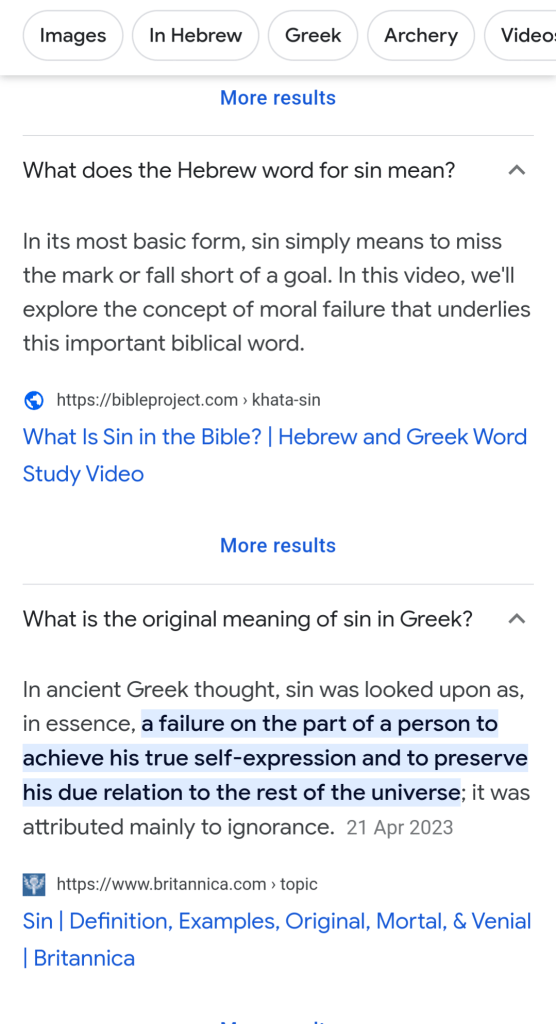
Lifestyle magazines are evil because they make us lose track of what is important. Sin is originally a Greek word that means to miss the mark, to fall short of our potential. We cannot miss the mark if we are looking at the wrong target.
Happiness is not having what we want, it comes from wanting we have, lifestyle mags seek to subvert that. It makes us look at what we have and reject it in favour of the lie, and that leads to misery. Lifestyle TV doesn’t tell us that the most important thing about throwing a dinner party has nothing to do with the place settings or how what you serve the gravy in, it’s about having enough people in our lives that want to enjoy our company and whose only expectation of the food is that it doesn’t give them dysentery.
There are no shortcuts to friendship and respect, it’s not something you can buy and it’s not something the lifestyle gurus can sell to you, so they distract you from what’s real and good.
And the worst part about it is that you don’t notice the cuts, the death by a thousand cuts. You don’t have to rush out and buy the latest car or holiday or air fryer, to be consumed by the lie. You just feel, even if subconsciously, the emptiness in the space left by the absence of the thing you never knew you needed. And the feeling of inadequacy that you cannot replicate the simple meal without blowing the food budget, trashing the kitchen, and wasting a whole day in the kitchen, and it ends up looking and tasting like crap.
No. Lifestyle media is definitely harmful and therefore evil. Is it any wonder that half the population is in a mental health crisis? Be careful what you watch and read, it’s insidious.
There’s this thing in my head. A memory, a dream, a wish, a half remembered scene from a movie. I think of it often, picturing it, wondering if I could contrive a story around it, though that’s not the point.
The thing is something simple, and it delves deep into my psyche, and because I’m nothing special, it must resonate with others on at least some level, so I’ll record it here.
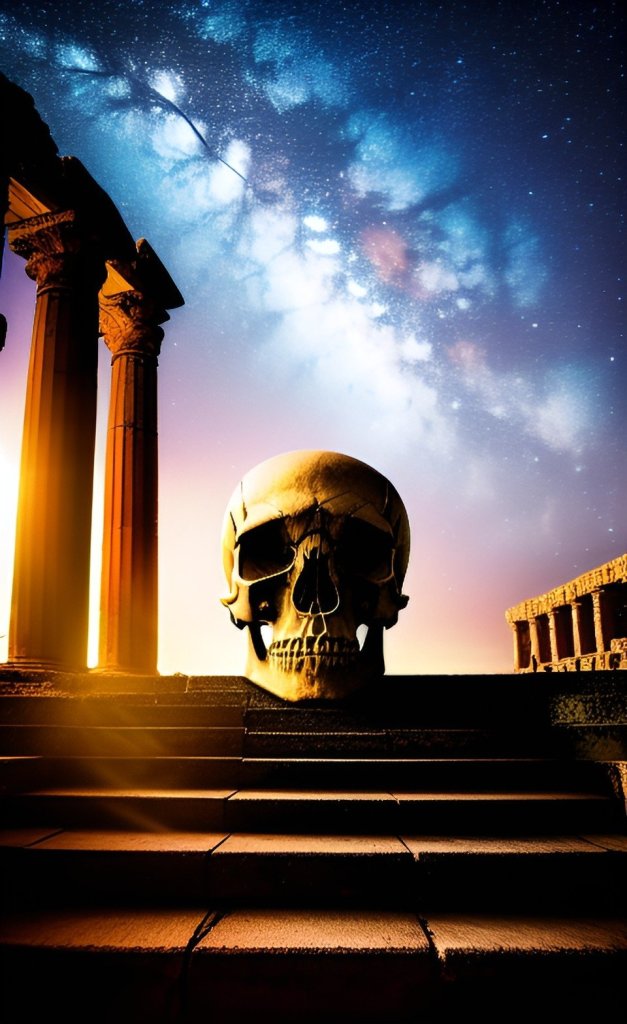
It’s about a lonely place. A temple or fortress or palace, perhaps all three. A once thriving hub of the community teeming with hustle and bustle, laughter and sorrow. The whole spectrum of human experience strung out across years and now fallen silent. Entropy has won.
To be alone in such a place. Wrapped in a silence so thick you don’t believe it, and conversations carry on the wind from the depths of time or the recesses of your own mind, not that it makes a difference in a place like this.
What is left of the buildings are little more than remnants of walls and floors, stone steps and columns, worn by wind and rain, and ticks and tocks. You explore the grounds but there is nothing to find. Nothing much grows anymore, the soil is little more than dead roots in dirt. Dust rests wherever the wind can’t reach it.
Where you are is hard to tell, the engraved text on the stone walls and pillars is eroded beyond comprehension. The statues that still stand proud are little more than featureless pillars themselves, nothing to identify them.
Except for one. A statue in granite, or some other hardy stone has stood a better test of time than the others. But who is this? Time has done its best to rob her of her beauty but the life in her eyes persists in the stone, and her gentle smile. Who is she? Did you know her? How long have you been here?
How long? Long enough to doubt yourself. Have you explored the whole place? Perhaps there is more to be seen beyond the eastern wall. There isn’t, of course, and it all seems rather familiar.
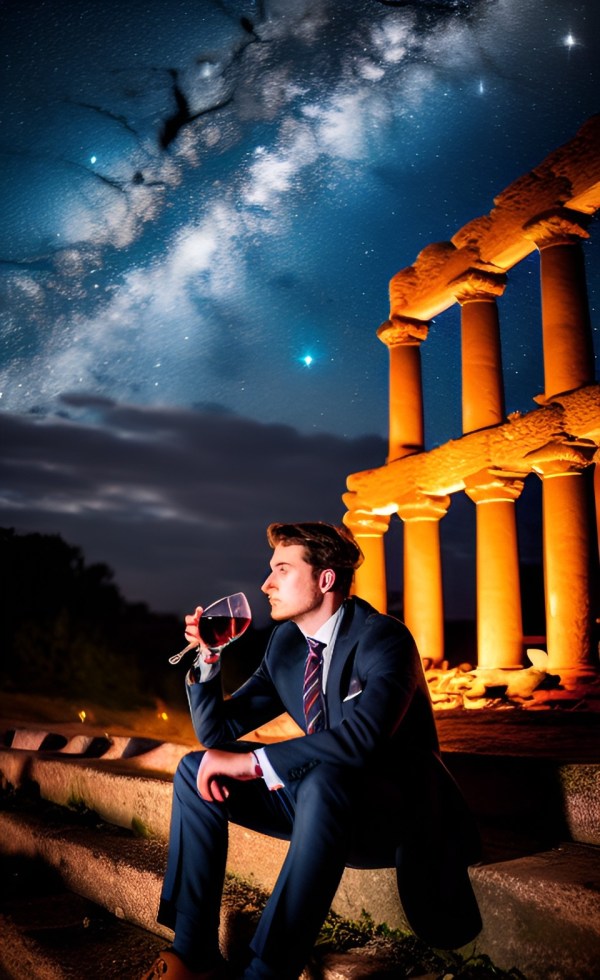
The pale sun sets and the stars come out, but you’re not sleepy, you’re never sleepy. So you return to the steps where you always find yourself, and you pour yourself a glass of wine. There is always wine when the sun sets. Best not to question it.
Maybe tomorrow you can look beyond the eastern wall for something new, but for now there are stars to be watched. Not so many as there used to be, it seems like fewer every night.
Write about a time when you didn’t take action but wish you had. What would you do differently?
What would I do that I didn’t do? What indeed? This is one of those dining on ashes things, and I’ve enough to feed us all.
There are many times I didn’t act, took the craven path, but one in particular sticks with me.
Long ago I took a journey on a train, a train that is now long since scrapped, from a place I no longer go back to, to a town where I no longer live. It was a late train, a late hour and delayed too. But it was buzzing, filled with weary travellers and revellers alike. It was the smoking carriage too, as I recall, back then it was where I liked to sit.
For the journey I kept myself to myself, enjoyed what little view there was of the argon lit streets in the sparse towns that punctuated the blackened fields of the English countryside, and occasionally sparking up a hand rolled cigarette that I had made for something to do.
About halfway through the journey I became aware that the shouting had lost its jovial hue and had turned quite sour. A barely intelligible Scots woman was hurling the most obscene insults at another passenger.
I was stunned. I couldn’t see what was happening but none of the other fifty odd passengers saw fit to intervene and that only reinforced my cowardice.
And what would I even do? I was a spotty bespectacled student with less meat than a half eaten buffalo wing, and even less gumption and street smarts.
So I listened, I winced and I cringed, and slowly I had pieced together what had transpired. By my estimation the plus sized mother had made the mistake of asking the inebriated Caledonian harpy to perhaps lay off the profanities and all hell ensued. This diminutive windbag hurled all manner of verbal abuse at the poor woman, who could do nothing but pray for a swift end to the torment of herself and her terrified son.
What could I even have done except make myself a target? You read all the time about heroes being stabbed for their trouble. But how likely was that? So if I stood up and took the flack, could I not withstand the noise of a screeching harridan for a couple of stops? Was this the man I had grown up to be? Had I forgotten the jubilation of the time I stood up to the neighborhood jerk and flung him out of his own garden? Sure, that jerk was no more than ten years old, but that was still older than I was at the time, and he never bothered us again.
What might have happened is that others might have stood up with me, and shown that terrified mother and her boy that there was still a shred of decency and hope in the world, and I might have retained that sense of forthright dignity that has evaded me ever since.
In the end it was the police that ended the ordeal. The train made an unscheduled stop at some nowhere town and the gob, along with her silent companion that I hadn’t even noticed, were removed from the train. The crowd found its voice again and cheered for removal, but I didn’t. I was glad that the ordeal was over, but I had no right to celebrate.
Years ago. Not so many as that train ride, but a good while nonetheless, my career meandered me on to various medical practices and surgeries, and on one occasion I was privileged to shadow an oncology consultant delivering the all clear to an immensely relieved and grateful patient.
The patient spoke to me directly, looked me square in the eye and told me, warned me, to take care of my body, and to watch out for the changes.
It’s not that I ignored the guy, I took the advice with good grace and promised to abide, but did I really? Did I? Did I go see my doctor all the times I should have, perhaps, perhaps not. What I do know is that had I taken more action along the way, perhaps the presence of the hairy hand of fate would now be just that little less apparent.