How do I use social media? To be honest I’m not sure if it’s not the other way around. Social media seems to use me more than I use it, I certainly think social media gets the better deal.
I use it to keep in touch with friends and to share ideas, in principle, but in reality I mostly use it to search endlessly for something to justify my anxiety. Something that reminds me that my existential dread is real and must contended with, lest I relax for a moment and find myself happily getting on with life.
The world turns, but I miss phone calls and meet ups and reading magazines and journals. It’s not 1995 anymore, which is a shame, I’d just about learned how to cope with the world by then, but they had to go and change it.
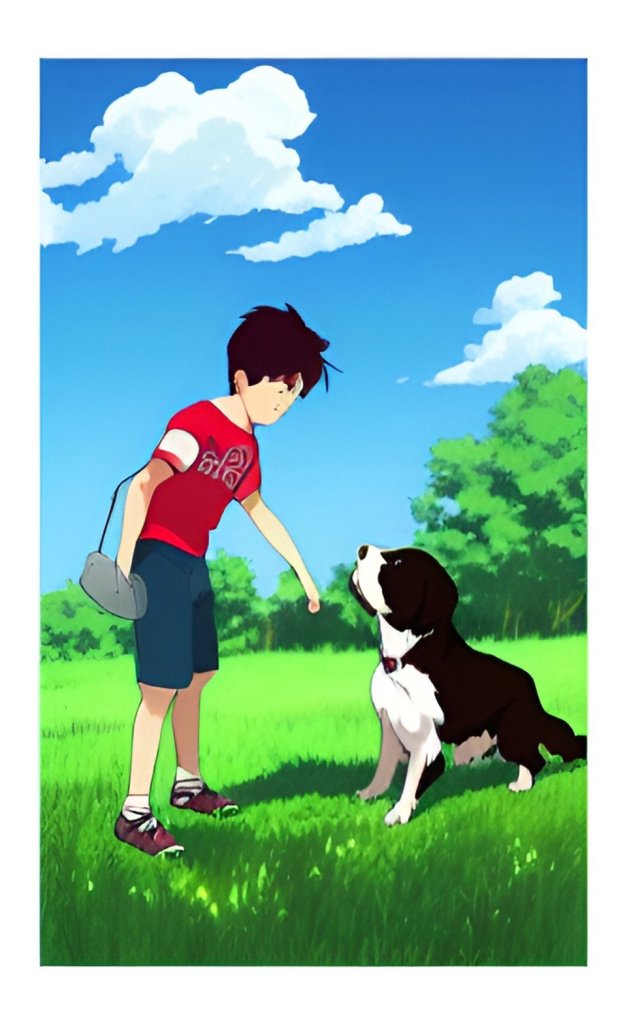
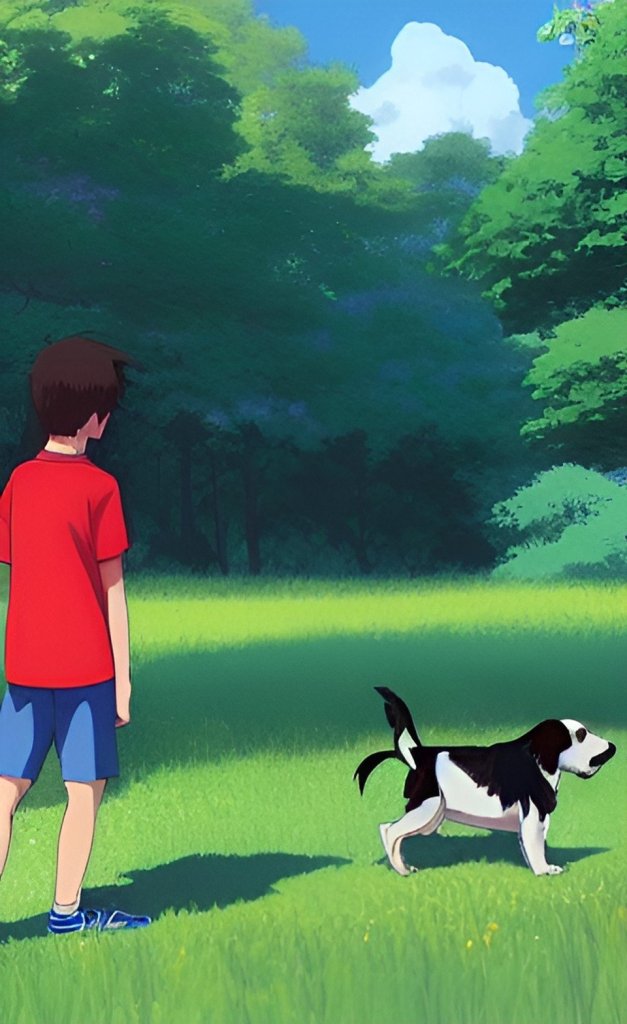
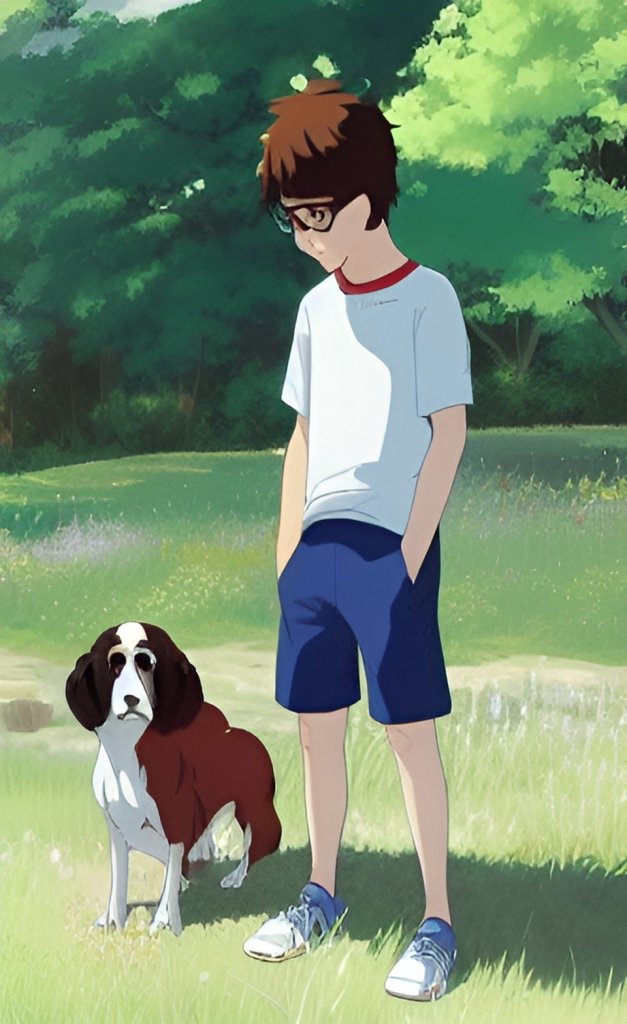
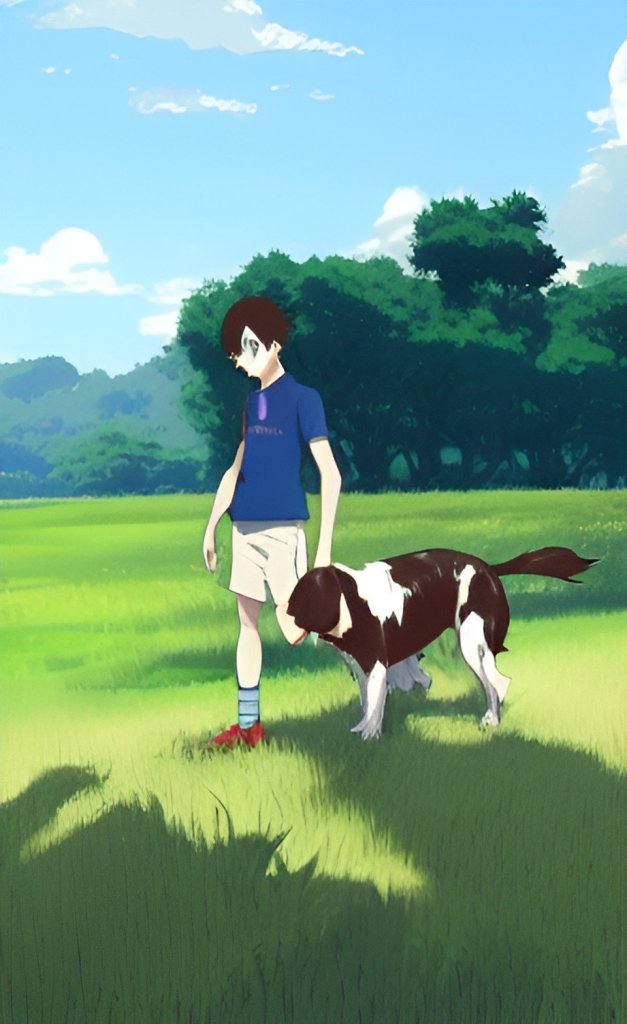
An AI generated story. I don’t expect anyone to read it, I’m just playing with the free AI apps and seeing what they do. That said, if anyone wants to explain the ending to me I’d be exceedingly grateful. I have worries for the future of writing, of stories. Content creation is so utterly easy now that human curation is almost redundant. I say almost because the need for it remains, though it’s easy to negate.
I asked the AI to tell me a story, but I had to come up with my own title. The audacity of these things:
tell me a ghost story with a twist about an anxious traveller with a secret, waiting for the last train out of town, in a snow storm, in 1920s England
Fair Cop, by AI
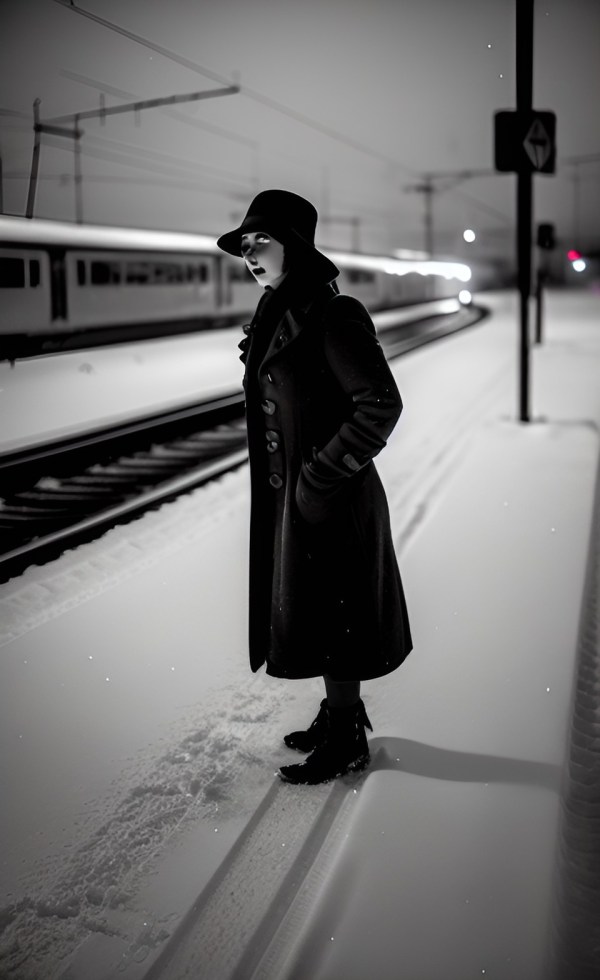
Arthur was a nervous wreck as he sat on the bench of the empty train station, waiting for the last train out of town. It was a bitter winter night, and the snow was falling so fast that it was difficult to see beyond the platform. Suddenly, Arthur heard a faint humming noise, which gradually got louder and louder until it morphed into a woman’s voice singing a haunting melody.
Arthur tried to ignore the eerie noise, but it was impossible to ignore the fact that the voice was coming from the abandoned train tracks. He looked over and saw a woman walking slowly towards him, her figure just visible in the blizzard. It wasn’t unusual for travelers to be stranded due to snow, but the mood of the singing woman chilled him to his bones.
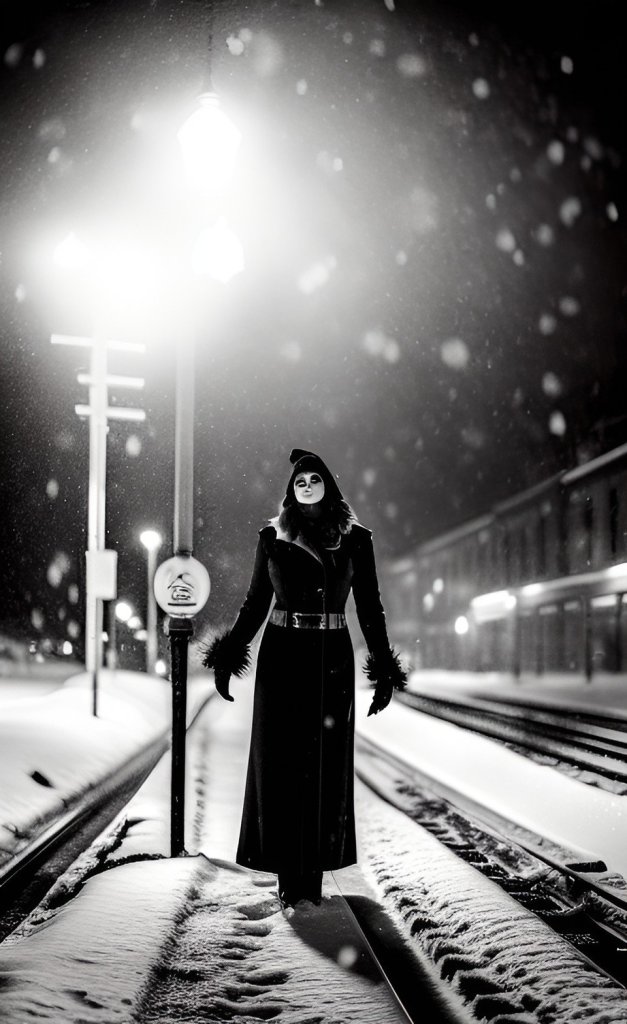
As she approached the platform, Arthur noticed something unusual about her. She was transparent and appeared to glide along the ground rather than walk like a normal person. And when she spoke, her words came out slowly and distorted, as if she was speaking through water.
He tried to compose himself, but his nerves soon got the better of him, and he blurted out the question that had been gnawing at him for days. “Do you know who I am?” he said, his voice trembling with anxiety.
The strange woman stopped singing for a moment and regarded him with an enigmatic expression. “I know everything about you, Arthur,” she said in a voice that was neither human nor animal.
Arthur felt his heart pounding in his chest. He knew he had to confess his secret, the reason for his anxiety. “I’m running away from the police,” he said. “I stole a valuable coin from a wealthy man, and now they’re after me.”
The woman stared at him for a moment before the blizzard suddenly cleared, revealing a police officer heading towards them.
“Arthur Thompson, I’m placing you under arrest for the theft of the Golden Medallion,” the officer announced as he arrived.
But before Arthur could react, the woman suddenly dissolved into the air, leaving only an icy chill in her wake. Arthur looked around, confused and scared, before he realized that she was a ghost from the past, warning him of his impending capture.
He was baffled by the twist of fate, but grateful, nonetheless, as the ghost had helped him avoid the inevitable punishment that would have awaited him in the hands of the law for the rest of his life, all because of his greed. He whispered a silent thank you, even as the officer cuffed him, took him to his cell to pay his penance.
It’s not going to win any awards. I’ll say that much. Maybe it’s because it’s not the premium version, but for a minute read I was mildly entertained. I’m not sure what happened at the end though. He was grateful for the warning and avoided punishment, but was caught? I dunno.
Maybe I could have saved myself some effort if I asked the AI to write a blog post about a ghost story written by AI with a very brief critique. Content is content is it not?
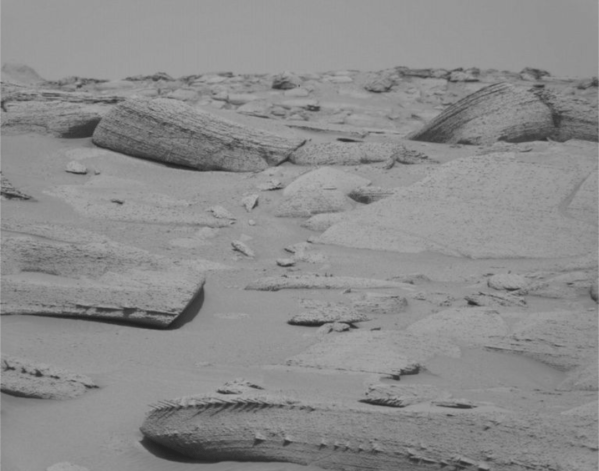
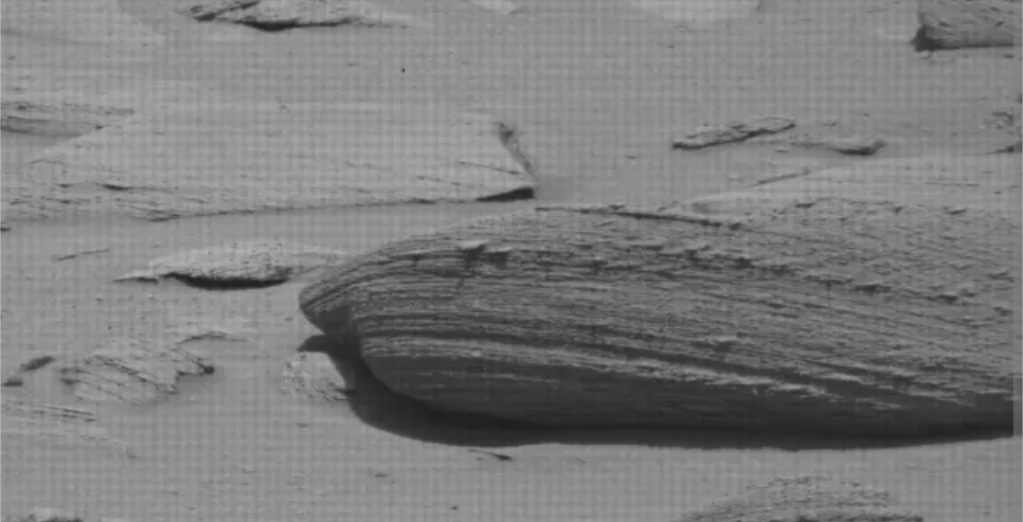
Some pictures have appeared in the media lately from the Mars mission. They’ve been described by some as resembling dragon bones.
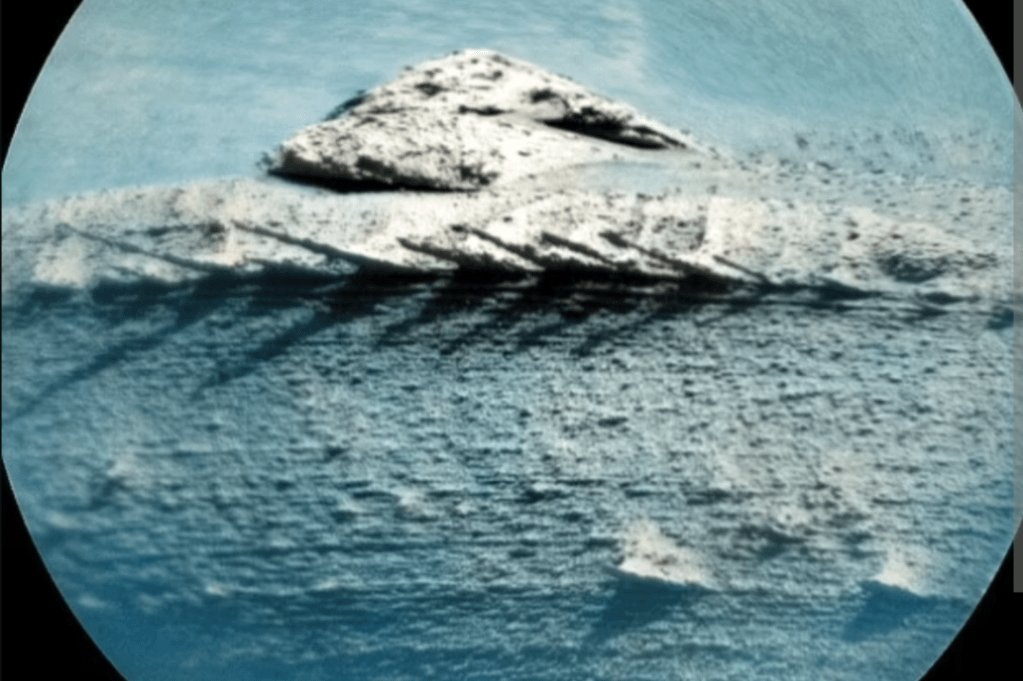
As awesome as that would be, that’s not what I see in the images. To me, they look like poles sticking out of the rock, much like rebar protruding from unfinished concrete blocks. They cast long shadows along the stone.
Looks like rebar and nubs
It’s hard to determine the size of them, or their true shape from these images, but I find that the explanation given, that these are merely mineral deposits that have been revealed by the erosion of the much softer stone, to be a little weak.
Erosion on Mars is paltry by Earth standards, and even though the surface of Mars is billions of years older than Earth, the explanation doesn’t ring true. It’s an unsubstantiated assertion. We don’t know the age or erosion rates of this rock, or what the supposed mineral could be.
That’s not to say that I think this really is rebar in cement, just that it’s what it looks like to me.
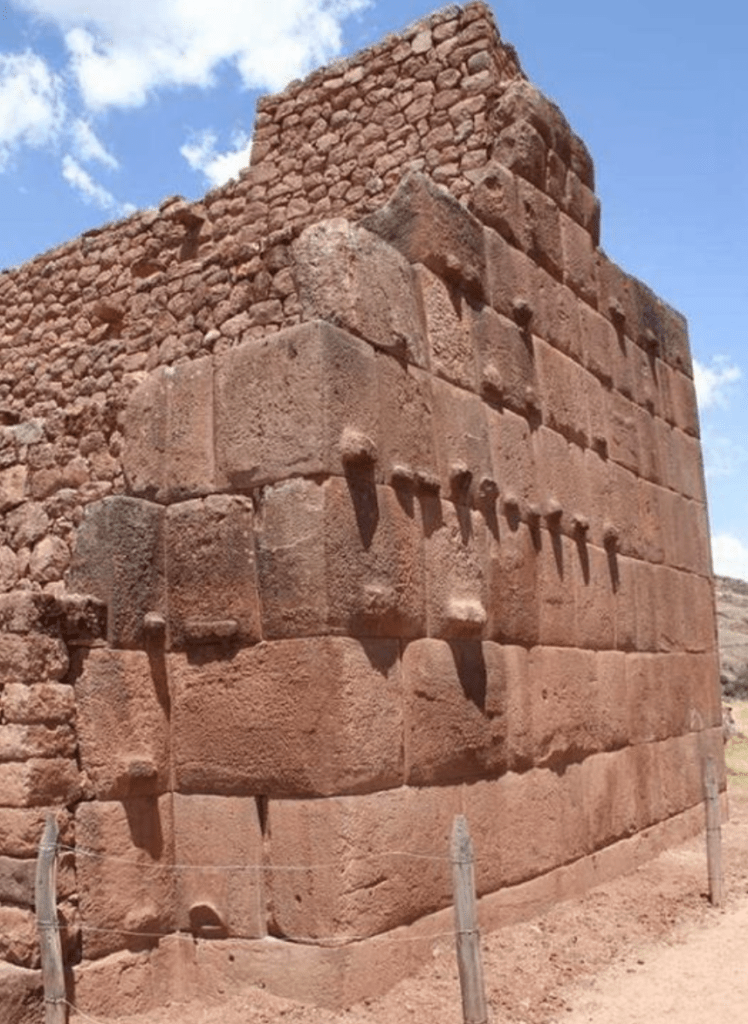
Another interesting detail in the image is the presence of the small protruding nubs, which to me look a lot like the ones found on ancient megalithic stones.
Nubs
These nubs are not understood but it seems reasonable to assume that they probably served some purpose in the construction of these sites.
Again, not suggesting that this is what it is, but this site on Mars is definitely worthy of a second look.
There is an old episode of Doctor Who that starts with the Tardis landing on the Titanic. His assistant, I forget which, had persuaded him to take her on an opulent voyage so he honed in on the Titanic and off they went, but they didn’t land on the deck, nor were they in Southampton, and it wasn’t even 1912.
The Tardis had materialised atop an outcrop of sandstone in a hillside clearing, surrounded by dense ancient woodland. No sign of docks or sea or ladies in hats, just trees and scrub, and creatures unseen rustling in the ominous undergrowth
“Where’s the ship Doctor?” The assistant shrieked. I’m thinking it was Tegan.
The Doctor, Tom Baker’s I think, hushed her and listened carefully to the wind whistle past his curled ear. Then he licked his finger and held it in the air.
“Ah” He said at last. “Seems we missed the sailing”
“No kidding, so where’s the ship now?”
“You’re standing on it”
Beneath their feet was the weather worn sandstone lip. It was nothing remarkable, much like any rocky outcrop in any clearing in any forest.
That spot upon which the Doctor and his assistant now stood, we learned, was the very same spot where the Titanic had come to rest on that fateful night in 1912. And it was that same spot where it remained while the years took their toll. The iron hull and super structure slowly corroded away and the sediments settled above, hiding all trace of that legendary watery grave.
Europe and North America drifted apart over the aeons until the process reversed and plate tectonics brought the two continents back together where they formed a new mountain range that would come to dwarf the Himalayas, had they too not succumbed to time and long since reduced to gentle undulations beneath the new Antarctic Ocean.
One hundred million years brought this spot of deep ocean bed back to the surface, and millennia of ice and wind and rain chipped away the layers of sedimentary rock until finally, the iron remains of the sleeping leviathan once again saw the light of day.
In the yellow sandstone on which they stood, a thin band of iron ore stained the otherwise uniform rock. Fifty thousand tons of metal, and 1500 souls, now a barely perceivable geological curiosity.
Then there was a scream and off they ran to their next adventure.
Time is deeper than any ocean, and there is way more hidden within it. Every day it seems that new histories are being washed upon the shores of our knowledge. Tidbits of antiquity, seemingly inconsequential to the untrained or uninterested eye, but putting them all together, a picture is emerging.
On a treasured but dusty bookshelf in my office I have a series of books that I have had since childhood. It includes such wonderful titles as Alchemy the Ancient Science, Dream Worlds, Magic Words and Numbers, Ghosts and Poltergeists, among others, but there is one book in the series that I don’t think belongs. I’m reminded of Winston’s interview question in Ghostbusters.
Do you believe in UFOs, astral projections, mental telepathy, ESP, clairvoyance, spirit photography, telekinetic movement, full trance mediums, the Loch Ness monster and the theory of Atlantis?
Janine Melnitz – Ghostbusters
One of those things is not like the others. I’ll admit, I’ve had this movie quote in my head for five decades and it never struck me before. For the longest time I had no inclination to believe that the city of Atlantis was anything more than a myth, a legend, but that’s hardly surprising when the matter is always listed with other fringe topics in the book shop.
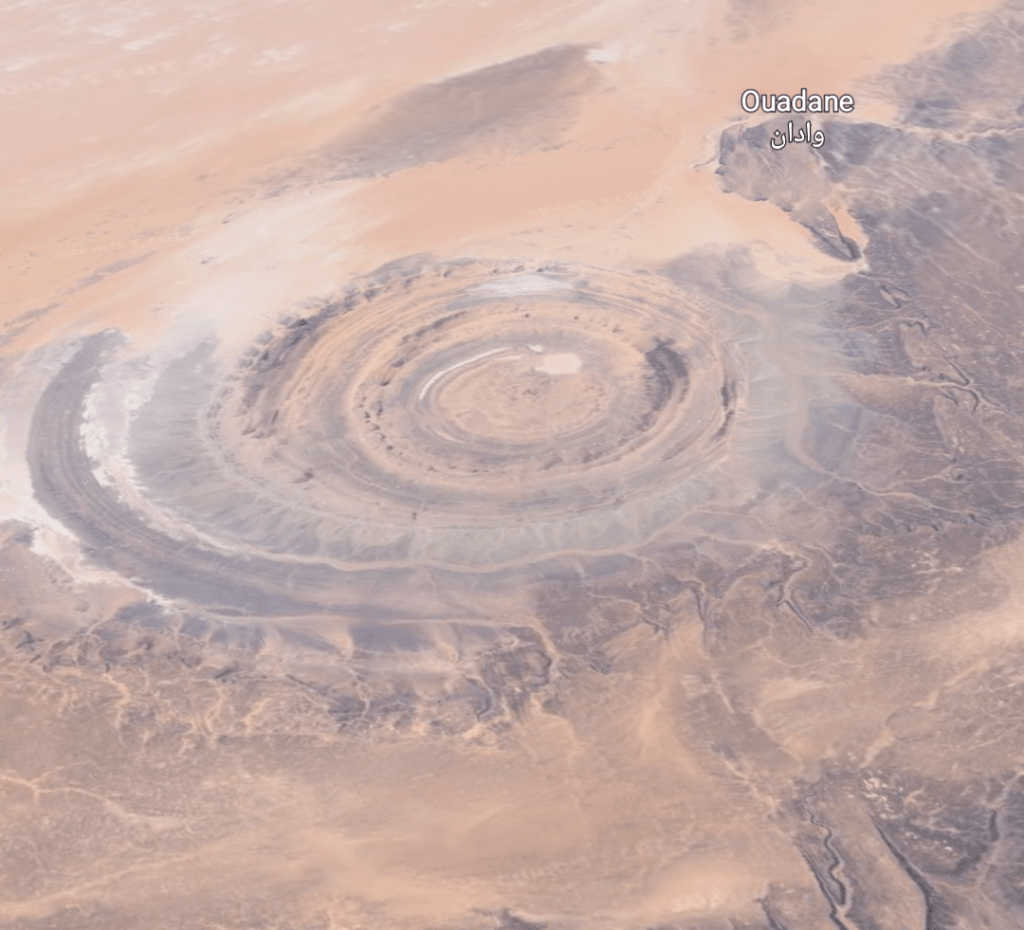
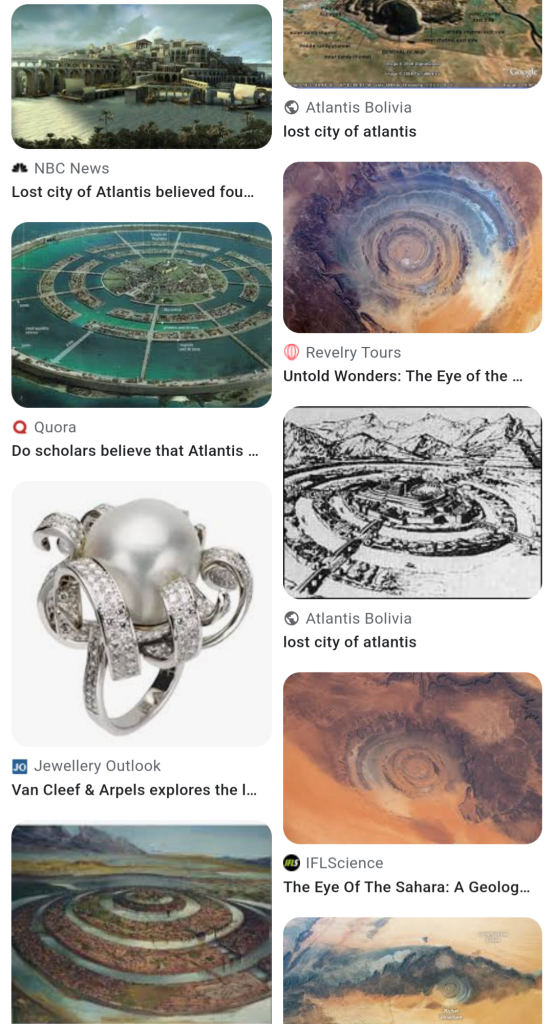
The YouTube channel Bright Insight has a great video outlining the evidence to support the Eye of the Sahara, the Richat Structure, as the location of Atlantis, I won’t go into detail here, but just looking at a picture of the thing and comparing it to the countless artistic impressions that have been created over the years forms a compelling case.
Atlantis is a curiosity, like Near Death Experience, Alien Abduction, not really given much credence, but why? Plato wasn’t, by all accounts, an attention seeking nutjob, why was it treated as anything but a historical account? I suppose it doesn’t help that Plato’s account was not first hand, it was passed down over 9000 years, so there was some room for error, but evidence is stacking up that there might be more to the story of Atlantis than mere parable or whimsy..
The Richat Structure Atlantis image search
This isn’t exactly a “The hair proves it” moment, but it’s hard to dismiss it. It’s entirely possible that a deluge, of the type that is known to have happened often during the 12000 bce Younger Dryas, could have swept Atlantis off the face of the planet in one night.
I don’t think this is a myth anymore. Not now that the evidence for high technology in abundance, scattered around the megalithic sites across the world has been brought to my attention. The work of Graham Hancock and Randall Carlson, and YouTube channels such as UndiscoveredX and Bright Insight are doing a wonderful job shining a halogen torch on the historical inconsistencies, and I’ve only just begun to scratch the surface.
It’s spring as I write this, and as I looked out of the window of a holiday let, across the tree tops of the steep hill of the park, and out across the water to the timeless view of Scottish mountains, I am struck by the enduring permanence of the view. The mountains carved out from solid rock by miles thick glaciers. The murky depths of choppy brine that flow to the ocean. Centuries of farmers have tended those hills, raised crops, driven their sheep. And centuries of sailors, merchants, adventurers, have plied those waters. An unbroken history, going back down the generations.
But then my gaze is broken abruptly by a thud on the window. A bumblebee ramming the glass brings a new perspective into focus. Against the backdrop of the seemingly eternal landscape, the ephemeral bee, brand new to the season makes its presence known. And the tree tops, over which I enjoy the view have recently been cut back. The bee knows not the date, it doesn’t know what year this is or what happened in the previous cycle. It is merely here and now. The trees are not what they might have been had they been allowed to grow, they will grow back, and they will be cut back again.
In this information age we have grown accustomed to knowing who we are and where we came from, the certainties of our past, the story of who we are, but is that an illusion? A lie? A cope? Does the bee have any doubts about its identity? Will it be remembered by the next colony? I have my doubts.
Just as the ship destroyed by Propsero’s magical storm sank beneath the waves and left no trace, so too the memories of the behemoth that was the Titanic will also vanish in time, but for those who know where to look, it’s mark will be found and understood.
The world turns and the crust churns. We cannot know how many shakespeares there have been, how many Einsteins, or how many Hitlers for that matter, if the passing millennia tear down all that we built, but the slate isn’t wiped clean every time. Some remnants remain to be found and understood, if we care to take a second look.
Sunday mornings for me of late have become a sort of sedentary stay in bed and generate AI art for a while type affair. Are we allowed to call it art? Dunno.
I have been thinking much lately, not least because I’ve been researching it, the lost ancient knowledge, or rather, what we can discern of it from the scraps of evidence that survived the passage of time thus far.
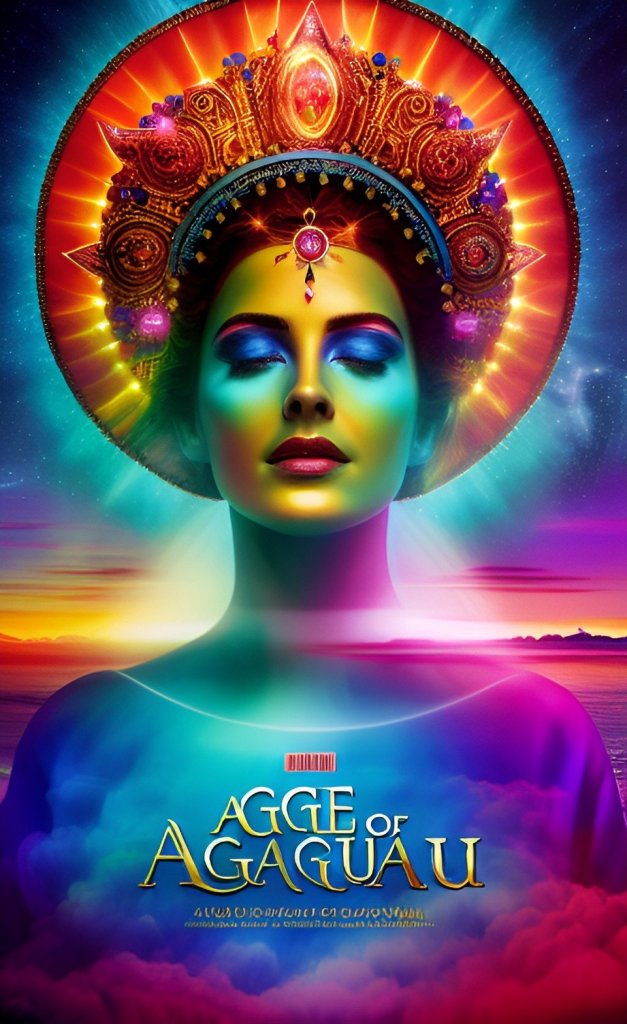
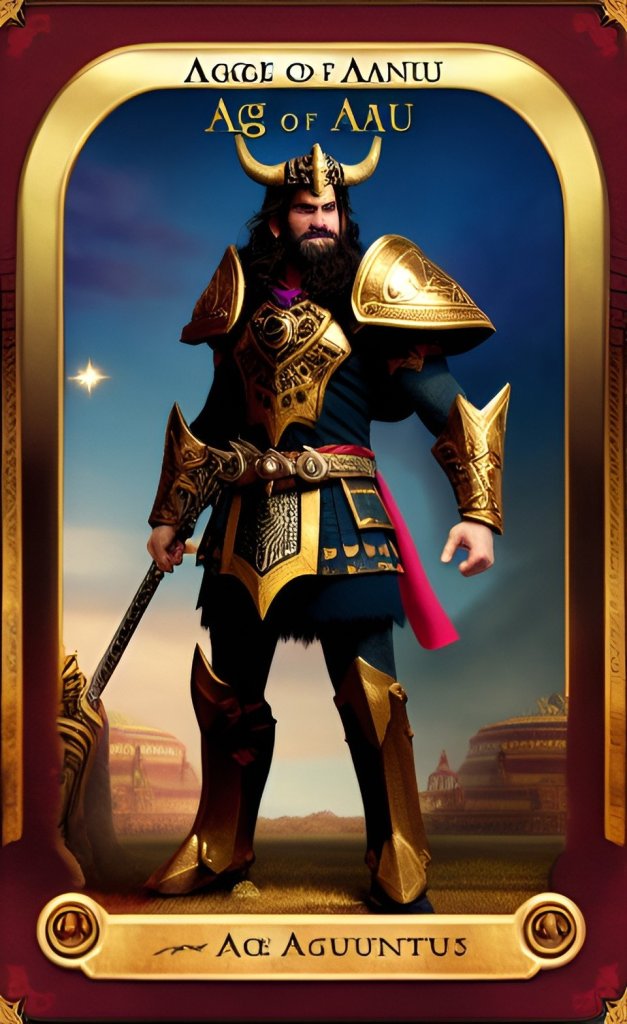
I wondered what the AI might tell me about the various ages of the zodiac. Aquarius is in ascendance, and the transition is often met with new dawns born of painful endings.
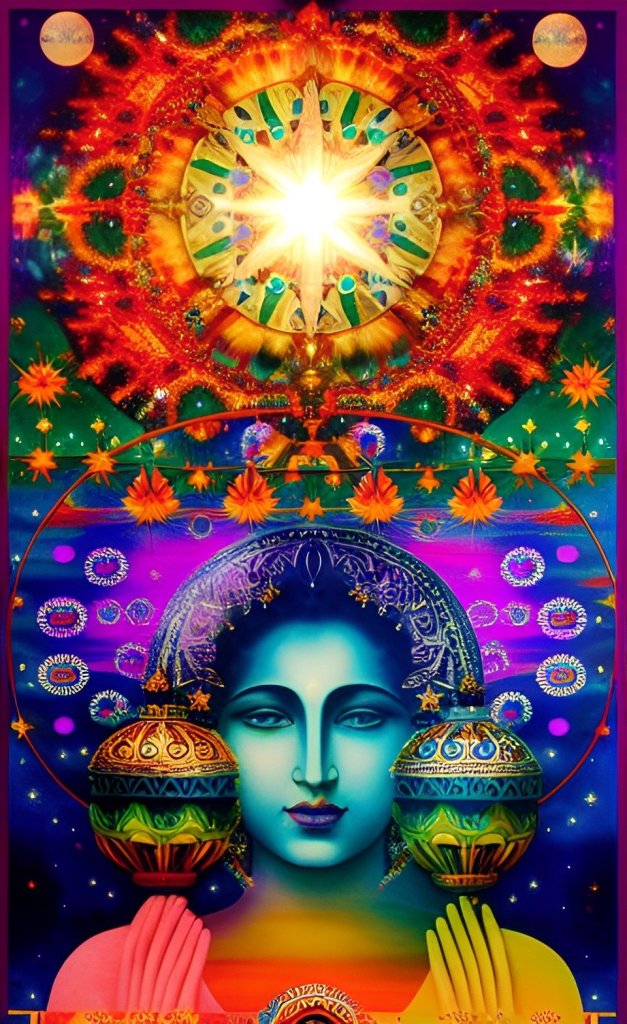
So what does Age of Aquarius mean to the AI?
It’s all a bit psychedelic and blended with Eastern mysticism. Hardly surprising.
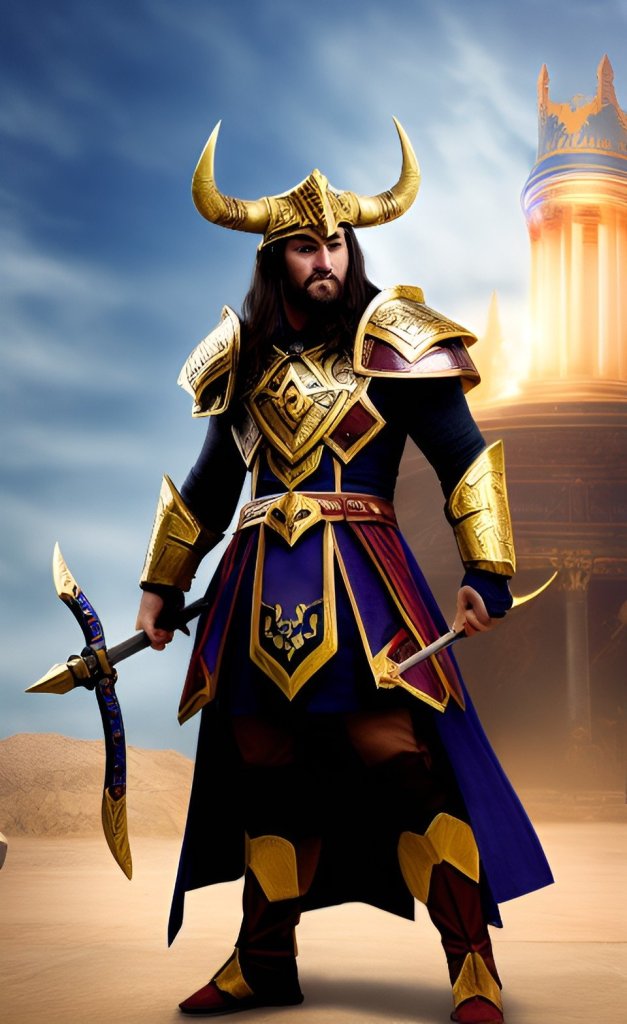
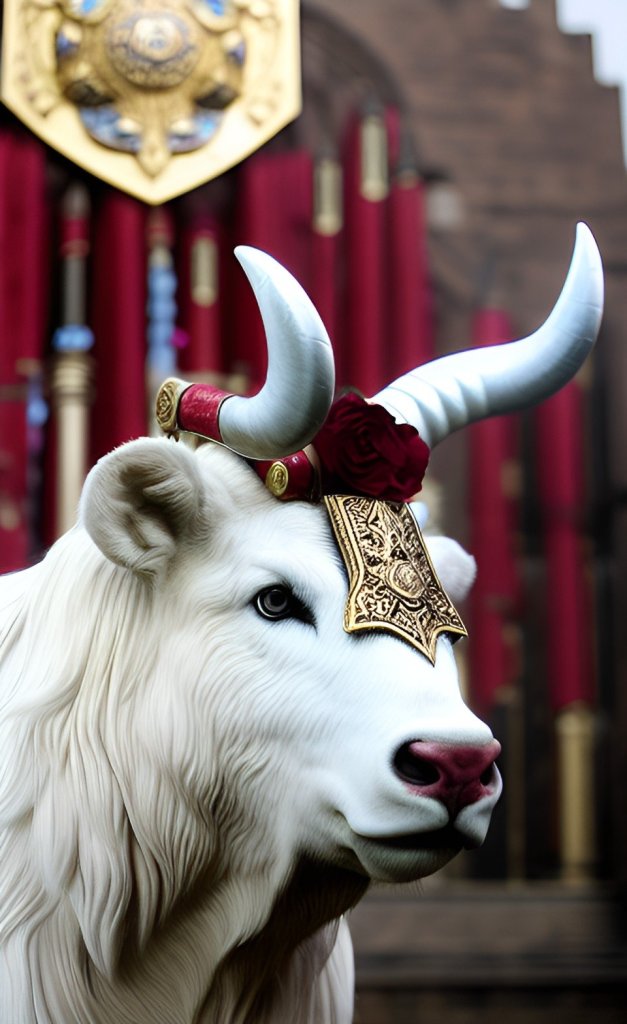
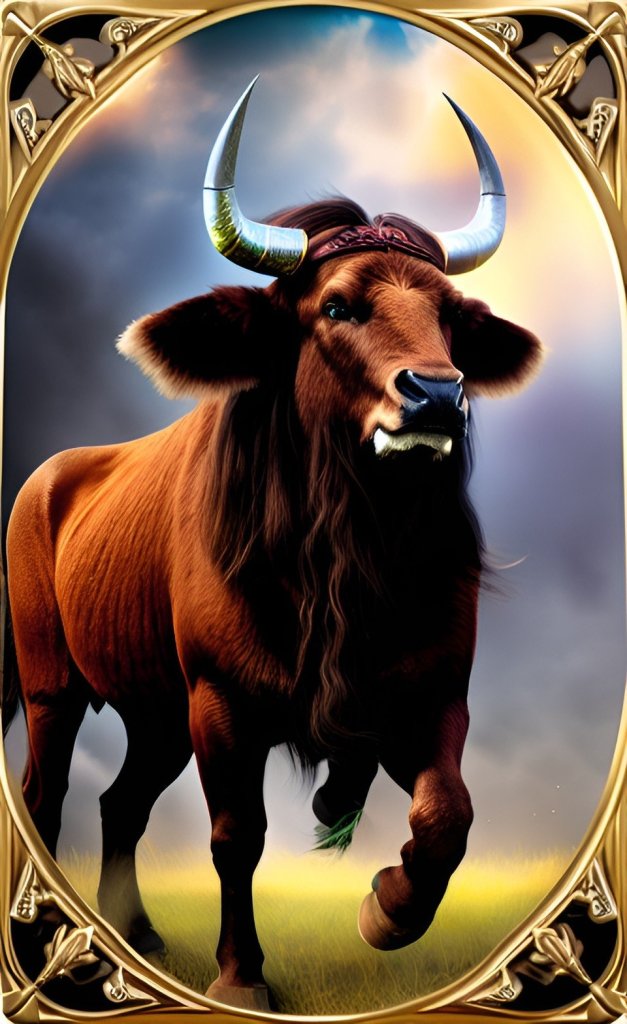
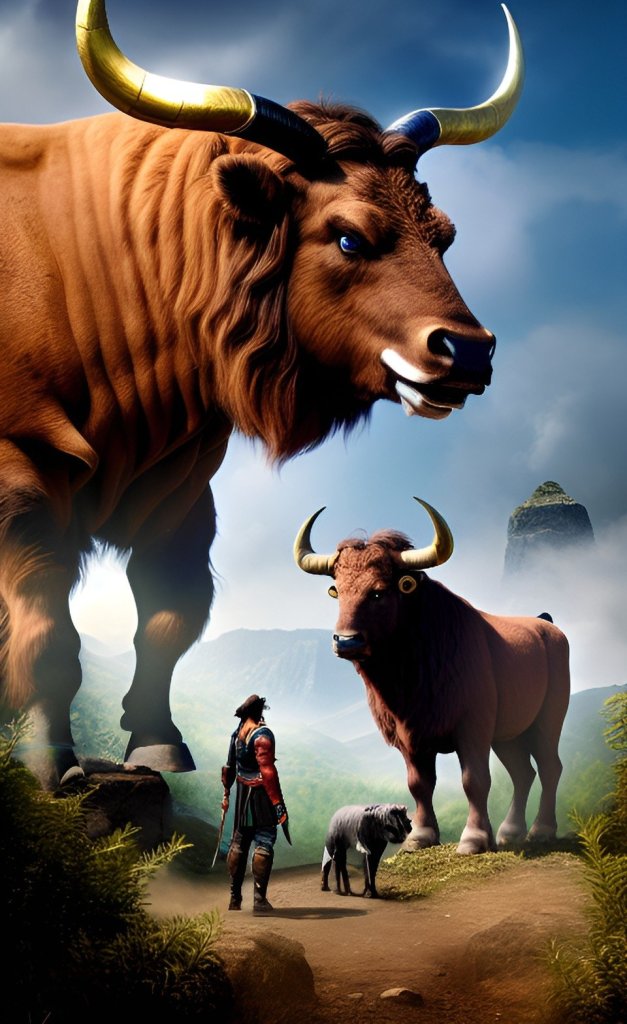
Age of Taurus?
Age of Taurus, the Bull, from 4300 bce to 2150 bce, is a much different affair. It was the dawn of the iron age, and growth of civilization, and cows.
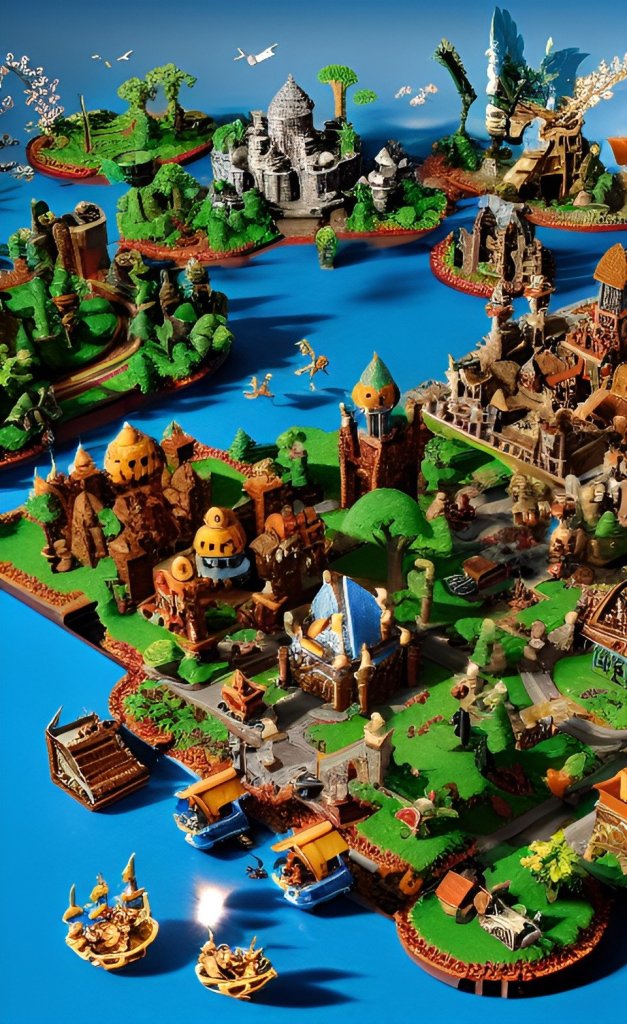
The Age of Pieces?
Pieces, the current astrological period began in year 1, and will run to 2150, at which point something cataclysmic may or may not happen. Curious imagery, looks like a video game. The age of Christianity and fish, not really getting that from the AI.
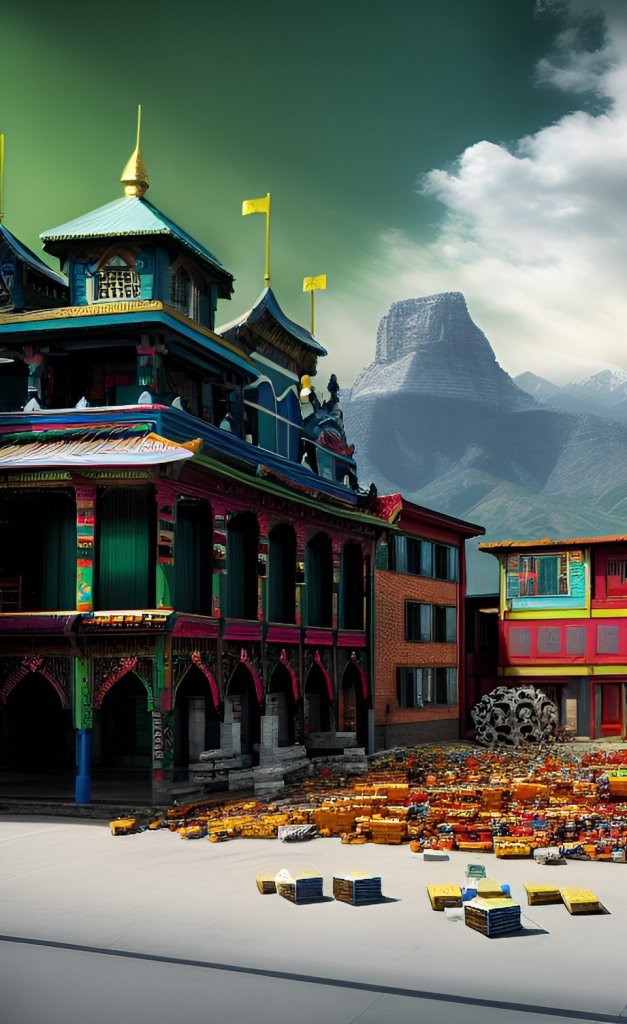
Next I tried Virgo, my own sign.
The Age of Virgo is duller than I imagined. It ran from 13000 to 10750 bce, the Younger Dryas period, the time as the great floods that reshaped the geography and climate across the planet. Maybe this is more representative of the next Age of Virgo in around 12772 AD.
Out of interest, I wondered what AI might know of the Younger Dryas period and it gave me scenes of melting ice, which is accurate I think.
And with the addition of the word ‘catacylism’ we get more end of the world stuff.
These don’t tell me anything, the AI doesn’t know anything that we don’t already know, but it’s a fun way to spend a Sunday morning in bed, coffee to hand.
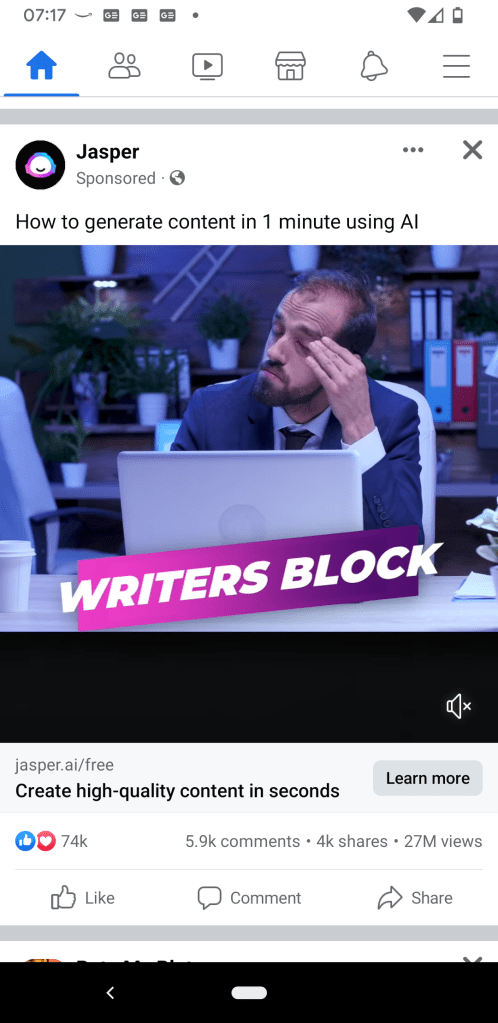
AI is everywhere already, and it’s only going to get everywhere else. I can’t even sit in bed on a morning with a mug of hot coffee, scrolling through my Facebook feed, without seeing more ads for AI.
Create high quality content in seconds. Sounds like a bucket of awesomeness doesn’t it. Here I am, struggling to manage just one post a month, as I try to balance my time across work and watching telly and all the other drudges that take priority. Why bother collecting thoughts, doing research, selecting images and wot not before writing it down, editing, and, with no shortage of trepidation, hitting the publish button.
Not anymore says the AI people. With just a few clicks and a couple of key strokes, I can spam the entire internet with self referencing auto drivel.
I don’t know if I can challenge the “high quality” claim at half seven in the morning, but what is clear is the value destruction this will cause.
Anything that can be created in seconds by anyone anywhere cannot be said to have value. Value is derived from scarcity, everyone knows that.
So where does that leave bloggers? Dunno really.
I will continue to write the occasional post here and there, but I suppose the odds of being found and read will be even worse once the click bait factories deploy AI content on mass to the masses.
I picture an internet dominated by content produced whimsically and ephemerally, tailored to the user’s recent activity. Whole websites, like TV tropes for example, that took years to build with hundreds of contributors, will be created on the spot, and coloured to fit the views and biases of the individual in the interest of keeping them engaged long enough to register as an impression to an advertiser.
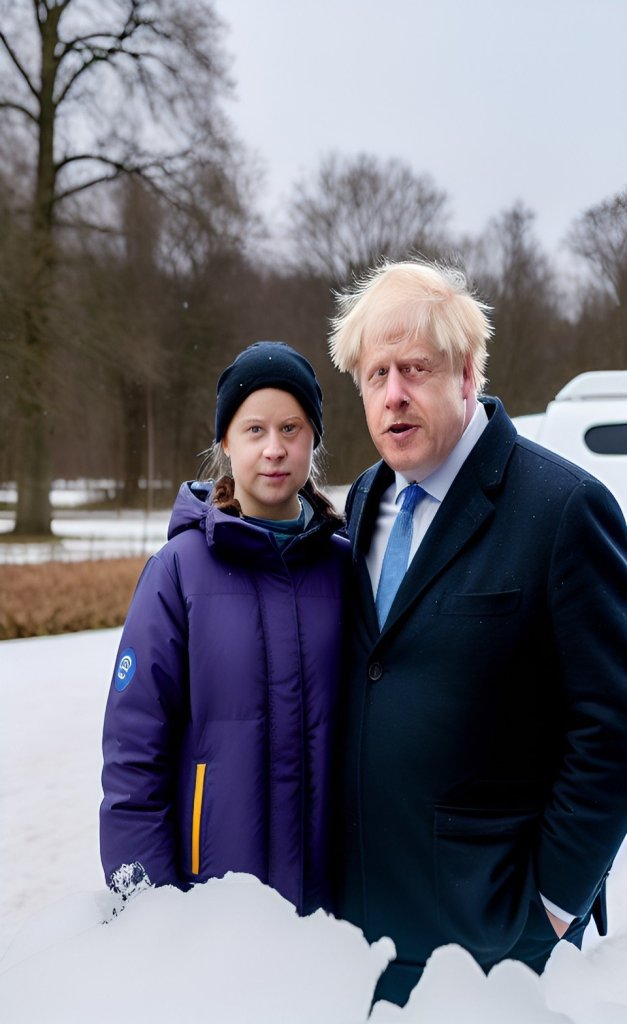
We won’t be able to trust a single thing we see on the internet. Photo and video and voice evidence will mean nothing. A few words uttered and you’ll have video evidence of anything you like.
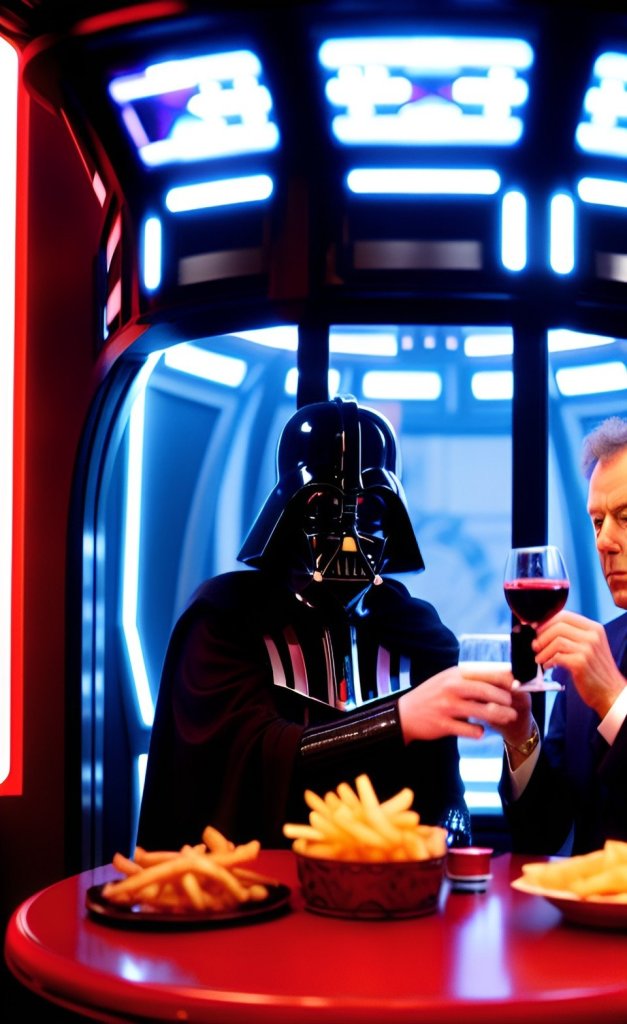
The standard of the images above is low, and on closer inspection, they don’t withstand any scrutiny. The eyes are particularly creepy. It will be easy to fool some, perhaps many for a while, but I think this is a huge shift in our civilisation. This is perhaps the beginning, ironicaly, of an information dark age.
Before the invention of photography and audio recordings, if something happened, we had to go on the word of those who witnessed it. I can see us returning to that state of being. Anything on the internet will be, to all intents and purposes, unreliable, unverifiable.
What we see and hear from the internet will bear even less semblance to what we see in the world beyond our window. Everyone will have to engage in their actual communities in order to survive, or at the very least, maintain the social order.
Am I catastrophising? I don’t think I am. I think we’re about to enter a very turbulent era in human history. The reality of AI is changing our relationship with everything.
I have a love of food, for example.
With AI I can enjoy endless images of food, food porn, and not a single chef need lift a finger. Shame they can’t be eaten.
These cakes and roast aren’t real, but they look good enough for a blog to be skimmed through, and it took next to zero effort to create them.
I could be a travel blogger if I wanted, and have the AI write up convincing articles and journals of exciting exotic places that only exist in ram.
The early days of the internet were great for exchanging ideas and finding like minded groups to talk about anything and everything. There were always trolls, and you couldn’t always trust that the truth was being told. But it was more or less a certainty that you were interacting with another human, or possibly a cat. We don’t have that certainty anymore. Conversations with AI can be utterly convincing. Imagine a forum where there are hundreds of Bots chatting among themselves.
The very idea of a website is under threat. Anyone looking to buy a fishing rod might stumble across a well established forum with decades of threads and posts and helpful members happy to direct the new member to a certain rod. A well established forum with decades of threads and helpful members that only exists for the duration of the transaction.
Does a website exist if no one is looking at it? The internet will become a probability wave.
Deep.
AI, I’m told has already encroached on the world of adult content creators. I don’t like to judge, but it’s probably not a bad thing if the demand for live acts of depravity drops out. How this plays out is anyone’s guess though.
I mean, here I am, typing my own words for an article I could have generated in seconds, and no one would have known. But that’s not the point. I would know, and as AI becomes increasingly dominant, demand for actual words written by actual people, in my view, will only increase. Real experience and real accounts of real experience will become cherished.
I’m not one of those king Canute luddites resistant to change. I have nothing to gain from shunning AI art. It’s given me the opportunity to illustrate my words without resorting to effort, and paying an artist.
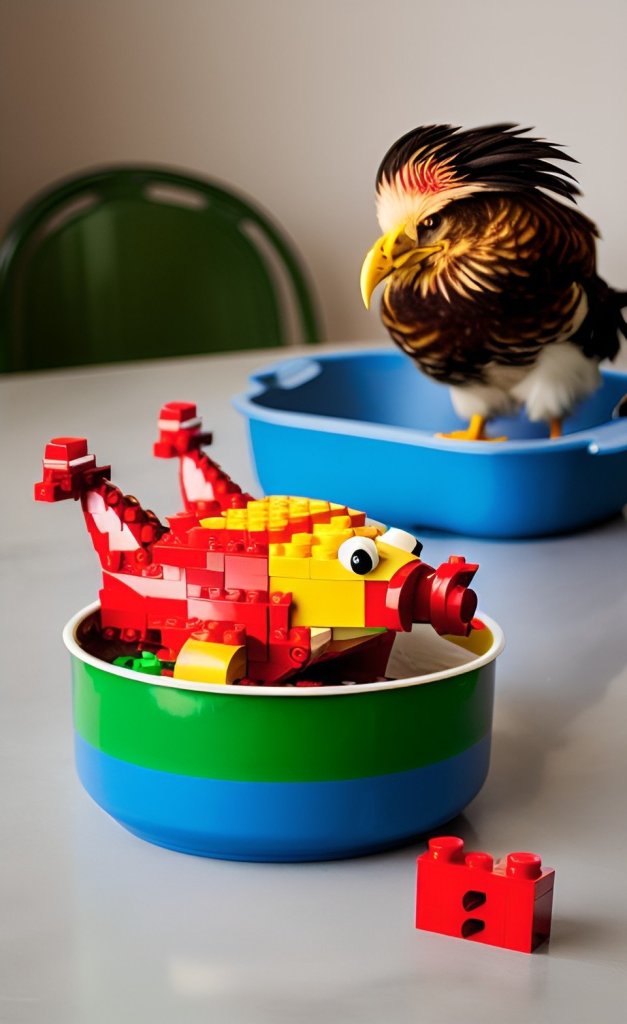
Does it really matter that these images are AI generated? I’m only using them to brighten up the page anyway. I’d be a fool not to, wouldn’t I?
The long and short of it is. AI is going to be disruptive. Blogs like this, will become unique and authentic voices amidst the plethora of valueless content, and I have some faith that readers will know the difference, but the only way they will be certain is to see with their own eyes. If we have something to say, we’re all going to have to get used to speaking in public. The written word will count for little, and this complication will, ironicaly herald in a new simpler time.
It’s over two months now since I learned of the passing of a childhood friend, and although he would probably call me a daft bastard for this I felt I should pay some tribute, in some small way.
We are at an age where a new technology has come along. AI is making headlines as it infiltrates our daily lives. It is, apparently, writing successful job applications and essays. It threatens to flood the blognet with regurgitated drivel, so naturally I’m curious.
I have, admittedly, wasted an hour or two exploring the free image generators with mixed results. The AI generated images aren’t displeasing, but they also aren’t anything either. They are a curiosity, and have some illustrative utility, but there’s no value in anything that can be generated in a second on a whim.
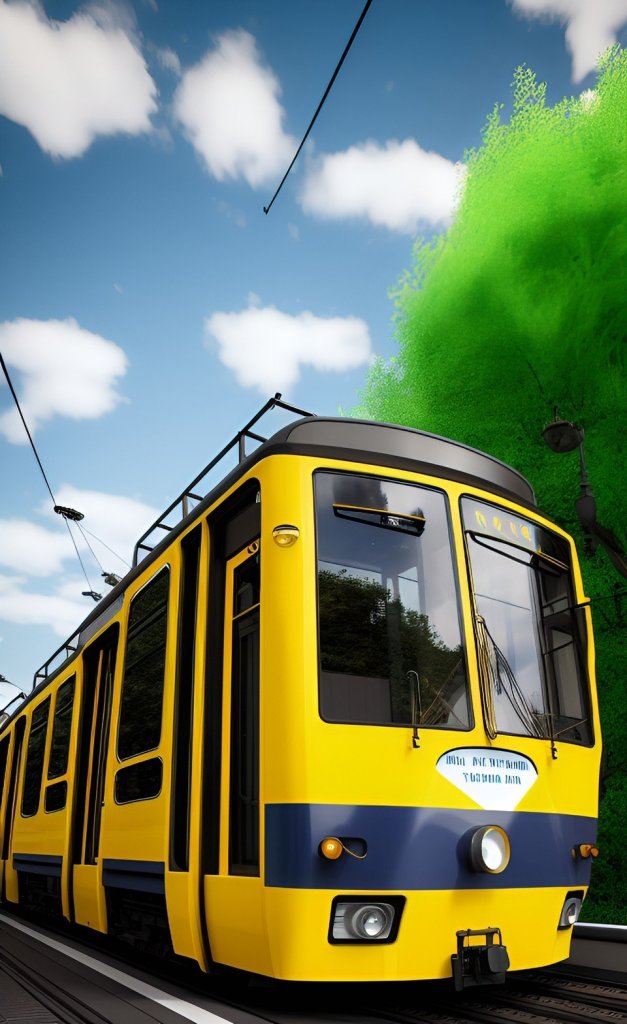
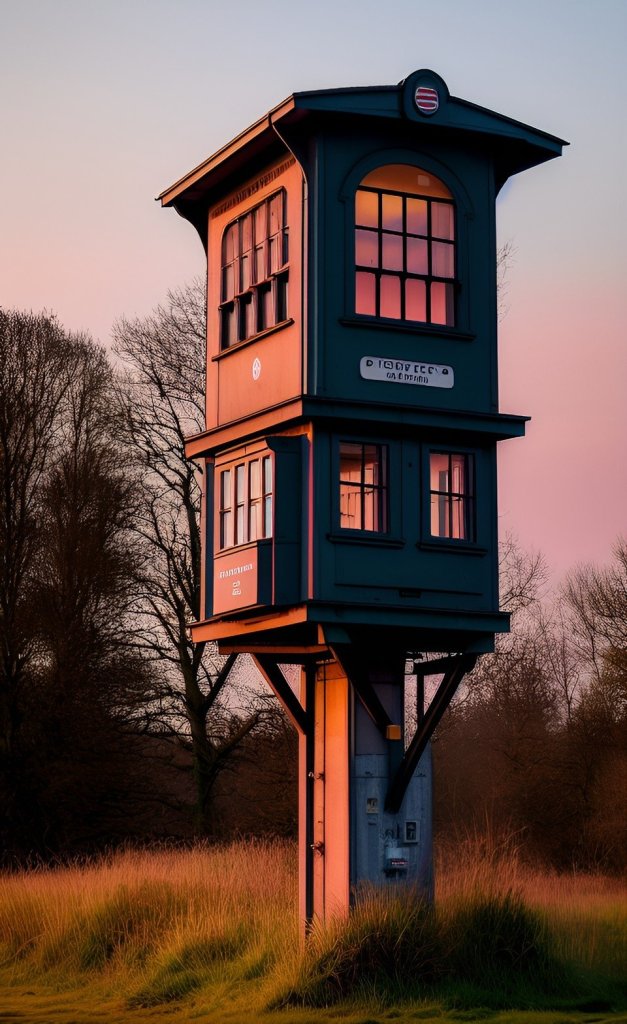
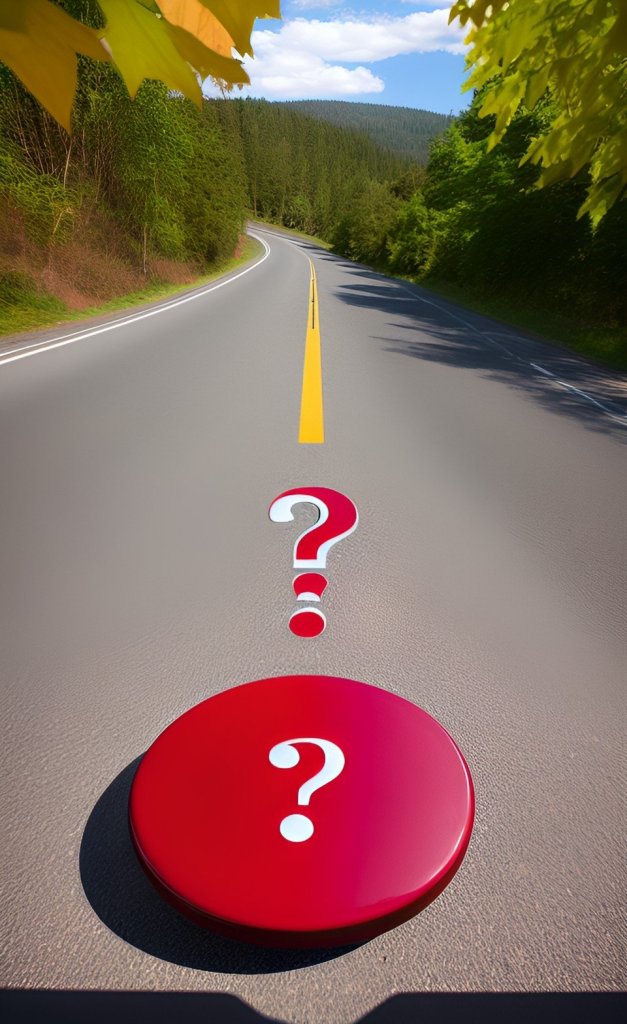
An AI TramAn AI Signal BoxAI answer to Life, the Universe, and Everything
But I wanted to see if there was much to the hype. Could it be a shortcut for my own endeavours? Word on the street is that Self Publishers are flooding Amazon with AI generated novels. How can that be good?
A test was necessary. On my massive to-do list is a reflective history of my home village. I have collected hundreds of accounts and memories from social media, news clippings, old photos, and read several books written about the place. There is still more to do, I might never finish it, but this is more about the journey I suppose, and I’m enjoying it so far.
AI Thurnscoe
But anyway. Could AI clip a few years off of my local history writing journey? I decided to ask it a whimsical essay question.
The Question
Write an essay explaining the socio economic situation in Thurnscoe South Yorkshire, describing its history, people, industry, culture, and future prospects.
The Answer
Thurnscoe South Yorkshire is a deprived inner city area in the metropolitan county of South Yorkshire, England. It is located approx 12 miles north of Sheffield and comprises the following wards: Burton, Clay Cross, East Pinder, Heppelthorpe, Jarrow, Mexborough, newington, and thurnscoe. The 2001 census recorded the population of Thurnscoe as 9,507, a decrease of 2.1% from the 10,047 recorded in 1991.
The socio-economic condition of Thurnscoe is reflective of the UK as a whole. Poverty, lack of opportunities and poor housing are common features. Thurnscoe has seen little recent job or economic growth, and its industry is aging and in decline. There is a high level of social deprivation.
Nevertheless there are also some positive features. The community is fiercely proud of its history and there is a strong sense of community spirit. The people are friendly and hospitable, and there is a lot of involvement in voluntary and community activities. The sense of humour is often unforced and the local pubs and clubs are lively and lively places.
Thurnscoe is unlikely to experience any dramatic socio-economic changes in the near future, but its prospects are difficult to predict.
What is an Essay?
An essay is a composition of prose that addresses a particular question or topic. It can be long or shorter, formal or informal, comprehensive or specific, and it typically explores one or more ideas in depth.
Judgement
As starting points go, this is pretty poor. It takes some stratosphericly high data and waffles a bit. This isn’t even GCSE geography level; just to be certain I also asked the AI what an essay was, I would have expected a few thousand words, but no, essays can be short form now, bit convenient. The claim that students, or job applicants, could use this tool as some shortcut to advantage doesn’t hold water. I would need to tweek and customise and furnish it with actual facts and research, in that the ChatGPT interface has nothing on the good old fashioned keyboard.
And perhaps more importantly, you can’t eat AI dessert. Just saying.
Friday 24th February. The return trip from the office, now much less frequent thanks to home working, and I somehow managed to miss the train.
I didn’t miss the train from Baker Street, that wound its way, bouncingly, beneath the streets of London, and never failing to induce a Gerry Rafferty ear worm for at least a couple of stops.
I didn’t miss the train from Euston. I arrived there with ample time to join the hundreds of others craning their necks at the departure board, waiting for the platform number to be announced, before their dash to grab a seat. I definitely didn’t miss the chaos of conflicting commuter stampedes, as the passengers for the Birmingham train, the Manchester train, and Glasgow, all tried to pass through each other, as luggage laden ghosts, and failed.
No. I didn’t miss the 18:30 with its charming passengers. Like the guy that chose to sit with me just long enough to munch through a smelly toasted cheese sandwich, a packet of cheese and onion crisps, demolish a bottle of coke, before moving up the train to another seat, leaving me with the discarded wrappers. Or the delightful extended family of Cumbrians that didn’t think to reserve seats together, and didn’t let the separation of seats hinder their conversations. No, I didn’t miss hearing about how bored they were on their trip back to Carlisle, or how much charge each of them had remaining on their phones.
Nor did I miss my onward connection, there was time enough for a beer or two before I boarded the 21:31 to Skipton, with its loud group of drunks heading back to their homes in the Yorkshire Dales.
The train I missed wasn’t taking me home to my beloved family after a hard day’s grind, it was something altogether more elating, brief as it was.
At Lancaster station there is a pub called the Lock and Tithe, and it’s placement so perfectly aligned with my travel arrangements and proclivities that it’s not unreasonable to suspect divine intervention.
I left my train from London and made a bee line to the bar, ordered a pint of Blonde and a packet of crisps, and seated myself outside. The usual hustle had died down and my previous train had departed onward to Glasgow, but I noticed the platform remained busy. People with cameras were in particular abundance.
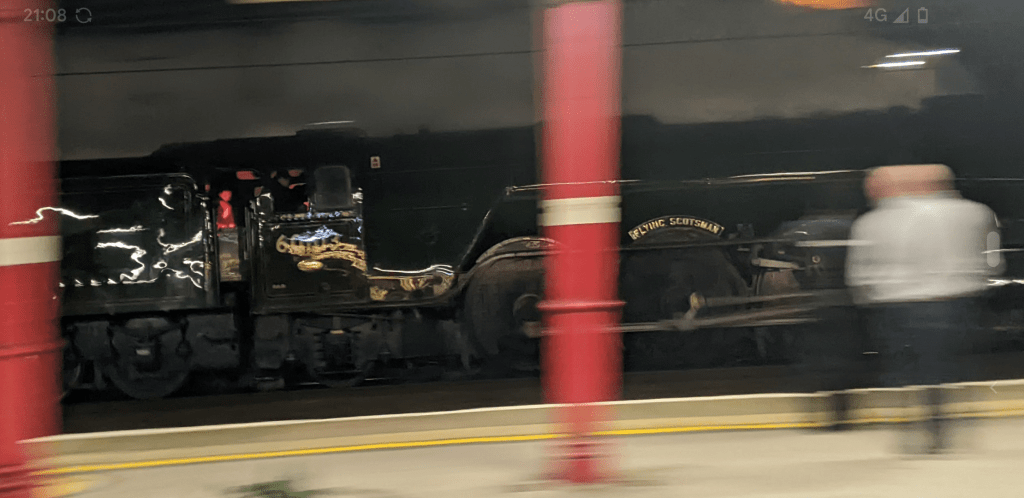
“She’s just passed Hest Bank” I heard someone say, and I put it all together. A train of interest was on its way. A train that happened to be the Flying Scotsman, a steam locomotive known throughout the world, and one I have taken the time the view across the country.
This was good news of course. I would delight in the passing of any steam engine, rare things as they are, but as excitement grew, and the spectators readied their cameras, I was gripped, irrationally, by FOMO. Fear Of Missing Out. I readied my camera phone and rose from the bench.
She whistled as she approached the station, and I tracked her through my screen, snapping as she went.
Flying Scotsman
That was the best image I captured, and reviewing the blurred JPGs on my phone screen I realised I had squandered something special. In those minutes respite between obnoxious fellow passengers, the universe had conspired to reward me with a brief spectacle of sound and fire and smoke and joy. And I spent that moment looking at the tiny screen on my phone.
I had missed the train.
I will take this lesson for what it is, a reminder that I, and everyone else for that matter, should do their best to live in the now. Now is all there is and where it’s at. There is nothing on the screen that can convey the anticipation of the people on the platform that had gathered for the event, the thrill of the whistle and the clank of pistons. The feel of the warm air on your face and in your hair, displaced by the mass of speeding steel, and the lingering aroma of coal smoke and oil.
The next time fate brings me to such moments, I will be there to live them, and my camera/phone, can stay in my pocket where it belongs.
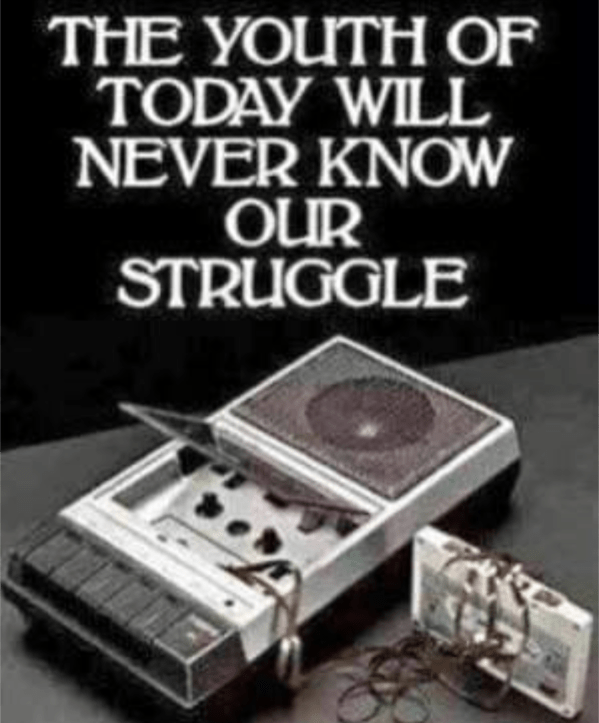
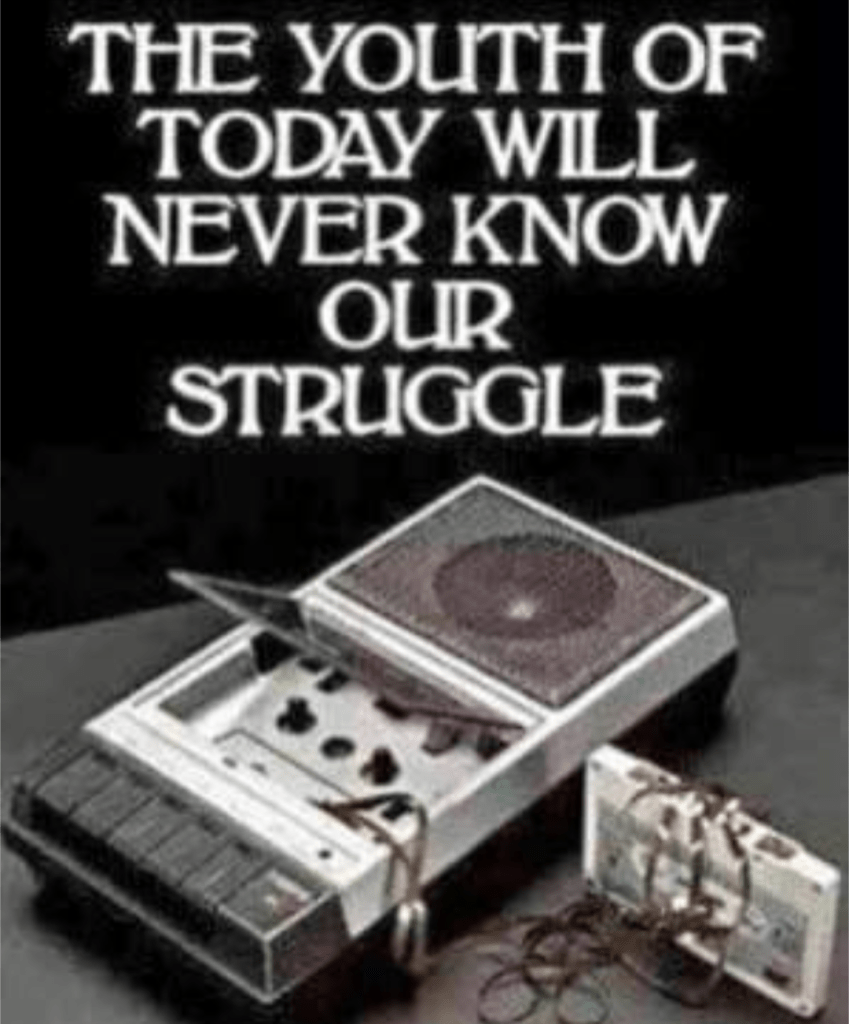
A Facebook meme. I am spending way too much time on Facebook. How much is too much? Some. Some time is too much many might say. But anyway. A meme cropped up.
A struggle indeed
The image of an old cassette with its tape all mangled and caught up in the tape head mechanism. Yup. How awful that was.
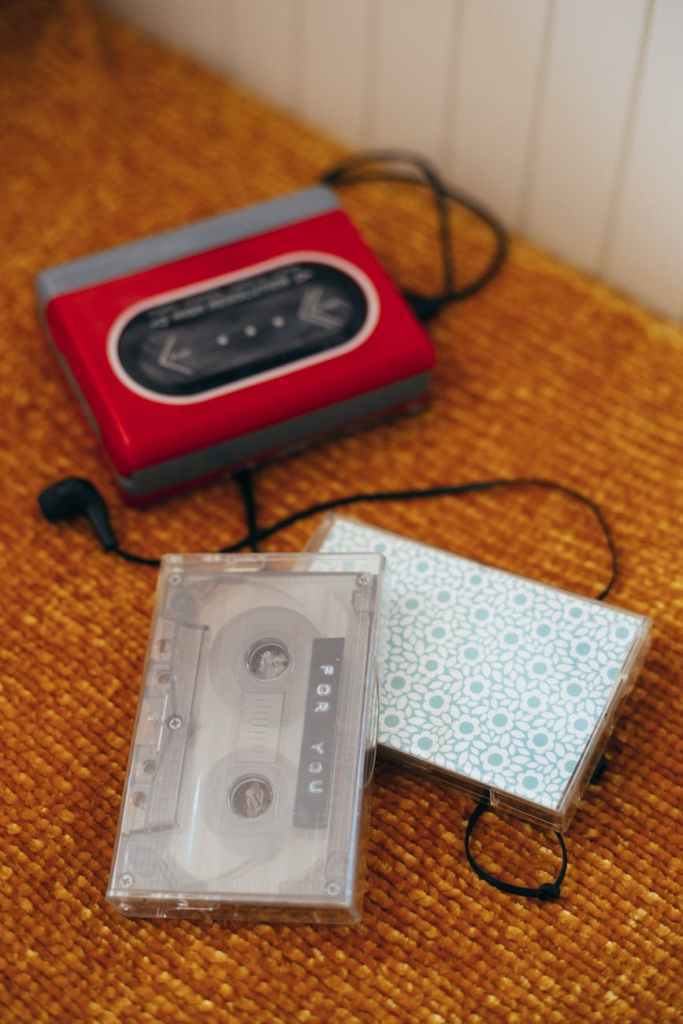
I remember one Christmas, probably 1988, I received a Walkman type device with headphones, and, among other things, Kylie Minogue’s first album, on cassette. That Christmas night I dutifully went to bed when I was told. With the lights out, and me all snug beneath my duvet, I put on the headphones and pressed play. I didn’t even hear the first song in full. “I should be so luc…”
The tape player mangled my brand new Kylie album. And that wasn’t the first and it wasn’t the last. But what could be done? My room was full of cassettes. I had them for music, I had them for computer games, I even had audio books and a beginner’s course in French.
CDs changed that, but they changed a lot more than the mangling of tape and the bother of rewinding. They brought the repeat function, the skip function, and the program function, and that was no bad thing.
I didn’t give it a moment’s thought at the time. I didn’t have to listen to songs I didn’t like, and I could listen to my favourites on repeat, in superior sound quality, and no risk of damage or even wear.
Then came MP3. It became possible to rip your songs from your CDs and play any song at random. Out of the hundreds of songs I’d collected over the years I only ever listened to a handful.
And then streaming came along and you could listen to any song you liked, whenever. Virtually any song ever recorded was now at your finger tips. I occasionally listen to a song or two, maybe every other month, if I feel like it.
Now, this train of thought keeps me going back to a quote from Star Trek:
We believe that when you create a machine to do the work of a man, you take something away from the man.
Star Trek: Insurrection; Sojef to Picard
In star trek, a group of people on some distant world had opted not to use their technological prowess because it lessened them, diminished them. I can see how that might work. But I’m not about to start listening to music on cassette again because streaming is too easy. That would be like cooking on an open fire in a wood because a kitchen is too convenient. But isn’t that what camping is?
Who needs a kitchen
When I was a teen I caught the bus every day to college. The journey was an hour. In the morning I would listen to Alan Parsons Project’s album Pyramid, on the return journey I would flip the tape and listen to I Robot. Thirty years later, every note in every song connects me immediately to a specific point on the bus route. Conversely, on the rare occasion that retread those ways, I automatically think of the song. Such is the power of the music, and it’s not just the song, it’s the emotions, the fond memories that it evokes. I doubt I’d have that if I’d had an unlimited playlist, or even a skip button. But that’s not all we’ve lost.
It’s not a major thing by any means. I don’t think the youth of today would believe they were missing out on anything. They’ve got their own music, and their own struggles. But this meme came up while I was pondering the nature of bliss. This is a philosophy blog afterall, and I was looking for a way to articulate this theme, that we cannot know bliss unless we know strife.
If a song is just a voice command away, it must surely have less value than a song that is recorded from the radio using a separate audio recorder to radio, speaker to microphone, in a noisy house with annoying siblings. And when the device can destroy your efforts. The song, listening to the song, enjoying the song, is the reward for the effort of simply hearing the song.
It’s a small thing, listening to a song, but it’s also a win. It’s a small win, but it’s an achievement none the less, and the way our brains are wired to give us little chemical rewards, dopamine I believe, when a plan comes together, missing those little wins must surely have some cumulative effect.
I’m not passing judgement on people’s lives, lifestyles, or life choices. We are where we are and what is is what is. A lot of the effort has been removed from our lives and yet we are in the midst of mental health crisis. I think there is a connection and that the struggle was confined to audio tape.
Thanks to Facebook I am exposed to a lot of unhappy people posting about poverty and misery, and sharing memes of their hopes that a communist revolution will resolve all of their problems. They haven’t thought it through. But I also know that there is genuine hardship out there, and that not everyone has an easy ride.
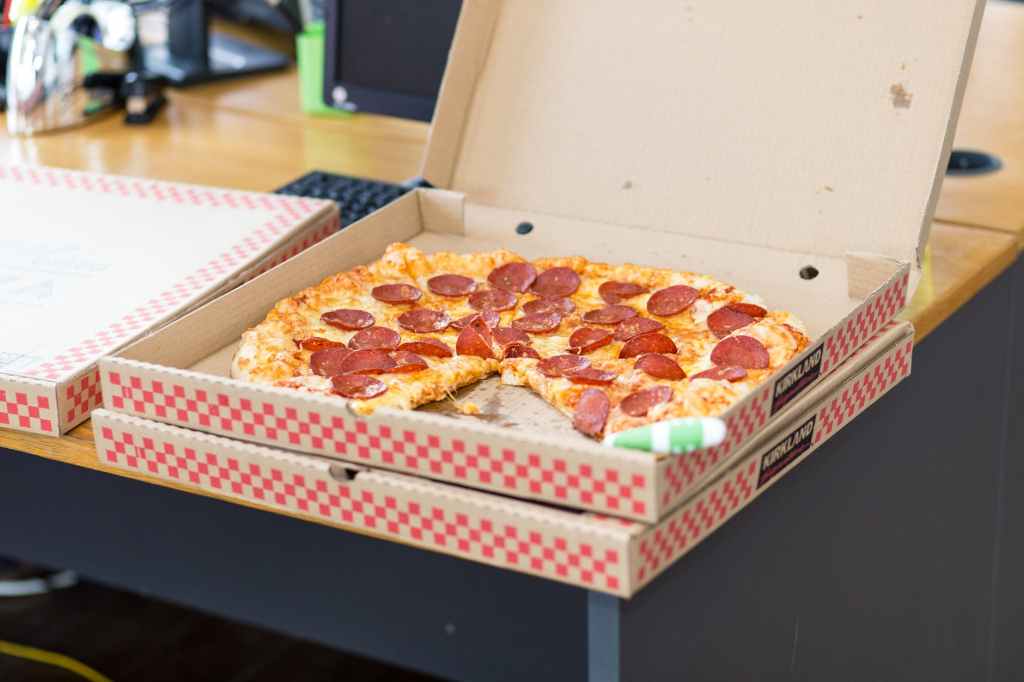
But take food as an example. If you want a pizza you can buy a basic one for 99p from the store. Or you can buy a premium one with stuff crust and generous toppings for £5. Or you can pay about £8 and have one freshly made for you and brought to your home with just a few commands on a smart phone app. I would argue though, that takeaway pizza for £8, though it might have better toppings and higher quality ingredients, it doesn’t have the value of the 99p pizza to the person with only £1.02p in their pocket that has a mile to walk to the store and a mile to walk back, and barely has the funds to cook it. Value comes from the struggle, and the struggle brings reward.
But back to the pizza. You want pizza, you can have pizza, very conveniently and tasty too. Then you have the extra time available because the pizza takes no more effort than sliding into a hot oven and sliding out when it’s done. There’s even a machine to wash the plate for you. Effortless and unrewarding.
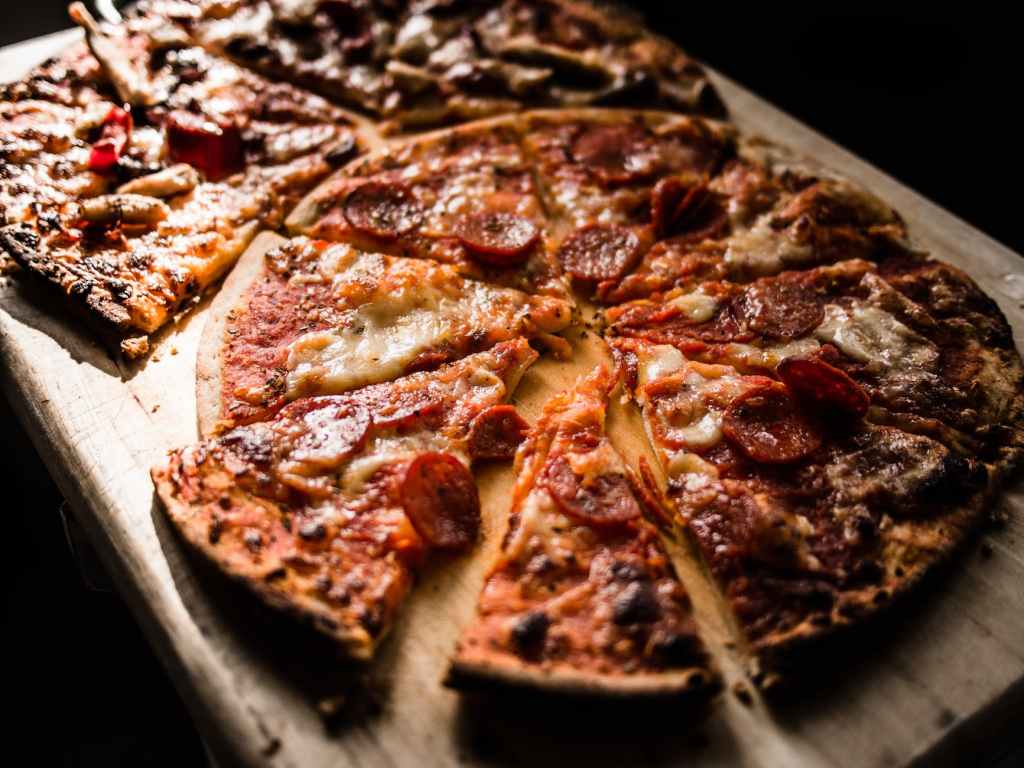
Imagine that pizza if there was no supermarket and there was no takeaway. Just a butcher, a green grocer, and general store to buy flour and yeast, meat and veg, and oil, and spices, and if those shops were separated by some notable walking distance, and some produce were in short supply. One might be tempted to not bother with pizza at all, too much effort, have a sandwich instead. The pizza has become unobtainable to some extent and it’s value has increased. It has ceased to be the easy option, it is no longer junk food, it has become an endeavour.
Endeavours involve struggle that leads to reward. This is a tough problem though, and it affects all of us, unless we have a calling to pursue. You might think that making the pizza from scratch might resolve the issue, and although making a pizza from scratch might taste nicer than the store bought variety, the reward isn’t there because the struggle isn’t real. You choose to make pizza the hard way, with readily available ingredients from the supermarket. There might be some reward the first time you make it, that’s the learning reward, but it’s not a struggle, it’s a choice, an indulgence.
Boxes
More and more of our life is being prepackaged for our convenience. More and more of our jobs are becoming automated. About ten years ago, maybe more, probably more to be honest, I wrote a short story about a shop that had no staff and no check out. You just walked in, took what you needed, and walked out. The shop would know who you are, what you took, and charge your account for it. Those shops exist now. I thought it was a moment of genius foresight and never expected them to become a reality in my lifetime, I never suspected that they were already in development as I wrote my story.
Where does this leave us, as a people? The meaningful work done for us. What then? It’s been suggested that we’ll all need some kind of basic income, but what do we do with that? When our most basic needs are met and our whims catered to. What then?
Maybe Star Trek has the answers.
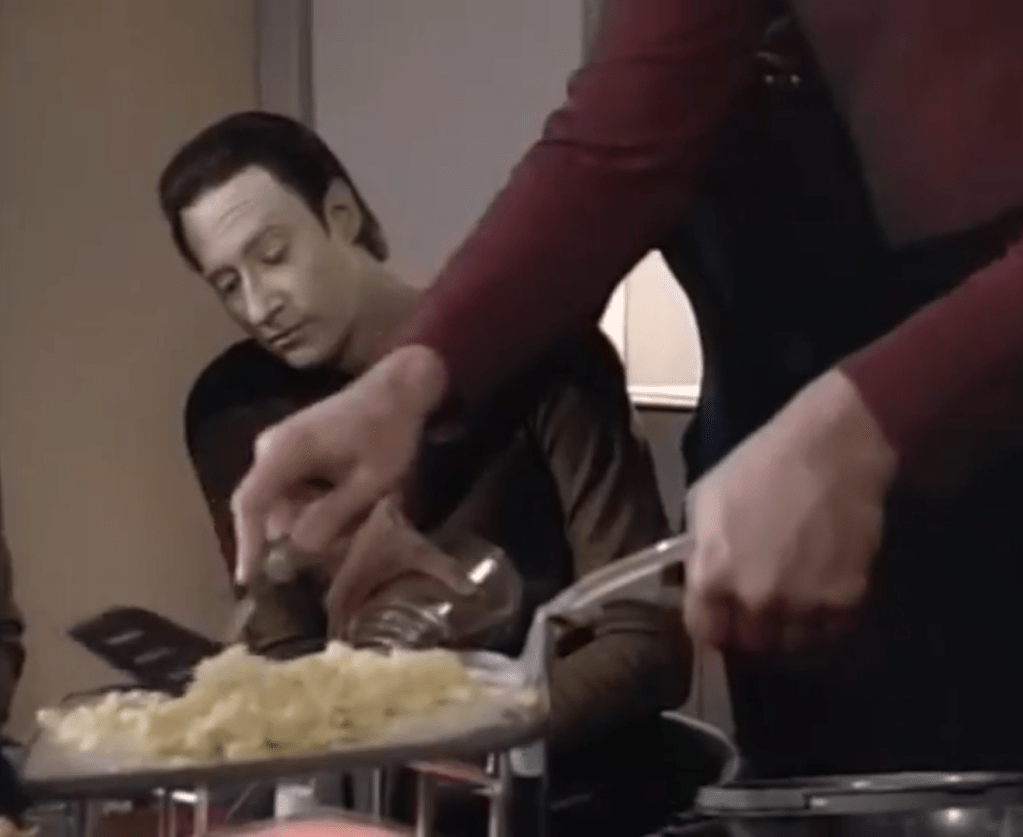
Food cubes or Katarian Eggs, I’ll pass
Star Trek is that bizarre utopian future where everything is taken care of, but they’re on a star ship exploring the universe, so not the same as our situation. I think if I was on a star ship I too wouldn’t be bothered by the coloured food cubes, they’re in space, meeting aliens. There are exceptions though. Commander Riker sees the failings of the replicated food and he tries to cook eggs, but he’s not very good at it.
This is all a long winded way of saying something isn’t right. The youth of today won’t know our struggles, but they have their own. The world is changing. We’re on the cusp of super conductors, cold fusion, quantum computers, abiogenesis, and who knows what else. The world is changing so quickly, but if we don’t find some way to restore purpose to everyone’s life, the struggle of a mangled tape will be a luxury beyond the imaginations of our future generations.